CO2 is faster and a pump does not run out. That is the whole comparison, and which one you want depends on whether a second puncture on the same ride is a scenario you take seriously. This list is ordered on attempts, not on speed.
How many attempts it gives you, which valves it fits, and whether it fits in a pocket rather than a bag you might not bring.
The order, and why
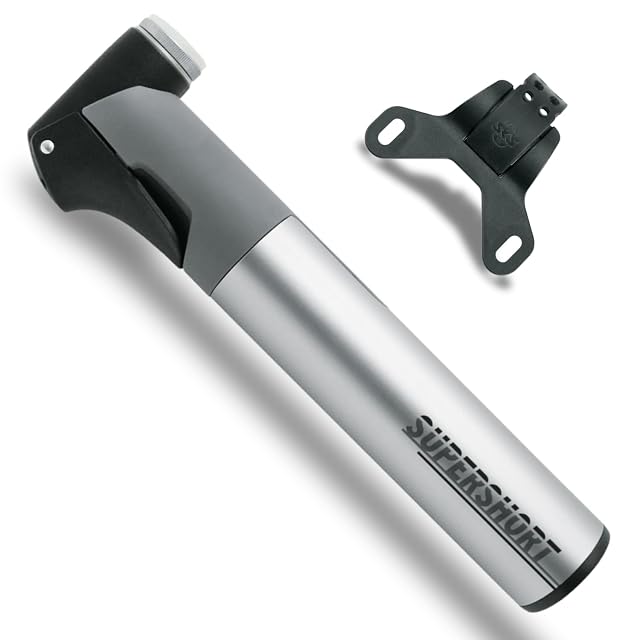
1. SKS SUPERSHORT. Sixteen point four centimeters, a reversible head covering AV, SV and DV, and a removable tube that becomes a T-handle. Unlimited attempts, three valve types including the Dunlop valve that a great many European city bikes still use, and a T-handle that is what makes a pump this short actually usable — without one you are pushing on a stub with two fingers. Made in Germany, which on a product with moving seals is a parts-availability argument.
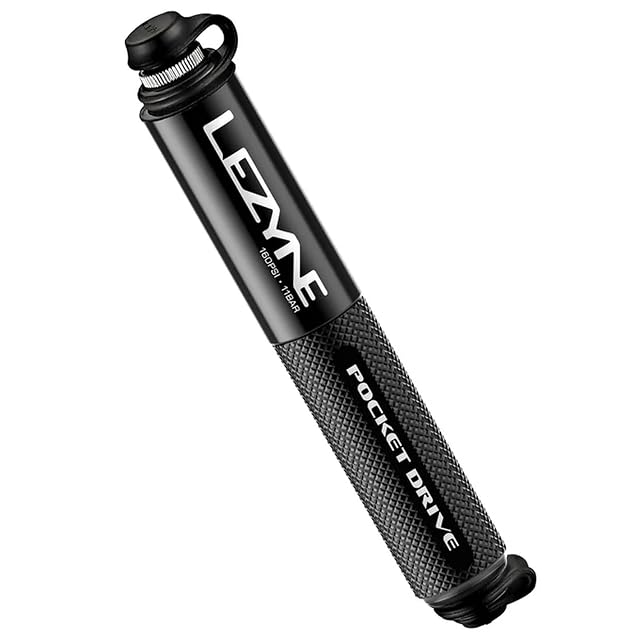
2. LEZYNE Pocket Drive. One hundred and forty millimeters and a stated eleven bar, from a maker that does accessories exclusively. It is the smallest pump here and it genuinely fits a jersey pocket, which means it comes with you on rides where you would leave a saddlebag at home. Presta and Schrader only — no Dunlop, so check your valves first.
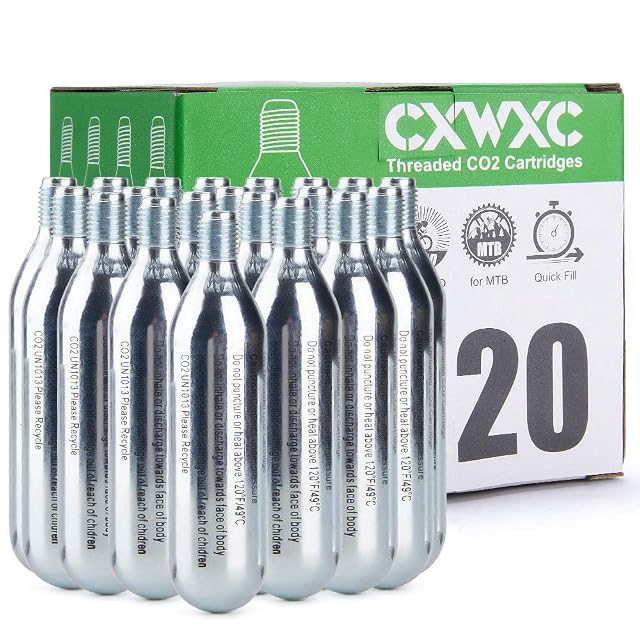
3. CXWXC 20 × 16 g with 2-in-1 head. Twenty cartridges and a head covering Presta and Schrader, for about what a five-cartridge kit costs. CO2 refills a tire in seconds with no effort, which matters in the cold and matters when your hands are wet. It is third because every cartridge is one attempt and you cannot make more at the roadside — but if you have decided CO2 is how you fix punctures, buying twenty ends the reordering.
What to check before you buy
Your valve type, and whether your frame has a pump peg. And carry a spare tube whichever you choose: neither of these fixes a hole.
Which one fits how you ride?
You want reliability above all
A mini pump never runs out, and that is its whole argument.
You want speed
A CO2 inflator is far faster, and each cartridge is one attempt with no second chance.
You ride tubeless
CO2 can affect some sealants, so it is worth checking what your sealant maker says.
You ride far from help
Carry a pump even if you also carry CO2, because a pump can always be used again.
Picking by how you ride
Roadside puncture repair
The whole point. What matters is getting home, not achieving perfect pressure.
Racing and fast group rides
Where CO2 wins because time matters and a second attempt is unlikely to be needed.
Long tours
Where a pump is the only sensible answer, because cartridges run out and shops do not.
Seating a tubeless tire
Where a big burst of air helps, and where a mini pump often will not manage it at all.
What really separates these
Valve compatibility
Presta, Schrader or both. A pump that does not fit your valves is a pump that does nothing, and adapters get lost.
How it attaches
A screw-on head or a short hose is far kinder to a valve than pushing a pump onto it, which is how valves get bent and broken.
Effort against pressure
A small pump reaching high pressure takes many strokes. High-volume pumps move more air per stroke and reach lower pressures, which suits wider tires.
Cartridge size and count
A CO2 cartridge is one attempt. Carrying two, and knowing how much a cartridge fills your tire size, is the practical part.
Whether you have practiced
A CO2 inflator is unforgiving of a first attempt at the roadside in the rain. Trying it once at home is worth more than any specification.
Which figure for which ride
Your priority
The tool
The catch
Reliability
A mini pump
Slow and hard work
Speed
CO2
One attempt per cartridge
Long tours
A pump
None
Tubeless seating
CO2 or a tubeless pump
Check your sealant advice
Where riders go wrong
Never having used the CO2 inflator
The first attempt should not be at the roadside in the rain. One practice at home teaches you everything the instructions do not.
Breaking the valve with a push-on pump
Levering on a valve stem is how valves snap. A screw-on head or a short flexible hose prevents it entirely.
Carrying one cartridge
One cartridge is one attempt. A pinched tube on fitting means walking home, and a second cartridge weighs almost nothing.
Expecting a mini pump to reach full pressure
Most will not, especially on narrow high-pressure tires. Enough to ride home carefully is the realistic goal.
By the kind of rider you are
The commuter
A mini pump, which will never run out and never needs replacing after use.
The racer
CO2 for speed, carrying two cartridges, having practiced at home.
The tourer
A pump, without question, because reliability beats speed when there is no shop for fifty kilometers.
Servicing and how long it holds up
Mini pumps seize when their seals dry out or grit gets in, and they live in a pocket or a bag full of grit. CO2 inflators are simpler but their seals also perish, and a cartridge stored with the head attached slowly empties.
Never store a CO2 inflator with a cartridge screwed in; it can discharge.
Keep the pump head clean; grit destroys the seal that grips the valve.
Check the pump works occasionally rather than discovering it seized at the roadside.
Replace perished seals where the pump allows it.
Safety
CO2 is cold enough to injure and cartridges are pressurized.
A discharging CO2 cartridge becomes extremely cold; use the sleeve and do not hold the metal.
Never puncture or heat a cartridge, and dispose of used ones properly.
Do not exceed the tire's maximum pressure, which is marked on the sidewall.
Check the tire is seated correctly before fully inflating, especially with CO2.
How many tires does a 16 g (0.6 oz) cartridge inflate?
One. A 16 g (0.6 oz) cartridge is sized for a single road tire and a wide mountain bike tire may take more than one. Carry as many as the number of punctures you are willing to survive.
Can I take CO2 cartridges on a plane?
They are pressure vessels and are commonly prohibited in both hold and cabin baggage. Rules differ by airline and by country — check the specific airline rather than assuming, and plan on buying them at the destination.
Why does a mini pump take so long?
Because a small barrel moves a small volume per stroke, and every stroke gets harder as pressure rises. A mini pump is a way home rather than a way to full pressure: reach a pressure you can safely ride on and top up properly later.
Mini pump or CO2?
A pump is slower and never runs out; CO2 is fast and gives you one attempt per cartridge. Many riders carry both for exactly that reason.
How many cartridges should I carry?
At least two. One is a single attempt, and a tube pinched during fitting turns that into a walk home.
Can I use CO2 with tubeless sealant?
Some sealant makers advise against it because CO2 can affect the sealant. Check what yours says rather than assuming.
Why did my valve break?
Usually levering on the stem with a push-on pump head. A screw-on head or a short flexible hose prevents it entirely.
Will a mini pump reach my normal pressure?
Often not, especially on narrow high-pressure tires. Enough pressure to ride home carefully is the realistic goal.
Should I practice first?
With CO2, definitely. The roadside in the rain is a poor place to read instructions for the first time.
Spares and fitting kit from the same aisle, at the price we read. Confirm they match the bike and the part you chose before ordering: it turns on the standard and the part number, which the listing gives.
Bell 1001999 · Inner tubes — 26" × 1.75-2.25 · Schrader 35 mm (1.38 in) · mold-cured · $7.99
Everything listed is drawn from the catalog of this site. Specifications are the published ones, from the maker and from Amazon; prices are what Keepa recorded on the date shown, and both move. The order rests on declared specifications, on stated strengths against stated limits, and on price. None of this kit has been ridden by us, and the page makes no such claim.
Last checked on
Prices quoted in these summaries are dated readings. The live price is shown next to each product.
The tool we use ourselves
Chosen your tool? Now buy it at the right price.
Bike racks, trainers and computers swing by thirty dollars or more across the year, and
the biggest "discounts" often land at prices the same model sold for six weeks earlier.
UniverTrack tracks the real price history across retailers, spots fake
reductions, and alerts you when it is genuinely the moment to buy.
Real price historyBuy-now alertsAI buying assistant