The best speed and cadence sensor for a head unit you already own
A sensor is a five-year purchase attached to a two-year head unit. The specification that decides whether it survives the change is not accuracy — they are all magnet-free and all accurate enough — it is which protocols it broadcasts on.
Dual protocol because it decides compatibility with the computer you have not bought yet. An IP rating because a sensor lives at hub or crank height, which is where road spray goes. And the mount because a sensor that comes loose stops reporting without saying so.
The order, and why
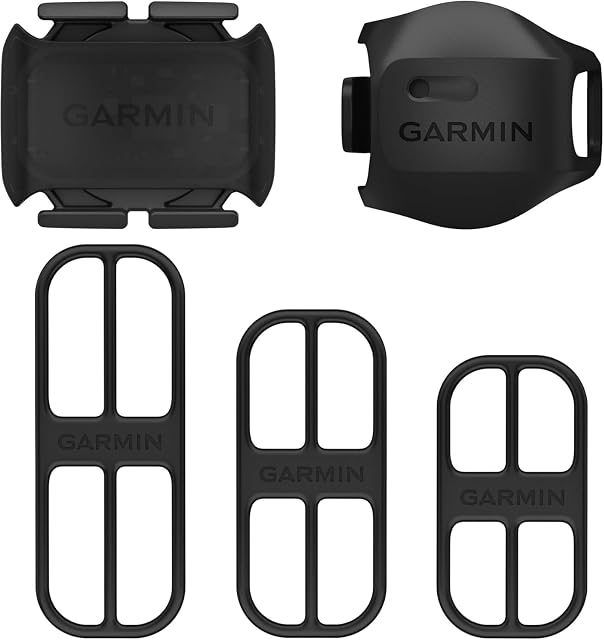
1. Garmin Speed Sensor 2 and Cadence Sensor 2 bundle. Both sensors, ANT+ and Bluetooth 5.0, and one capability nothing else here has: the speed sensor records on board. A commute logged with no head unit on the bars at all, then synced afterwards, is genuinely useful and it is not a feature its competitors offer. The speed sensor mounts on the hub, so there is nothing hanging off a spoke.
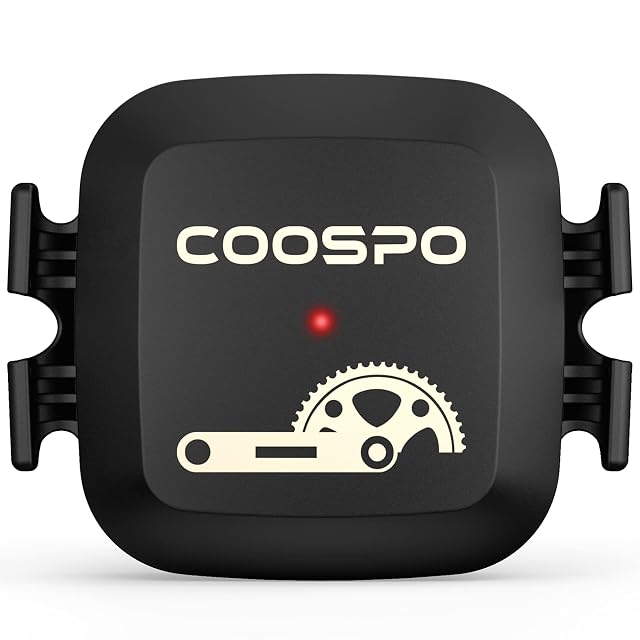
2. CooSpo BK467. Speed and cadence, ANT+ and Bluetooth, and an IP67 rating — the only stated ingress figure in this list. IP67 means dust-tight and survives immersion, which is more than a bike sensor should ever need and exactly what it will get in a February downpour.
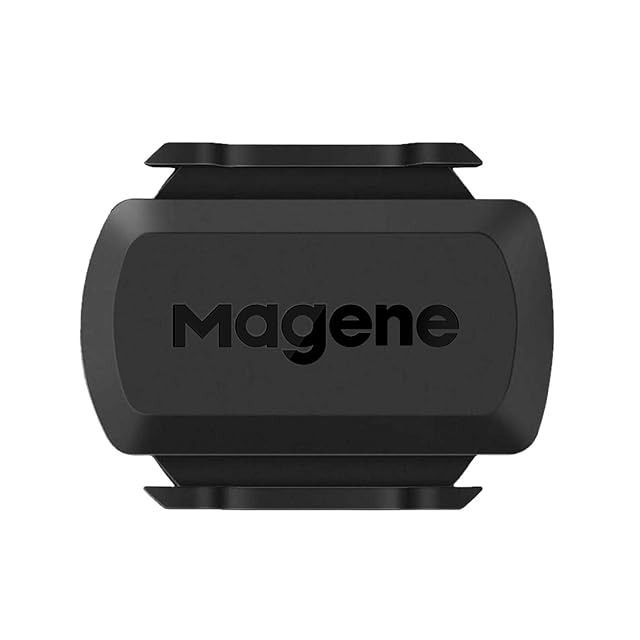
3. Magene S3+. Dual mode, ANT+ and Bluetooth 4.0, magnet-free, at the lowest price here and the best-selling sensor on this site. Two of them cover speed and cadence for less than one conventional pair. Magene also publishes the fact that two versions of the S3+ circulate with different battery compartments — unusually honest, and worth knowing before you buy a second one a year later.
What to check on your own bike
Crank clearance for a cadence sensor: it sits on the inside face of the crank arm and has to clear the chainstay through a full rotation. Measure with the crank at its closest point, not at the bottom of the stroke.
Which one fits how you ride?
You train indoors
A speed or cadence sensor lets a basic setup talk to training software without a smart trainer.
You ride under trees or in cities
A speed sensor gives distance where GPS drops out, which is exactly where GPS is worst.
You want to work on pedalling
Cadence is the useful number, and it is the one GPS cannot infer.
You have a modern GPS computer
It already estimates speed and distance, so a sensor is an accuracy and indoor-use question.
Picking by how you ride
Indoor training
Where a sensor is what lets a normal bike and a dumb trainer feed data into an app.
Accurate distance
Where GPS is unreliable: forests, cities, tunnels. A wheel sensor measures rather than estimates.
Cadence work
The number that changes how people ride, and one that only a sensor provides.
Multiple bikes
Where a sensor per bike and a single head unit is a common and cheap arrangement.
What really separates these
Wireless protocol
Sensors speak particular protocols and your head unit or app must speak the same. Dual-protocol sensors avoid the question entirely.
Magnet or magnetless
Magnetless sensors mount on the hub or crank with nothing to align. Magnet types are cheaper and need the magnet kept in position.
Mounting and clearance
A crank-mounted cadence sensor must clear the chainstay. Checking before buying prevents a sensor that fouls the frame.
Battery type and life
Coin cells that last a long time, and a battery compartment that stays sealed. A sensor that stops mid-ride is usually a battery.
Whether you need speed at all
If you have GPS and ride mostly on open roads, cadence alone may be all you actually gain.
Which figure for which ride
Your need
The sensor
Why
Indoor training
Speed and cadence
The app needs data
Riding under cover
Speed
GPS drops out
Pedalling technique
Cadence
GPS cannot infer it
Open road with GPS
Possibly neither
GPS is adequate
Where riders go wrong
Buying the wrong protocol
A sensor your head unit cannot hear is useless. Dual-protocol sensors remove the risk entirely and cost little more.
Not setting wheel circumference
A speed sensor needs the correct wheel size to convert rotations to distance. An incorrect value makes every ride wrong.
Mounting a cadence sensor without checking clearance
Crank-mounted sensors can foul the chainstay. Checking the gap before fitting saves an awkward discovery.
Blaming the sensor for dropouts
Intermittent data is usually a low battery or a loose mount rather than a failed sensor.
By the kind of rider you are
The indoor trainer
A speed and cadence pair, dual-protocol, on the bike that lives on the trainer.
The forest rider
A speed sensor, because GPS distance under tree cover is unreliable.
The rider improving technique
Cadence alone, which is the number that actually changes how you pedal.
Servicing and how long it holds up
These sensors are sealed and simple, and almost every fault is the battery or the mount. A sensor that drops out intermittently has a low coin cell or a rubber strap that has stretched, and neither is a failure of the sensor itself.
Replace the coin cell when data becomes intermittent, before it stops entirely.
Check the rubber mounting straps; they perish and stretch.
Reseat the battery cover carefully; a poor seal lets water in.
Keep a spare cell, since they always fail at the least convenient time.
Safety
Small components near moving parts.
Make sure a crank-mounted sensor cannot contact the frame at any crank position.
Check that mounting straps cannot work loose into the spokes or chain.
Do not adjust a sensor while riding.
Dispose of coin cells properly and keep them away from children.
Speed/cadence · Bluetooth and ANT+ · IP67 · app compatible
A dual-protocol speed and cadence sensor with a published IP67 rating and stated compatibility with Zwift, Rouvy, Ride with GPS, Peloton and Wahoo apps.
Best for: Indoor training, where named app compatibility and a sealed housing both earn their place.
Dual mode speed/cadence · ANT+ and Bluetooth 4.0 · magnet-free
The best-selling sensor in this hub: one unit that switches between speed and cadence mode by reseating the battery, broadcasting on both ANT+ and Bluetooth.
Best for: A first sensor, or a pair of them, at the price of a set of brake pads.
What is the difference between ANT+ and Bluetooth here?
ANT+ is the protocol most dedicated bike computers expect and it lets several devices listen to one sensor at once. Bluetooth is what phones and watches use, and a Bluetooth connection is usually exclusive to one device. A sensor broadcasting both works with either, which is why every sensor in this list does.
Do magnet-free sensors need calibrating?
They need a wheel circumference to convert rotations into speed, and most head units either ask for it or take it from the GPS over the first few rides. Cadence needs nothing. There is no magnet to align, which is the failure that used to end most sensor installations.
Can one sensor do both speed and cadence?
Not at the same time. The Magene S3+ switches between the two modes, so a pair covers both roles — which is what makes buying two of them cheaper than buying a dedicated pair.
Do I need a speed sensor if I have GPS?
On open roads, usually not. Under tree cover, in cities and indoors, a wheel sensor measures where GPS only estimates or fails.
What does a cadence sensor tell me?
Your pedalling rate, which GPS cannot infer. It is the number most likely to change how you actually ride.
Will it work with my computer or app?
Only if they speak the same wireless protocol. Dual-protocol sensors work with almost everything and cost little more.
Why is my distance wrong?
Almost always the wheel circumference setting. A speed sensor converts rotations into distance and needs the right number to do it.
My sensor keeps dropping out. Why?
Usually a low battery or a loose mount rather than a fault. Replace the coin cell and check the strap before assuming the worst.
Magnet or magnetless?
Magnetless sensors are simpler to fit and have nothing to align. Magnet types are cheaper and work fine when the magnet stays put.
Spares and fitting kit from the same aisle, at the price we read. Confirm they match the bike and the part you chose before ordering: it turns on the standard and the part number, which the listing gives.
Everything listed is drawn from the catalog of this site. Specifications are the published ones, from the maker and from Amazon; prices are what Keepa recorded on the date shown, and both move. The order rests on declared specifications, on stated strengths against stated limits, and on price. None of this kit has been ridden by us, and the page makes no such claim.
Last checked on
Prices quoted in these summaries are dated readings. The live price is shown next to each product.
The tool we use ourselves
Chosen your tool? Now buy it at the right price.
Bike racks, trainers and computers swing by thirty dollars or more across the year, and
the biggest "discounts" often land at prices the same model sold for six weeks earlier.
UniverTrack tracks the real price history across retailers, spots fake
reductions, and alerts you when it is genuinely the moment to buy.
Real price historyBuy-now alertsAI buying assistant