Skip to content

The best bike locks for 2026

Three formats dominate, and each trades security against how it carries: a folding lock stows compactly on the frame and wraps around awkward stands, a D-lock resists leverage best for its weight but only reaches what fits inside its shackle, and a chain covers the most anchor points while being the heaviest to carry. We compare format, the length or shackle clearance the manufacturer states, key against combination cylinders, whether a frame bracket is supplied, and whether an independent scheme — ART, ADFC — has assessed the lock, which is the only claim on a lock you can check. Not one manufacturer in this hub publishes a weight, which is a real gap: weight is the honest measure of how much steel a lock carries.

The models we recommend

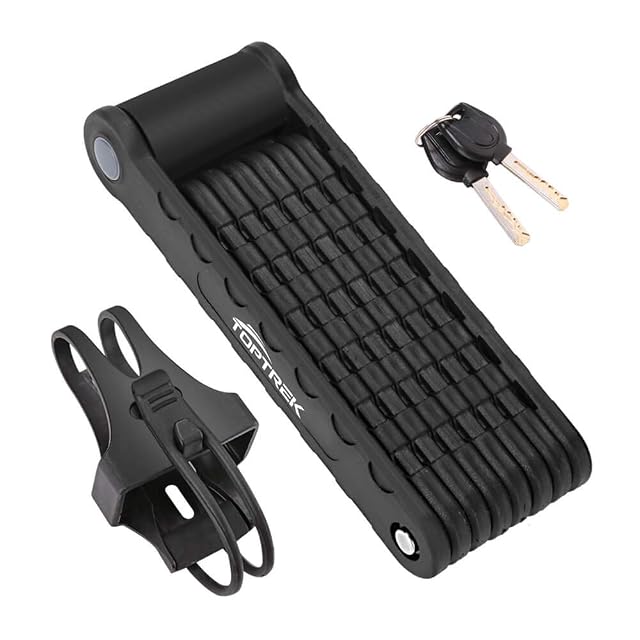
  1. Toptrek Folding lock, 94 cm (37 in)

    94 cm (37 in) folded lock · 5 mm (0.20 in) links · bracket included

    The longest folding lock at the entry price here, at 94 cm (37 in), with 5 mm (0.20 in) alloy links and eight rotating joints and a frame bracket included.

    Best for: Riders who need reach around thick stands more than maximum resistance, at the lowest price in the hub.

    7.5/10

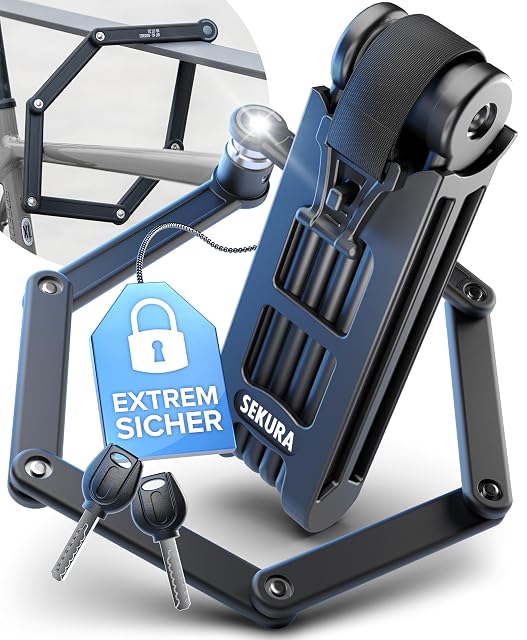
  2. Büchel Sekura folding lock, 85 cm (33.5 in)

    85 cm (33.5 in) hardened steel · 3 keys · bracket included

    A hardened steel folding lock at 85 cm (33.5 in) from a long-established German bicycle parts maker, supplied with three keys and a frame bracket, and the best-selling lock in this hub.

    Best for: Everyday city parking where a serious deterrent matters more than a certified grading.

    7.5/10

    ≈ $86

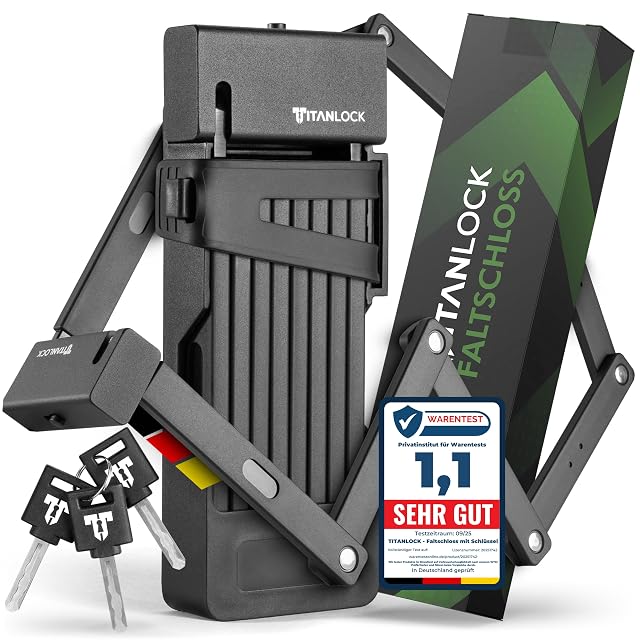
  3. TITANLOCK ART-certified folding lock, 100 cm (39.4 in)

    100 cm (39.4 in) folding · ART certification stated · anti-scratch

    A 100 cm (39.4 in) folding lock whose manufacturer states ART certification, with a protected cylinder intended to resist drilling and an anti-scratch coating on the links.

    Best for: City riders whose insurer names a certification scheme, or who park a valuable bike in the same place regularly.

    7.5/10

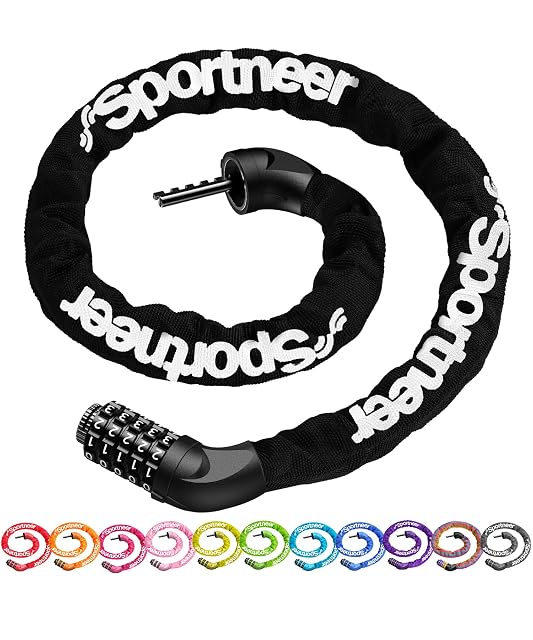
  4. Sportneer 43205-21875

    6 mm (0.24 in) manganese links · 5-digit combination · 3.2 to 4 ft · fabric cover

    A combination chain lock in 6 mm manganese steel with a five-digit cylinder, a fabric cover and a dustproof cap.

    Best for: A café stop or a daylight rack, or locking two bikes together

For which need, in bike locks

Locking to a distant fixed point

Length decides what you can go around. A lock that is too short forces you to secure the frame only, or nothing at all.

TITANLOCK No4

A lock you actually carry

A heavy lock stays at home. Compact format is what guarantees it is there at the moment it is needed.

Büchel 60503853

Weighing what you agree to carry

A two-kilo lock protects better and stays at home every other ride. The stated weight decides real protection, which is the protection of the lock you actually take.

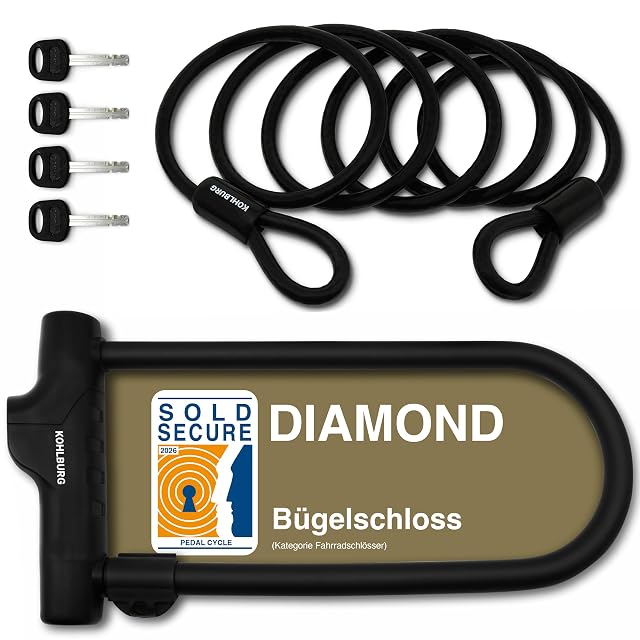
KOHLBURG KB-BS-003

For whom, within bike locks

Long city parking
That is the most exposed situation. A good-grade D-lock, plus a second point of attachment, is the realistic minimum.
Short stop
A light lock is enough for a few minutes in sight. The risk is not the same as a whole day parked.
Valuable bike
No lock is unbreakable: it buys time. Two locks of different technologies force an attacker to bring two tools.

What each advantage costs, on bike locks

Resistance against weight
Resistance comes from the mass of steel, without exception. A lock that is both light and very resistant does not exist.
Chain against D-lock
A chain reaches varied anchor points and is heavy; a D-lock is more resistant for the same volume and needs an anchor close by.
One lock against two
Two locks of different types force two tools and two attacks. That is more effective than a single expensive lock.

Before buying bike locks

How do I lock a bike properly?

The frame and at least one wheel to a fixed, anchored point. Locking only a wheel is what lets the bike leave without it.

Is a light lock enough?

For a short stop in sight, yes. Resistance comes from the mass of steel: a lock that is both light and very resistant does not exist.

Do I need two locks?

Two different technologies force two distinct tools. That is often more effective than a single very expensive lock.

Where should the lock sit while locked?

As high as possible and not resting on the ground: a lock lying on the ground is levered apart far more easily.

Do the stated security levels mean anything?

Independent ratings give an order of magnitude of resistance time. Manufacturers' own scales are not comparable between brands.

Should I insure my bike?

Many policies require a lock of a stated grade and proof it was secured to a fixed point. Read the conditions before, not after.

Should I have my bike marked?

A registered marking allows a recovered bike to be returned and deters resale. In France it is compulsory on new bikes at the point of sale.

How do I maintain a lock?

A drop of dry lubricant in the barrel once a year. A seized barrel in winter is a common problem.

What to remember about bike locks

Lock the frame and at least one wheel to a fixed anchored point, the lock as high as possible and never resting on the ground — resting on the ground allows leverage. Resistance comes from the mass of steel, and two different locks beat one very expensive one.

A quick look at bike locks

  • Length: 85 to 100 cm (39.4 in), on 4 of the 6 models.

Bike locks, side by side

There is no table here, and the reason is in the listings. The figure published most often across these 6 products is cylinder, given by 4 of them — short of the four in five a column needs to compare rather than to display gaps. Each product page says what its own maker published.

Also worth reading on bike locks

Sources and how we rank

Specifications: manufacturer sheets for bike gear and the matching Amazon product pages. Prices and availability: Keepa.

Most recent revision in this category: October 6, 2026.

How we assess bike locks