Skip to content

The best roof and boot-mounted bike racks for 2026

A roof carrier is only half a purchase: it clamps to crossbars you may not already own, and on a car with open roof rails a pair of bars often costs more than the carrier itself, while a boot-mounted strap carrier needs no bars at all but rests its load on the tailgate and obscures the number plate and lights unless a board is added. We compare bar compatibility, the load each manufacturer rates per bike, how many points touch the frame, and whether locks are included or sold separately.

The models we recommend

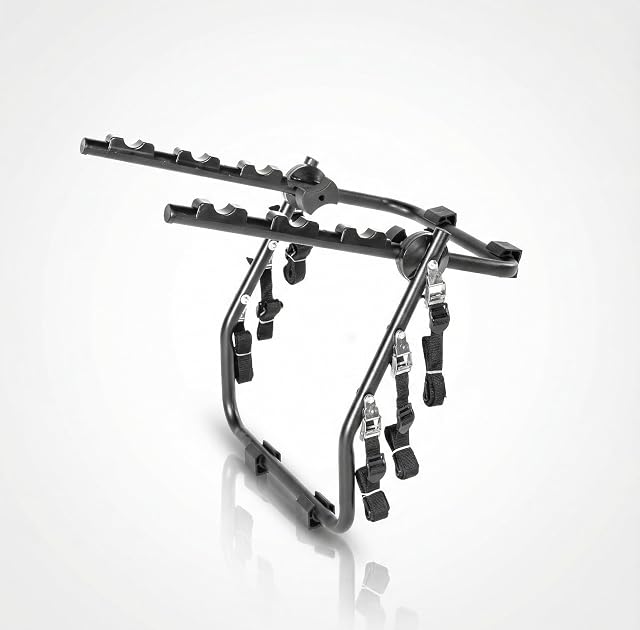
  1. VDP Travel boot rack, 3 bikes

    3 bikes · 45 kg (99.2 lb) max · tailgate mount · no towbar needed

    A tailgate-mounted rack for up to three bikes to a stated 45 kg (99.2 lb), needing no towbar and fitting without tools, with rubber buffers and rubberized hooks.

    Best for: Occasional transport on a car with no towbar, where cost matters more than convenience.
    7.5/10

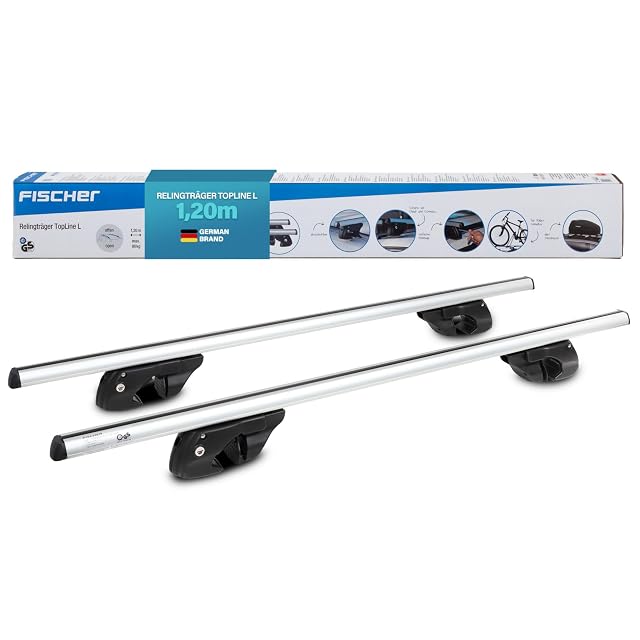
  2. Fischer TopLine L roof bars for open rails

    Aluminum crossbars · 90 kg (198.4 lb) capacity · open rails · 20 mm (0.79 in) channel

    Not a bike carrier but the aluminum crossbars a roof carrier needs, rated at 90 kg (198.4 lb), for open roof rails, with a 20 mm (0.79 in) channel that accepts a range of accessories.

    Best for: Cars with open roof rails, as the foundation before any roof carrier is chosen.

    8.1/10

    ≈ $185

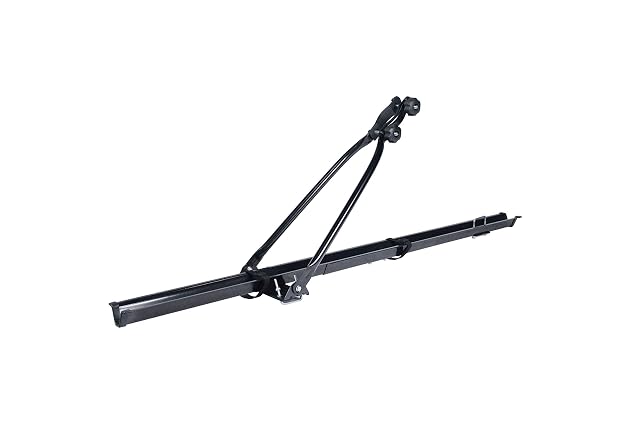
  3. CAM Biker roof carrier, 1 bike

    Roof mount · fits bars to 48 mm (1.89 in) · two hand knobs · 1 bike

    A simple single-bike roof carrier that clamps to crossbars up to 48 mm (1.89 in) across, fitted with two hand knobs and stated to suit all bike models.

    Best for: Adding a bike to a roof rack you already own, for the price of a set of tires.

    7.5/10

    ≈ $110

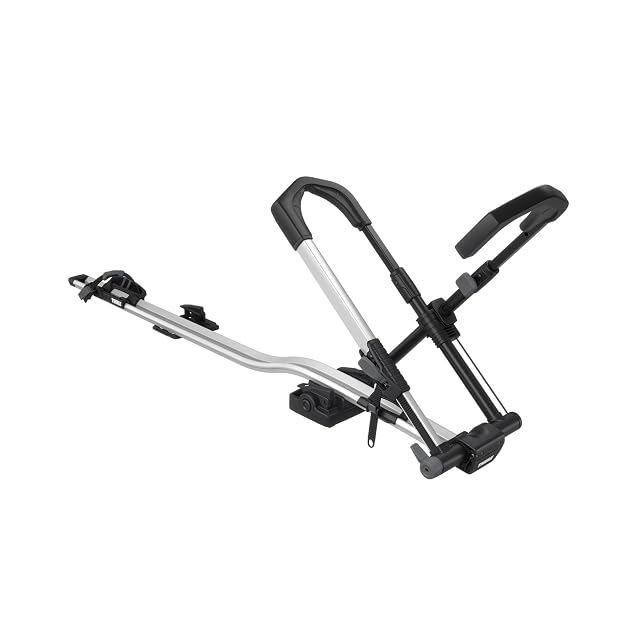
  4. Thule UpRide roof carrier, frame-free

    Roof mount · no frame contact · carbon-safe · rear wheel strap

    A roof carrier that holds the bike by the front wheel with no contact on the frame at all, which is why Thule states it as suitable for carbon frames.

    Best for: Carbon-framed road and gravel bikes, where a frame clamp is the thing you are trying to avoid.

    8.7/10

    ≈ $520

For which need, in roof and boot bike racks

Carrying several bikes

On a boot-mounted rack, the number of bikes decides the load applied to bodywork that was not designed for it.

VDP K39_401

A solution without a towbar

A roof or boot rack allows a bike to be carried on a vehicle with no towbar, which is the starting constraint.

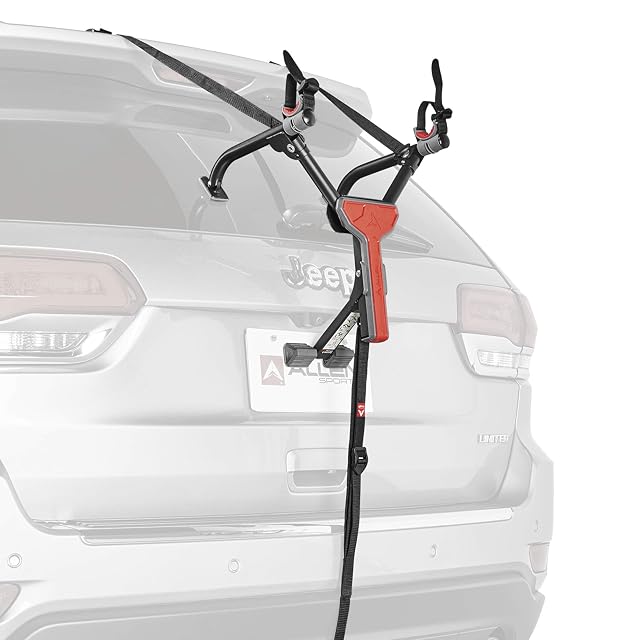
Allen MT1-B

Staying under the roof's rated load

Bars, carrier and bikes add up, and the permitted roof load is lower than people expect. The stated empty weight comes off that limit before the bikes are counted.

Thule 599001

For whom, within roof and boot bike racks

Vehicle without a towbar
That is the situation these formats exist for. Roof and boot are the only options when there is no towball.
A single bike
A roof rack for one bike stays light and can be handled alone. With several bikes, the lifting becomes a real issue.
Heavy bikes
Lifting an e-bike onto a roof is difficult and risky. These formats suit heavy bikes poorly.

What each advantage costs, on roof and boot bike racks

Roof against consumption and height
A roof rack frees the boot and adds a great deal to fuel consumption and to the height of the vehicle. Forgetting it in an underground car park is a classic accident.
Boot against load on the bodywork
A boot rack costs little and rests on bodywork not designed for it. The fitting and the contact points have to be respected exactly.
Ease of loading against safety
The roof calls for a lift at arm's length; the boot loads at chest height and covers the plate and lights more easily.

Before buying roof and boot bike racks

How tall is the vehicle with a bike on the roof?

Reckon on several tens of centimeters more. Underground car parks and height barriers are the most frequent accident with this format.

Does a boot rack damage the bodywork?

The contact points and the fitting direction are stated precisely. Approximate fitting marks the paint, and can deform the tailgate.

Do I need specific roof bars?

The rack has to suit the section and type of bars. The permitted roof load is set by the vehicle manufacturer.

Can the lights be covered?

Never: if the load hides lights or plate, a repeated light board and plate are required. That is a legal obligation.

Does the front wheel come off?

Some roof mounts hold by the fork and require the front wheel to be removed. Others hold the wheel in place.

Does it change the handling?

Crosswind is markedly noticeable, especially on the roof. Speed has to be adapted.

Can the rack be left on permanently?

It costs fuel, whistles and wears. Most owners take it off when not in use.

Does a roof rack change fuel consumption?

A bike on the roof adds significant aerodynamic drag, and consumption rises markedly on a motorway. Taking the bars off out of season is what recovers the difference.

What to remember about roof and boot bike racks

A bike on the roof adds several tens of centimeters: the underground car park is the most frequent accident with this format. On a tailgate the contact points are precisely prescribed — approximate fitting deforms the panel — and covering lights or plate makes a repeat board compulsory.

A quick look at roof and boot bike racks

    Roof and boot bike racks, side by side

    There is no table here, and the reason is in the listings. The figure published most often across these 5 products is capacity, given by 3 of them — short of the four in five a column needs to compare rather than to display gaps. Each product page says what its own maker published.

    Also worth reading on roof and boot bike racks

    Sources and how we rank

    Specifications: manufacturer sheets for bike gear and the matching Amazon product pages. Prices and availability: Keepa.

    Most recent revision in this category: August 30, 2026.

    How we assess roof and boot bike racks