Skip to content

The best bike lights for 2026

Two figures get printed on the same box and they are not measuring the same thing: lumens count the total light a unit emits, while lux describes how much of it lands where the road actually is — which is why a shaped 40 lux beam can be more useful than an unshaped light claiming several hundred lumens. We compare both figures as the manufacturer states them, whether the maker declares StVZO approval for use in Germany, runtime in each mode, and replaceable batteries against built-in USB-rechargeable cells.

The models we recommend

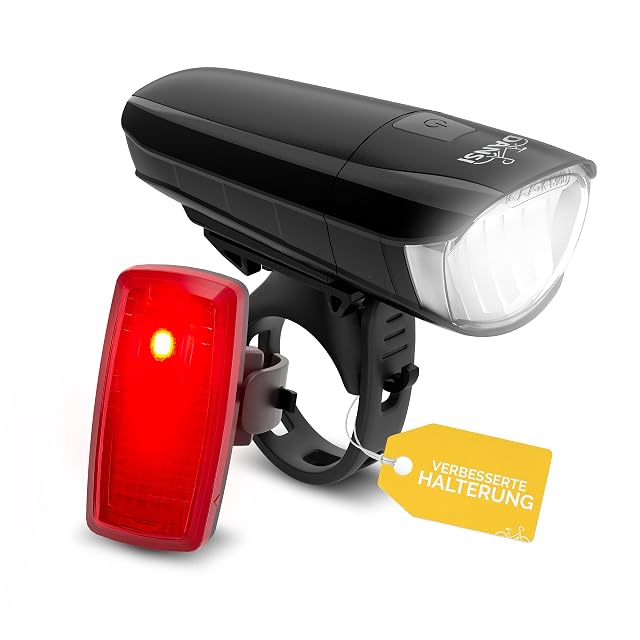
  1. DANSI Battery light set, 30/15 lux

    30/15 lux · StVZO stated · battery · 6 h front, 15 h rear

    The cheapest StVZO-declared light set in this hub, running on replaceable batteries with a two-level 30/15 lux beam and a battery-level indicator.

    Best for: Riders who want approved lighting on a bike they use occasionally, and who would rather carry spare cells than remember to charge.
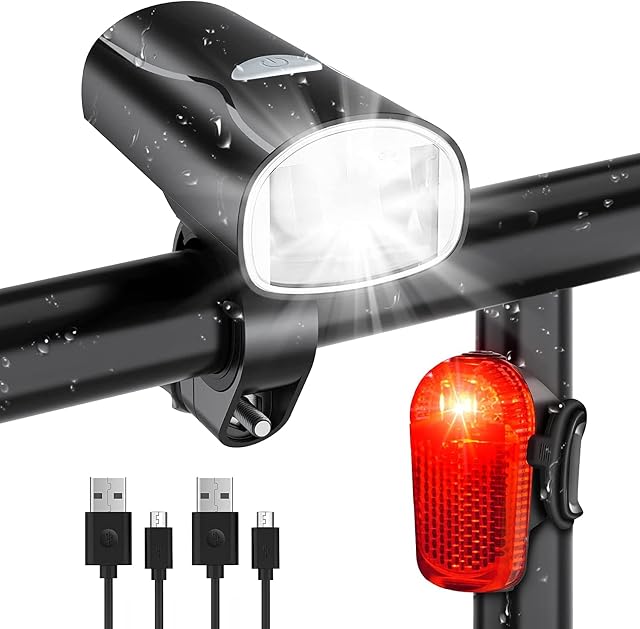
    6.9/10

  2. Antimi USB-C light set, IPX5

    IPX5 · StVZO stated · USB-C · 220° rear spread · 40 g (1.4 oz)

    The best-selling light set in this hub, with a published IPX5 rating, USB-C charging and a rear lamp the maker specifies at a 220° spread.

    Best for: Urban riders who want side visibility at junctions and one cable for everything they own.

    8.1/10

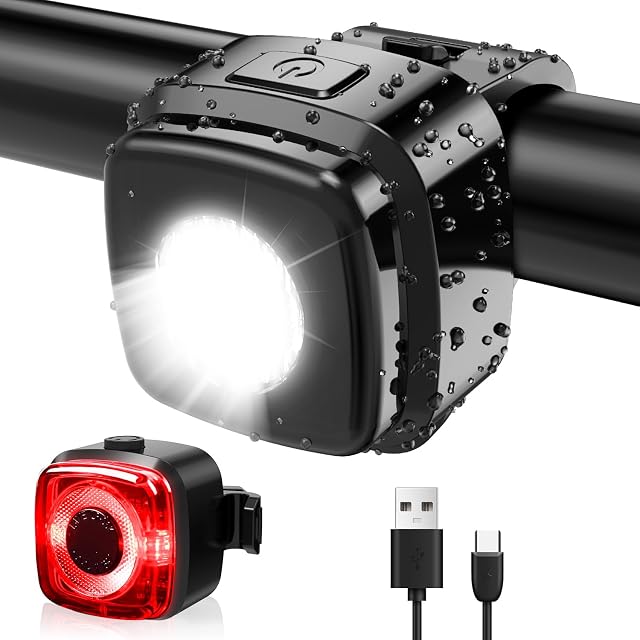
  3. Realky USB light set, 30 lux

    30 lux · StVZO stated · USB rechargeable · 6 h front

    A USB-rechargeable StVZO-declared set at close to the cheapest price here, with a 30 lux front lamp and an ABS and PMMA housing the maker describes as waterproof.

    Best for: Commuters who charge at a desk and want approved lighting without a battery habit.

    8.1/10

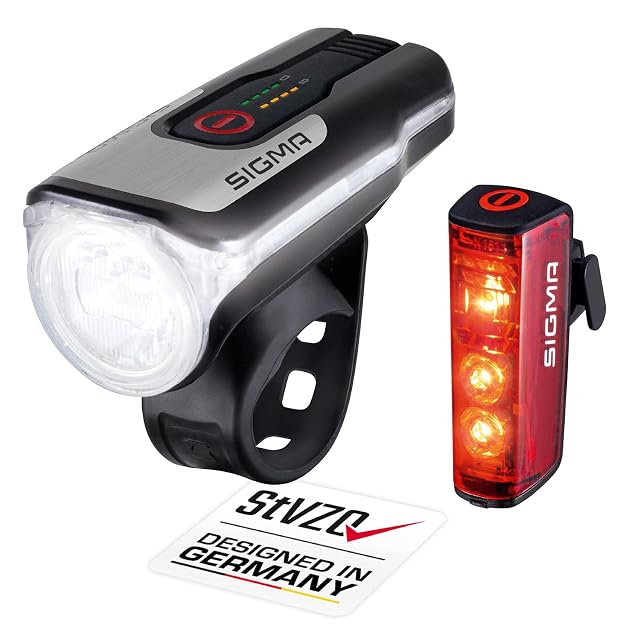
  4. SIGMA Aura 80 and BLAZE light set

    80 lux front · StVZO stated · established German brand

    The brightest approved front lamp in this hub at 80 lux, from a long-established German cycling instrument maker, paired with the BLAZE rear lamp.

    Best for: Riders on unlit roads and lanes who need an approved beam that actually lights the road, not just marks their presence.

    8.1/10

    ≈ $81

For which need, in bike lights

Lighting the road

On an unlit road you have to see the ground in front of you, not merely be seen. Light output is what separates the two uses.

SIGMA 17860

Lasting a long night ride

Stated run time corresponds to the lowest mode. At full output it falls sharply.

DANSI 44001

Being seen in town

In a lit built-up area the point is to be visible, not to light the way. A modest lamp is enough and rarely needs charging.

Realky HW-DCD01-01_V1

For whom, within bike lights

Urban journeys
Being seen from a distance and from the sides matters more than output. Side visibility is the point most often overlooked.
Unlit road
You have to genuinely light the ground, which takes output and a beam designed for the road. A be-seen lamp does not do it.
Off-road at night
A wide beam and comfortable run time are necessary. Lighting becomes safety equipment, not an accessory.

What each advantage costs, on bike lights

Output against dazzle
A powerful beam badly aimed dazzles other road users. A cut-off beam lights the road without dazzling, which a round beam does not.
Stated run time against the mode used
The durations correspond to the lowest mode. At full output, real run time can be several times shorter.
Built-in battery against cells
The battery avoids cells and has to be recharged; cells can be replaced anywhere and go flat without warning.

Before buying bike lights

How much output do I need?

In a lit city, being seen is enough. On a black road you have to genuinely light the ground, which takes markedly more.

Is the stated run time realistic?

It corresponds to the lowest mode. At full output, expect a fraction of the figure shown.

Should the rear light flash?

Flashing draws the eye and makes distance hard to judge. Many people run a steady light and a flashing one together.

Is lighting compulsory?

A front light and a rear light are compulsory at night and in poor visibility, along with reflectors. The precise rules are in the highway code.

How do I set the beam height?

It has to light the ground in front of you without rising into other road users' eyes. A badly aimed beam dazzles without lighting any better.

Does side visibility matter?

A great deal: most conflicts in town come from the sides. Lights with side windows and wheel reflectors answer that.

Does cold reduce run time?

Markedly, as with any battery. In winter, expect appreciably less than stated.

Does the lamp need to be waterproof?

The ingress protection rating is stated. In sustained rain, an inadequate rating lets water in and corrodes the contacts.

What to remember about bike lights

Being seen and lighting the way are two different uses: a be-seen lamp does not show you the road. Stated run time applies to the lowest mode, cold reduces it further — and a badly aimed beam dazzles without lighting any better.

A quick look at bike lights

  • Highest figure for output: SIGMA 17860 (80 lux front).

Bike lights in one table

To appear here, a characteristic has to be stated by four items in five. Short of that, the column would mostly say nobody publishes.

ModelPriceOutputRuntime
SIGMA 17860$8180 lux front—
Antimi06——2.2 to 6 hours depending on mode
DANSI 44001—30 lux bright, 15 lux economyApproximately 6 hours front, 15 hours rear
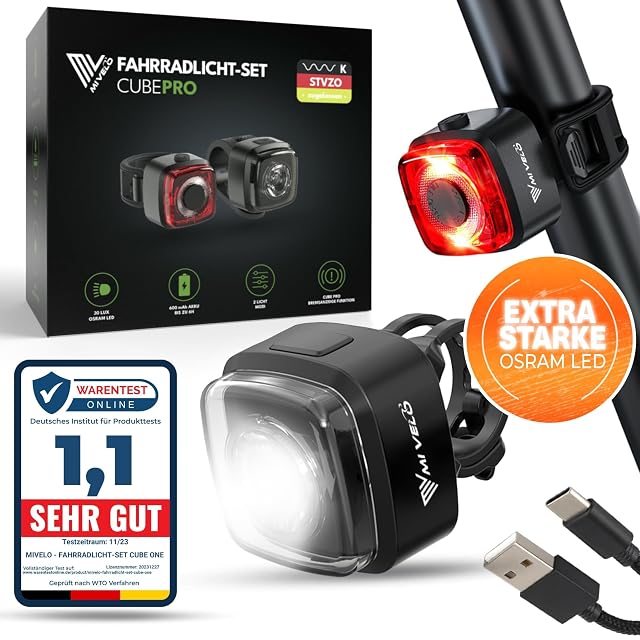
MIVELO Cube PRO—30 lux and 15 luxUp to 6 hours, USB charging
Realky HW-DCD01-01_V1—30 lux frontUp to 6 hours front

Also worth reading on bike lights

Sources and how we rank

Specifications: manufacturer sheets for bike gear and the matching Amazon product pages. Prices and availability: Keepa. Every figure in this table names its source.

Most recent revision in this category: August 30, 2026.

How we assess bike lights

Prices quoted in these summaries are dated readings. The live price is shown next to each product.