The only cage here that publishes its bolt spacing
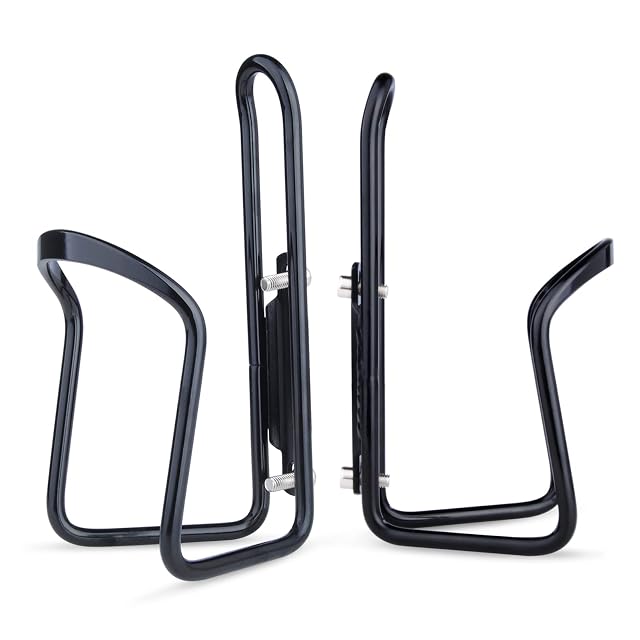
FiveBox Alloy cages, pair, 56–71 mm (2.20 to 2.80 in) bolt spacing
A pair of aluminum bottle cages for bottles 68.9 to 76.2 mm (2.71 to 3 in) in diameter, with a 56 to 71 mm (2.20 to 2.80 in) mounting bolt range.
What you are getting
Two aluminum alloy bottle cages, with two screws, flexible arms, and a published bolt spacing of 56 to 71 mm. Takes bottles 68.9 to 76.2 mm across. $9.99 the pair.
It is the only cage on this shelf that publishes the bolt spacing
“It’s 56 mm (2.20 in)–71 mm (2.80 in) range for the mounting screw distance, don’t worry, it is standard size, fit different brands of bikes.”
That is the mounting figure, and no other cage in this survey — nor any of the three already published here — gives it. The standard spacing between bottle bosses on a bicycle frame is 64 mm (2.52 in), and a cage with a 56 to 71 mm (2.20 to 2.80 in) range accepts frames drilled either side of it.
Why that matters: a cage with fixed holes on a frame whose bosses are a millimeter or two off will not take both bolts without force, and forcing one strips a boss out of a carbon or thin alloy frame. A range means the slots do the accommodating.
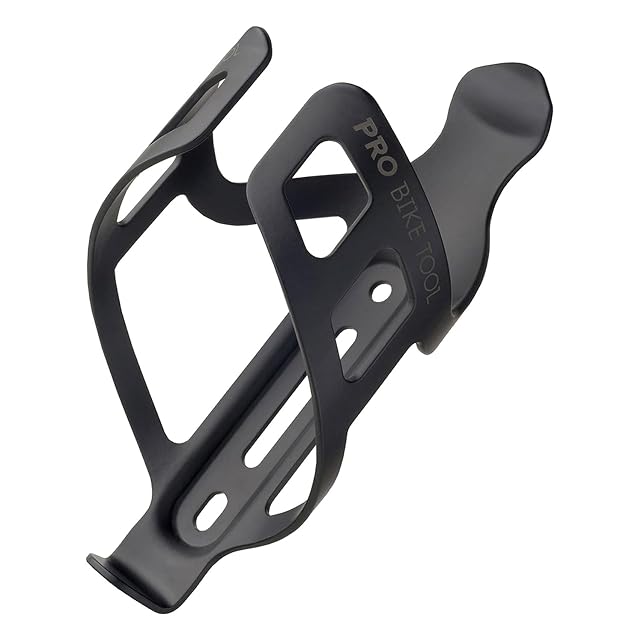
The PRO BIKE TOOL cage on this page approaches the same problem differently, with “oval mounting holes for frame adjustment” — the same idea, no figure.
And it publishes the bottle diameter in millimeters
“Min bottle diameter is 2.75 inch (68.9 mm), max bottle diameter is 3 inch (76.2 mm)”, and the listing is explicit that this rather than the volume is what decides: “accurately, it is decided on the bottle diameter”.
That is the right way round. The CNC cage on this page gives volumes (600–800 ml) and the ROCKBROS gives “20–21 ounce”, and a tall 750 ml bottle and a squat one are different diameters at the same volume.
A 7.4 mm (0.29 in) window covers almost every standard cycling bottle and most disposable 500 ml bottles.
Aluminum alloy, and no weight
“Made of aluminum alloy, anti-rust, extra strength and durability combined with low weight.”
Low weight with no figure. The PRO BIKE TOOL alloy cage on this page publishes 48 g (1.7 oz) and the ThinkTop carbon pair about 25 g (0.9 oz) each — so “low” here is unquantified, and alloy cages in this survey land at around 48 g (1.7 oz).
The 4 mm (0.16 in) hex key is not in the box
“Use a 4 mm (0.16 in) hex key (not included) to fasten cages in screw holes on frame.”
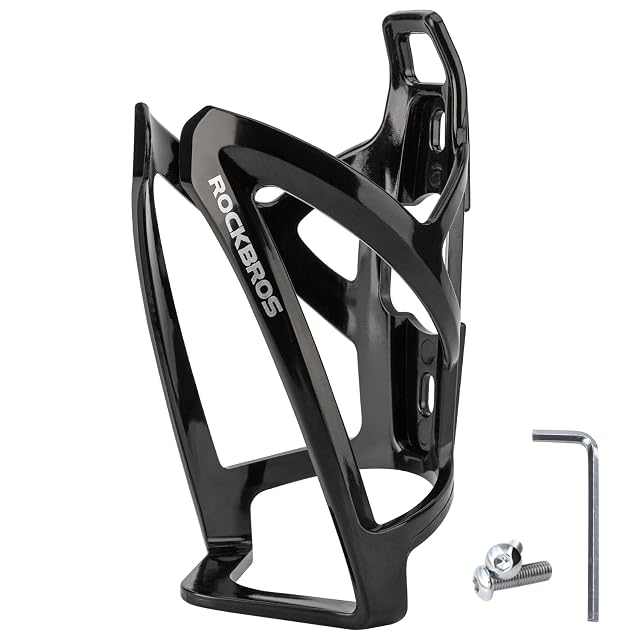
Said plainly, which is better than leaving it out. The ROCKBROS cage on this page includes a 3 mm (0.12 in) Allen wrench with its screws; the two cages differ in bolt head size as well as in what they supply.
Two screws are included — note, two, for two cages. Most frames need two bolts per cage, so a second pair may be wanted; the CNC cage on this page says “2 screws per bottle cage”.
Top-entry, like everything in this group
The introduction to this shelf exists largely for side-entry cages, which release a bottle sideways on a frame too small to lift it clear. None of the five cages in this American survey is side-entry.
So the buying advice applies in full: measure the gap between the bottle boss and the top tube before choosing. On a small frame, a top-entry cage and a 750 ml bottle do not come out.
What is not published
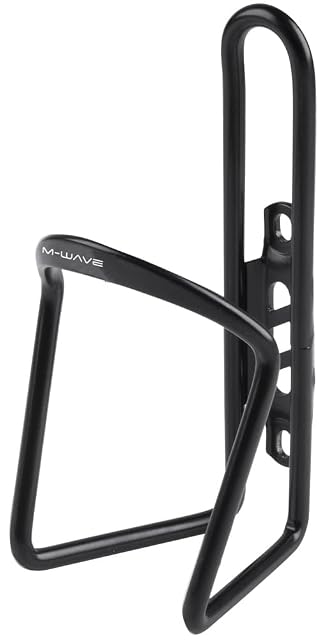
No weight, no cage dimensions, no alloy grade — where the CNC cage on this page names 6061 — and no statement on whether the arms can be bent to tighten the fit, which the listing hints at: “you can collapse to snug up bottle”.
Availability
Read on the day this page was built: $10 at the American Amazon shop.
Read from Keepa on the day this page was last revised; stock and price both move without notice.
Prices quoted in this text were read on 2026-10-06. The live price is at the top of the page.