Skip to content

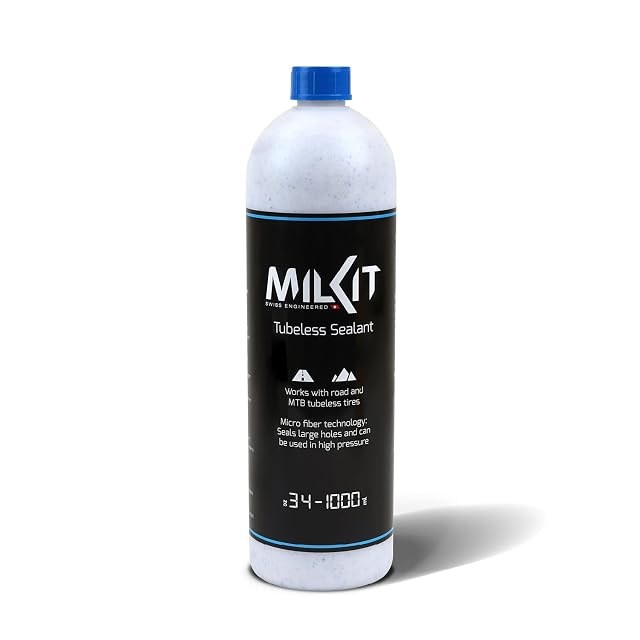
milKit Tubeless sealant, 1000 ml

A liter bottle of sealant stated not to clump into rubber lumps inside the tire, non-allergenic, and specified from -20 °C (-4 °F).

milKit tubeless sealant one liter bottle

milKit Tubeless sealant, 1000 ml

A liter bottle of sealant stated not to clump into rubber lumps inside the tire, non-allergenic, and specified from -20 °C (-4 °F).

Volume
1000 ml
Behavior
Does not clump into rubber lumps
Allergens
Non-allergenic
Temperature
Works from −20 °C (-4 °F)
Amazon reference
B07YJM5JPC (identical on 6 markets)
EAN
7640174460342
  • Non-clumping, which is the single most annoying failure of latex sealants
  • Non-allergenic, which matters for anyone sensitive to natural latex
  • A liter is a large commitment for one bike

Best for: Winter riding, latex sensitivity, or a household running several tubeless bikes.

≈ $47
Check price on Amazon
Specifications

Volume
1000 ml
Behavior
Does not clump into rubber lumps
Allergens
Non-allergenic
Temperature
Works from −20 °C (-4 °F)
Amazon reference
B07YJM5JPC (identical on 6 markets)
EAN
7640174460342

milKit’s sealant is specified around two problems the standard latex formulas have.

What the manufacturer publishes

Tubeless sealant that does not clump into rubber lumps inside the tire. Repair of cracks and holes, described with a quality and puncture protection claim. Environmentally friendly and safe, non-allergenic and completely free of allergens. Functioning from −20 °C (-4 °F), temperature and pressure resistant, for mountain bike, gravel and road use.

The clumping problem

Standard latex sealant dries into solid rubber lumps. Anyone who has taken a tubeless tire off after a year knows them: they roll around inside, add weight, and have to be peeled out before new sealant goes in. A non-clumping formula removes an entire maintenance chore.

The latex question

Natural latex sealants are a genuine problem for people with a latex allergy — not in normal use, but when handling a tire during a repair. A stated non-allergenic formula matters for those riders specifically.

The −20 °C (-4 °F) figure

Sealants thicken and eventually stop flowing as temperature drops, which means a winter puncture may not seal. Almost no manufacturer publishes a low-temperature limit. This one does.

The liter

More than one bike needs. For a household with several tubeless bikes, or a rider topping up three or four wheels twice a year, it is the cheaper way per milliliter.

The questions riders ask

What does non-clumping actually change?

Latex sealants dry into rubber lumps that roll around inside the tire and have to be scraped out at every refit. A non-clumping formula dries without leaving them, so topping up is genuinely just topping up.

Does sealant work in the cold?

Formulations differ, and most manufacturers do not publish a figure. milKit states its sealant functions from −20 °C (-4 °F), which is a specific claim for winter riding.

All tubeless sealant and valves