An e-bike is 22 to 28 kg (48.5 to 61.7 lb), which is more than double a road bike. That single figure disqualifies a large part of this category, and the awkward part is that most stands do not publish a load rating at all — including the best-selling one. This list is ordered on that.
A published load rating, the height range, and whether the base stays put when you lean on a stuck bolt.
The order, and why
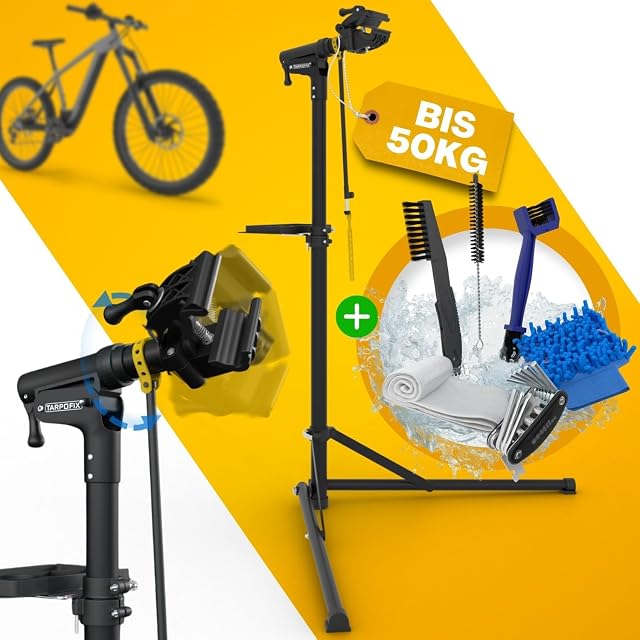
1. Tarpofix e-bike repair stand. Fifty kilos published, 98 to 155 cm, powder-coated steel, 8 kg, one-hand operation. It is first because it is the only stand in this hub that states a figure covering an e-bike with a comfortable margin, and because 8 kg of stand is what stops a 25 kg bike moving the base. Powder-coated steel rather than aluminum is heavier to carry and better at standing still.
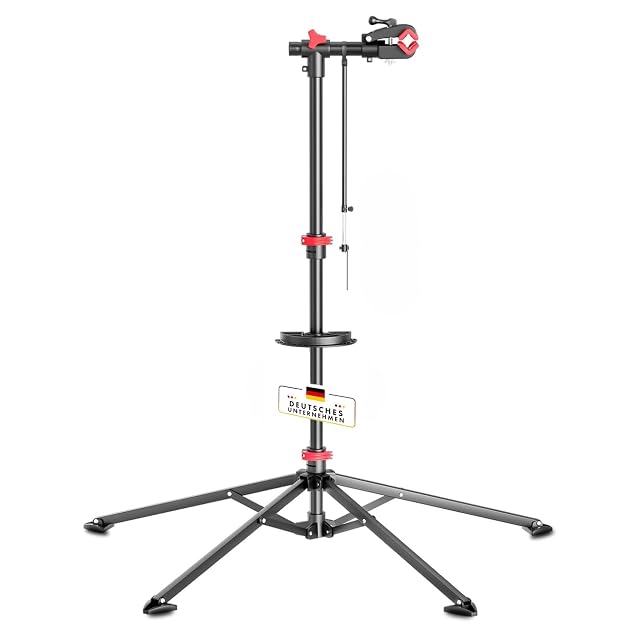
2. Floordirekt Lois. Thirty kilos published, height to 113.5 cm and above, a 360° clamp, a tool tray and folding, at the entry price. Thirty kilos covers a light e-bike and every ordinary bike, and it is stated rather than implied. The tool tray is worth more than it sounds: the alternative is a floor, and a floor loses small parts.
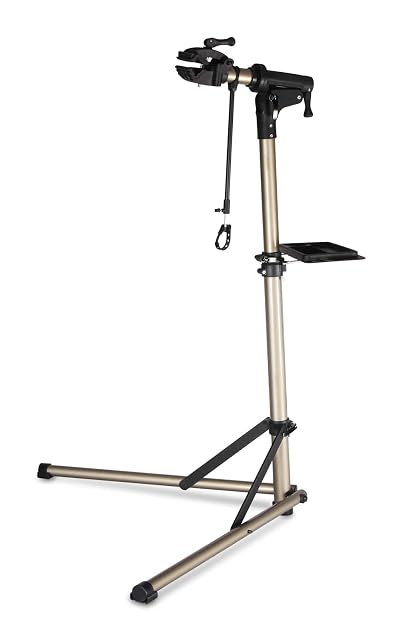
3. CXWXC CXR10. The best-selling stand on this site, in aluminum alloy, 100 to 160 cm — the tallest range here — with a 360° clamp, folding. Aluminum is lighter to move and does not rust in a damp garage, and CXWXC states suitability for e-bikes. It is third because it states that suitability without publishing a number, and on this specific question the number is the question.
What to check before you buy
Weigh your bike, or take the manufacturer’s figure and add what is on it. Then check your seatpost has enough exposed length above the frame for a clamp — a bike set low for a short rider often does not.
Which one fits how you ride?
You work on an e-bike
Weight capacity is the specification that matters, and e-bikes are far heavier than the stands most people own.
Your bike has a carbon frame
Never clamp a carbon frame tube; clamp the seatpost, or use a stand that holds the bottom bracket and fork.
You have limited space
A folding stand, though the heavier the bike the more a fixed stand earns its place.
You lift the bike alone
How you get the bike into the stand is the part that hurts, and a low-clamping design helps considerably.
Picking by how you ride
Routine maintenance
Gear adjustment, cleaning, brake bleeding. Almost all of it is far easier with the wheels off the ground.
E-bike work
Where the weight of the bike is the constraint on the stand rather than the work being different.
Wheel and drivetrain work
Where being able to spin the wheels freely is the whole point.
Storage
Where a stand is not the right tool; wall hooks and racks are.
What really separates these
Weight capacity
Stated capacity must exceed your bike's actual weight with battery fitted. E-bikes exceed many stands' limits, which is the point of this guide.
Base stability
A heavy bike high in the air is a tipping hazard. A wide, heavy base matters more with an e-bike than with anything else.
Clamp type and what it grips
A tube clamp is convenient and unsuitable for carbon frame tubes. Bottom-bracket-and-fork stands avoid the question entirely.
Clamp height and getting the bike in
Lifting a heavy bike shoulder-high alone is the practical problem. A stand that clamps low and then raises solves it.
Whether it folds
Folding suits a shared space; fixed is steadier. With a heavy bike the extra stability is worth more than it seems.
Which figure for which ride
Your bike
The stand
The caution
E-bike
High weight capacity, heavy base
Remove the battery first
Carbon frame
Seatpost or BB-and-fork mount
Never clamp a frame tube
Alloy road bike
Any stand
Little
Shared space
Folding stand
Less stable under weight
Where riders go wrong
Clamping a carbon frame tube
Carbon crushes. Clamp an alloy seatpost instead, or use a stand that supports the bottom bracket and fork.
Leaving the battery in
Removing the battery takes weight off the bike and out of the equation, and it protects an expensive component from a fall.
Exceeding the stand's capacity
A stand rated for a road bike will not hold a cargo or e-bike safely. The capacity is a limit, not a suggestion.
Clamping a dropper post
Clamping a dropper seatpost damages it. Clamp somewhere else or use a different stand type.
By the kind of rider you are
The e-bike owner
A high-capacity stand with a heavy base, and the habit of removing the battery first.
The carbon road rider
A bottom-bracket-and-fork stand, or an alloy seatpost clamped gently.
The occasional tinkerer
A folding stand within capacity, accepting that a heavy bike wants something steadier.
Servicing and how long it holds up
Stands fail at their clamps and their height mechanism. Clamp jaws harden and crack over years, and a quick-release height collar that slips under load is a fault to fix before it drops a bike.
Replace worn clamp jaws; hardened rubber grips poorly and marks frames.
Check the height collar holds under load before trusting it with a heavy bike.
Tighten the base fixings periodically.
Store a folding stand dry; the joints seize with rust.
Safety
A heavy bike held above the ground.
Remove the battery from an e-bike before lifting it into a stand.
Stay within the stand's stated weight capacity.
Make sure the base is on level ground and cannot be knocked.
Never clamp a carbon frame tube or a dropper post.
50 kg (110.2 lb) · 98–155 cm (38.6 to 61 in) · powder-coated steel · 8 kg (17.6 lb) · one-hand operation
The e-bike stand of this hub: 50 kg (110.2 lb) rated, adjustable from 98 to 155 cm (38.6 to 61 in) in powder-coated steel, weighing 8 kg (17.6 lb) and folding.
Best for: E-bikes and heavy touring bikes, where 30 kg (66.1 lb) ratings are not enough.
Aluminum alloy · 100–160 cm (39.4 to 63 in) · 360° clamp · folding
The best-selling stand here: an aluminum alloy repair stand adjustable from 100 to 160 cm (39.4 to 63 in) with a 360° rotating clamp, described as light and folding.
Best for: A well-made general-purpose stand for a garage, from the model most people successfully use.
On the seatpost, below the minimum insertion mark, whenever the post is long enough. Clamping a frame tube puts a point load on it, and carbon frames and thin-walled aluminum tubes carry manufacturer prohibitions against exactly that. Follow the figures and warnings from your own frame's maker.
Can I clamp a carbon seatpost?
Many carbon post manufacturers say no. The usual workaround is a cheap aluminum seatpost kept for workshop use, or a stand that supports the bike by the bottom bracket and a wheel instead. Read what your own post's maker states.
How high should a repair stand go?
High enough that the part you are working on is at chest height rather than hip height, which for most people means a bike at around 110 to 140 cm (43.3 to 55.1 in). That is a stand range, not a stand maximum — you want the bike comfortable, not the stand extended to its limit.
Will a normal repair stand hold an e-bike?
Often not. E-bikes are considerably heavier than the bikes many stands are rated for, and the capacity is a limit rather than a suggestion.
Can I clamp a carbon frame?
No. Carbon crushes under a clamp. Clamp an alloy seatpost instead, or use a stand that supports the bottom bracket and fork.
Should I remove the battery?
Yes. It takes significant weight off, makes the bike easier to lift and protects an expensive component if anything slips.
How do I get a heavy bike into a stand alone?
Choose a stand that clamps low and then raises, or one that supports the bottom bracket. Lifting a heavy bike shoulder-high alone is the real problem.
Can I clamp a dropper post?
No, it damages the post. Use a different clamping point or a stand type that does not clamp the post at all.
Folding or fixed?
Folding suits a shared space; fixed is steadier. With a heavy e-bike the extra stability of a fixed stand is worth having.
Spares and fitting kit from the same aisle, at the price we read. Confirm they match the bike and the part you chose before ordering: it turns on the standard and the part number, which the listing gives.
Dr. Wack 2863 · Chain lubricants — 100 ml · special polymers · high creep and adhesion
Everything listed is drawn from the catalog of this site. Specifications are the published ones, from the maker and from Amazon; prices are what Keepa recorded on the date shown, and both move. The order rests on declared specifications, on stated strengths against stated limits, and on price. None of this kit has been ridden by us, and the page makes no such claim.
Last checked on
Prices quoted in these summaries are dated readings. The live price is shown next to each product.
The tool we use ourselves
Chosen your tool? Now buy it at the right price.
Bike racks, trainers and computers swing by thirty dollars or more across the year, and
the biggest "discounts" often land at prices the same model sold for six weeks earlier.
UniverTrack tracks the real price history across retailers, spots fake
reductions, and alerts you when it is genuinely the moment to buy.
Real price historyBuy-now alertsAI buying assistant