A frame needs soap. A chain needs solvent, and a brush that reaches between sprockets. Most cleaning kits are a bag of brushes that handle the first job well and the second not at all, so this list is ordered on what each one includes for the drivetrain.
Whether the drivetrain is covered, whether the brushes reach into narrow gaps, and whether the kit stays together in a shed.
The order, and why
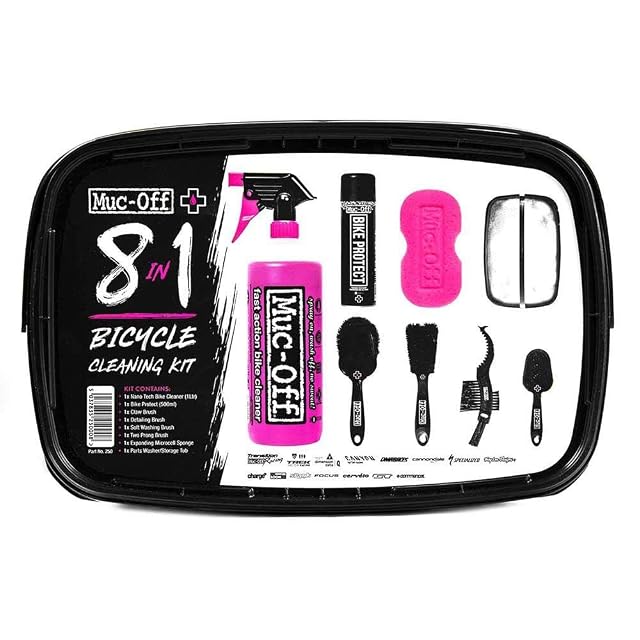
1. Muc-Off 8-in-1 kit. A liter of Nano-Tech cleaner, a set of brushes, Bike Spray, and a sealable bucket. The bucket is the reason it is first: it is the wash bucket, then the storage, and a kit that lives in one container is a kit you still have in a year. The liter of cleaner means the kit works on the day it arrives rather than after a second order. Muc-Off is the expensive answer in every category it appears in, and this is the one where the packaging genuinely earns part of it.
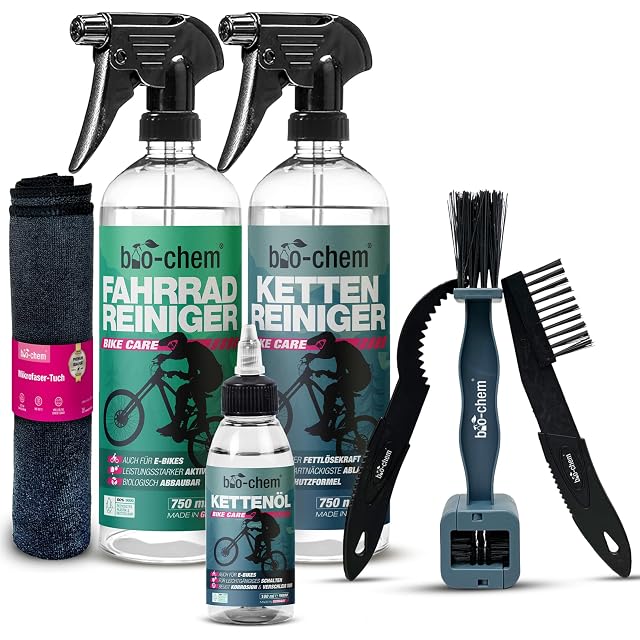
2. bio-chem 7-piece set. Cleaner and a separate drivetrain cleaner plus care products, stated safe on carbon and alloy. Two distinct fluids for two distinct jobs is exactly the structure this question wants, and the carbon and alloy statement matters if your frame or bars are carbon — some aggressive degreasers are not recommended on composite.
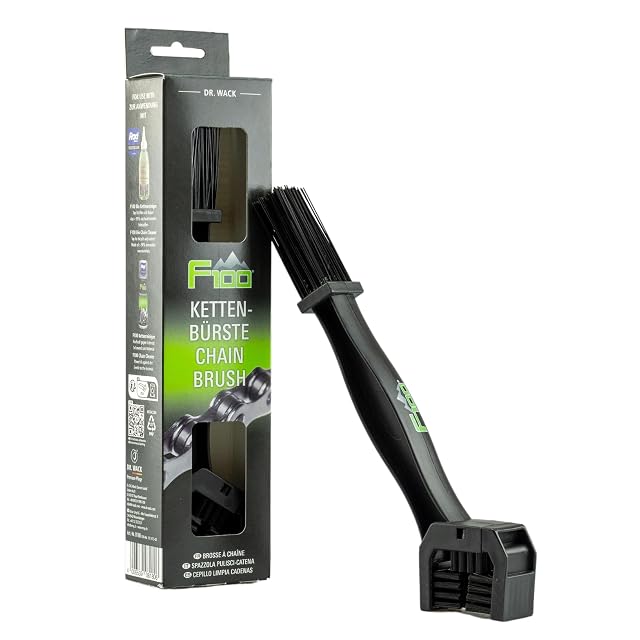
3. Dr. Wack F100 chain brush. A brush with two heads, for chain, chainrings, sprockets and derailleur, and no fluid at all. Two heads matters more than it sounds: one profile for the chain, one for the narrow gaps between sprockets, which a single brush shape cannot reach. It is third because it is one tool rather than a kit — and it is the right first purchase if you already have a degreaser.
What to check before you buy
Whether you already own a degreaser. If you do, buy the brush and save the difference. If you do not, a kit with no fluid in it is not a kit yet.
Which one fits how you ride?
You ride in winter
Cleaning is drivetrain maintenance, and salt and grit are what actually wear a bike out.
You have disc brakes
Keep degreaser and any oily product away from rotors and pads, which contaminate permanently.
You want the simplest routine
Brushes, a bucket, bike-specific soap and a chain-appropriate degreaser cover everything.
You are tempted by a pressure washer
Do not: high-pressure water drives grit past bearing seals, and that is expensive.
Picking by how you ride
Winter maintenance
Where cleaning after salty rides is what makes a drivetrain last, and where it is genuinely worth the time.
Post-ride quick clean
A wipe of the chain and a rag over the frame, which is the routine that actually gets done.
Full drivetrain clean
Occasionally, with degreaser and brushes, followed by relubrication which is the part people skip.
Preparing for service
A clean bike is quicker to work on and easier to inspect for cracks and wear.
What really separates these
Brushes rather than cloths
The awkward shapes are what matter: a cassette brush, a narrow frame brush and something for the chain. Cloths do not reach them.
Bike-specific cleaner
Household detergents can strip lubricants and attack finishes. Bike cleaners are formulated to avoid that, and they cost little more.
Degreaser and where it must not go
Degreaser belongs on the chain and cassette. On rotors and pads it causes contamination that usually means replacement.
A drying and relubrication plan
Cleaning removes lubricant. A clean bike that is not relubricated is worse off than a dirty one that is.
Chain cleaning method
A chain bath tool, a brush, or removing the chain. Each works, and the choice is about how much mess you accept.
Which figure for which ride
The task
The tool
The caution
Frame
Soft brush and bike soap
Avoid household detergent
Chain and cassette
Degreaser and stiff brush
Keep it off the rotors
Rotors
Isopropyl alcohol only
No oily products at all
Drying
A cloth and time
Relubricate afterwards
Where riders go wrong
Using a pressure washer
High-pressure water forces grit and water past bearing seals in hubs, bottom bracket and headset. The damage is not visible and it is expensive.
Getting degreaser on the rotors
Contaminated pads squeal and lose power, and cleaning them rarely works properly. This is the commonest self-inflicted brake problem.
Forgetting to relubricate
Cleaning strips the chain. Riding a clean, dry chain wears it faster than leaving it dirty would have done.
Using household degreasers indiscriminately
Some attack finishes, seals and decals. Bike-specific products exist because the materials on a bike are varied and delicate.
By the kind of rider you are
The winter commuter
Brushes, bike soap, a chain cleaning routine, and lubricant applied every time.
The occasional rider
A rag, a brush and chain lubricant. That covers most of what matters.
The mechanic at home
A proper kit including a chain bath, plus isopropyl alcohol reserved strictly for rotors.
Servicing and how long it holds up
The cleaning kit itself needs looking after: brushes clogged with old grease spread it rather than removing it, and a cloth used on a chain must never touch a rotor. Keeping separate cloths and brushes for drivetrain and for brakes is the single most useful habit here.
Keep drivetrain brushes and cloths strictly separate from anything used near brakes.
Rinse and dry brushes; clogged bristles just move grease around.
Replace a chain-bath tool's brushes when they wear flat.
Store cleaning products away from frost, which ruins some of them.
Safety
Brakes and chemicals.
Never let oil, degreaser or chain lubricant reach disc rotors or pads.
Test the brakes at walking pace after any clean, before riding properly.
Wear gloves with degreasers and read the label; some are harsh on skin.
Dispose of degreaser and chain-cleaning waste responsibly rather than down a drain.
1 L Nano-Tech cleaner · brushes · Bike Spray · sealable bucket
A complete kit with a liter of Nano-Tech bike cleaner, a set of brushes, a protective Bike Spray and a sealable bucket that doubles as the wash bucket.
Best for: Starting from nothing: one purchase and the bike gets properly cleaned that afternoon.
7 pieces · cleaner, drivetrain cleaner and care · carbon and alloy safe
A seven-piece set combining a bike cleaner, a drivetrain-specific cleaner and care products, stated as suitable for carbon, aluminum, painted frames, seals and plastics.
Best for: A carbon or e-bike where knowing what a cleaner will not damage is worth paying for.
On the frame, yes. On the drivetrain, no — car shampoo will not shift chain grease, and the products that will are degreasers rather than soaps. Two products, two jobs.
What has to be kept off disc brakes?
Everything in this list. Degreaser, chain oil and even overspray from an aerosol contaminate pads, and most brake manufacturers state that contaminated pads are replaced rather than cleaned. Take the wheels out before spraying anything near a rotor.
Is a pressure washer safe on a bike?
Most bike manufacturers say no. The pressure drives water past the seals in hubs, bottom bracket and headset, where it stays. A hose at ordinary pressure and a brush is the accepted method.
Can I use a pressure washer?
It is strongly advised against. High-pressure water drives grit and water past bearing seals in the hubs, bottom bracket and headset, and that damage is expensive.
Can I use washing-up liquid?
It works but some household detergents strip lubricants and can attack finishes over time. Bike-specific cleaner costs little more and avoids the question.
What if degreaser gets on my rotors?
Contaminated pads squeal and lose power, and cleaning them often does not fully work. Keep degreaser away from them entirely, and use isopropyl alcohol on rotors only.
How often should I clean my bike?
In winter, after salty or muddy rides; otherwise when the chain looks dirty. Relubricating the chain matters more than a spotless frame.
Do I have to relubricate after cleaning?
Yes. Cleaning strips the chain, and a clean dry chain wears faster than a dirty one. It is the step people skip and the one that matters.
What is the minimum kit?
A brush, a cloth, bike soap and chain lubricant. Everything else makes the job faster rather than possible.
Spares and fitting kit from the same aisle, at the price we read. Confirm they match the bike and the part you chose before ordering: it turns on the standard and the part number, which the listing gives.
BBB BTL-250 · Degreasers and bike cleaners — Plant-based · 100% biodegradable · no microplastics · recycled PET bottle · $55
Everything listed is drawn from the catalog of this site. Specifications are the published ones, from the maker and from Amazon; prices are what Keepa recorded on the date shown, and both move. The order rests on declared specifications, on stated strengths against stated limits, and on price. None of this kit has been ridden by us, and the page makes no such claim.
Last checked on
Prices quoted in these summaries are dated readings. The live price is shown next to each product.
The tool we use ourselves
Chosen your tool? Now buy it at the right price.
Bike racks, trainers and computers swing by thirty dollars or more across the year, and
the biggest "discounts" often land at prices the same model sold for six weeks earlier.
UniverTrack tracks the real price history across retailers, spots fake
reductions, and alerts you when it is genuinely the moment to buy.
Real price historyBuy-now alertsAI buying assistant