Every trainer here will connect to a training app. What separates them is how much stands between switching on and riding: a wheel to remove, a cassette to buy, a Bluetooth chain to hold together, or nothing at all.
The question is not which trainer produces the most resistance. It is how many steps sit between you and a ride on a January evening, because that number is what decides whether the trainer gets used in February.
There are three of them: connecting to the app, fitting the bike, and holding a wireless connection for an hour.
The order, and why
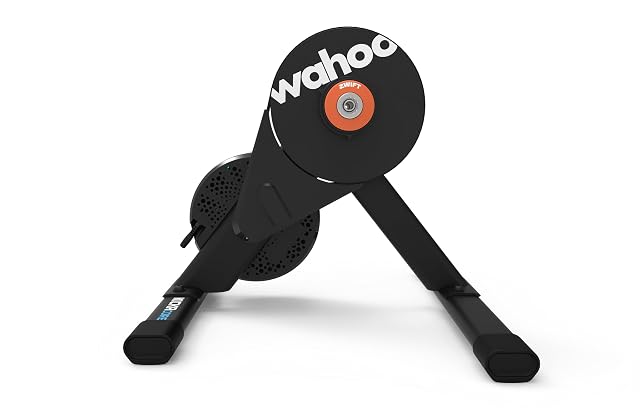
1. Wahoo KICKR CORE 2. Direct drive with built-in WiFi. WiFi rather than Bluetooth matters more than it sounds: the Bluetooth pairing chain between trainer, sensors, phone and computer is where most indoor sessions actually go wrong, and WiFi replaces it with a connection that reconnects by itself. It ships with Zwift Cog and Click, so there is no cassette to buy and no chain whip to learn to use. It is the most expensive answer and the one with the fewest steps.
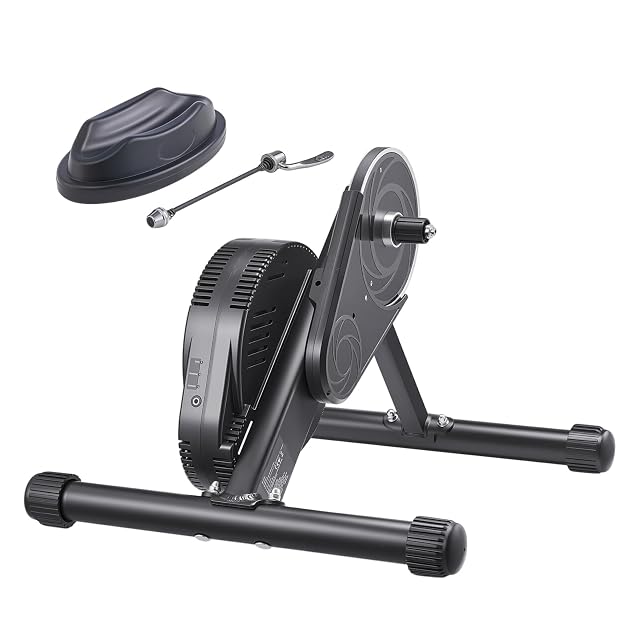
2. VEVOR smart wheel-on. Bluetooth 4.0 and ANT+ with thirteen resistance levels, at a fraction of the price. The rear wheel stays in the bike, which means a tire wearing against a roller and more noise, but it also means the bike comes off the trainer and goes outside in five seconds.
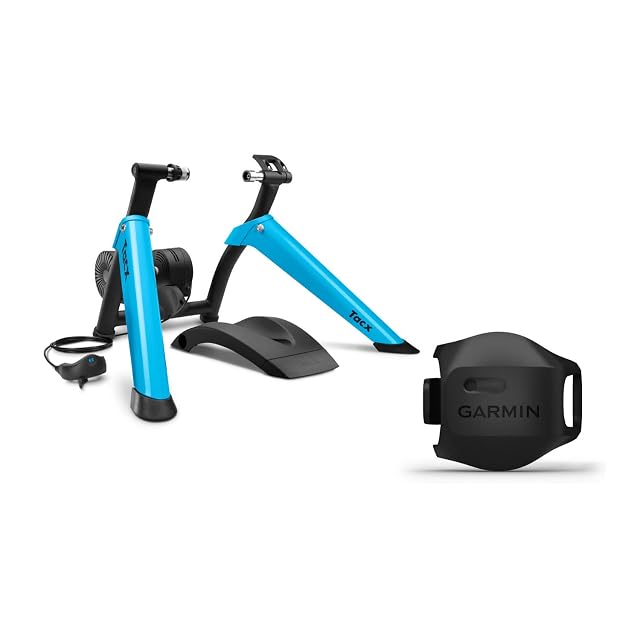
3. Garmin Tacx Boost. Wheel-on and magnetic, supplied with a speed sensor, and stated to need no mains power. That combination is what makes it the answer for a garage with no socket. The resistance is set by hand on the unit rather than by the software, so app terrain does not change what your legs feel.
What to check on your own bike
For the direct-drive unit, your rear axle standard and the drivetrain speed count if you plan to fit your own cassette. For either wheel-on unit, whether your rear wheel uses a quick-release skewer — several wheel-on trainers require one, and a bolted or thru-axle wheel will not fit without an adapter from the trainer’s manufacturer.
Which one fits how you ride?
You want the app to control resistance
A smart trainer is the requirement, and that is the main dividing line in this category.
You have limited space
A wheel-on trainer folds away more easily; a direct-drive one is a semi-permanent fixture.
Noise matters
Direct-drive trainers are considerably quieter, which is decisive in a flat.
You just want to spin
A basic wheel-on trainer costs far less and does that perfectly well.
Picking by how you ride
Structured training
Where a smart trainer changing resistance automatically is the entire point.
Virtual riding
Where gradient simulation makes the experience, and where accuracy matters less than responsiveness.
Winter base miles
Where any trainer works and where boredom is the real limiting factor.
Warming up
Where a simple wheel-on trainer is entirely adequate and far easier to store.
What really separates these
Direct drive or wheel-on
Direct drive removes the rear wheel, is quieter and more accurate, and takes more space. Wheel-on is cheaper, louder, and wears tires.
Whether it is a smart trainer
Only a smart trainer lets the app control resistance. Without it, you change gear manually and the app simply records.
Noise
The specification that decides whether you can train in a flat in the evening. Direct-drive units are considerably quieter.
Compatibility with your bike
Axle standard and cassette compatibility on direct-drive trainers. This is where an otherwise good purchase goes wrong.
Space, floor and ventilation
A trainer needs a mat, a fan and somewhere it can live. Sweat is corrosive and heat is the limiting factor on any indoor session.
Which figure for which ride
Your priority
The trainer
The cost
App-controlled resistance
A smart trainer
Price
Quiet in a flat
Direct drive
Space and price
Storing it away
Wheel-on
Noise and tire wear
Just spinning
Basic wheel-on
No app control
Where riders go wrong
Buying a non-smart trainer for app training
Without smart resistance the app cannot control the workout. It will record you, which is not the same thing.
Ignoring axle and cassette compatibility
Direct-drive trainers need the right axle adapters and a cassette that matches your drivetrain. This is the commonest fitting problem.
Not protecting against sweat
Sweat is highly corrosive to a bike's headset, bolts and frame. A towel and a sweat cover cost almost nothing and prevent real damage.
Training without a fan
Indoors there is no airflow, and heat limits every session. A fan changes indoor training more than any equipment upgrade.
By the kind of rider you are
The structured trainer
A direct-drive smart trainer, a fan, a mat and a dedicated cassette.
The flat dweller
Direct drive for the noise reduction, which is what makes evening training possible.
The occasional spinner
A basic wheel-on trainer, a trainer tire, and no app subscription at all.
Servicing and how long it holds up
Trainers are hard on bikes rather than the other way round. Sweat corrodes everything it lands on, and on a wheel-on trainer the roller wears the tire into a distinctive stripe within weeks.
Wipe the bike down after every session; sweat is corrosive.
Use a dedicated trainer tire on a wheel-on unit, or accept rapid wear.
Check the trainer's cassette for wear like any other.
Keep the unit's cooling vents clear and let it cool between sessions.
Safety
A bike fixed in place with someone working hard on it.
Make sure the trainer is fully clamped and on a level floor before riding.
Use a mat: it protects the floor, catches sweat and reduces noise.
Ventilate the room and use a fan; overheating indoors is the real risk.
Keep children and pets away from the moving flywheel.
Direct drive · built-in WiFi · Zwift Cog and Click included
The only direct-drive trainer in this hub: the rear wheel comes off, built-in WiFi handles pairing and updates, and Zwift Cog and Click are included for virtual shifting.
Best for: Anyone training indoors regularly, especially in a flat where noise decides whether it gets used.
Wheel-on magnetic · no mains power · 67.5 × 65 cm (26.6 × 25.6 in) · sensor included
A wheel-on magnetic trainer from Tacx needing no mains power, with a compact 67.5 × 65 cm (26.6 × 25.6 in) footprint and a Garmin Speed Sensor 2 included in the bundle.
Best for: Riders who want the Tacx build quality and app-visible data without paying direct-drive prices.
No. A wheel-on trainer that broadcasts on Bluetooth or ANT+ works with Zwift, and the VEVOR here does. Direct drive removes the rear wheel from the equation, which means no tire wear, less noise and a more consistent resistance — it is a comfort and durability argument rather than a compatibility one.
What is Zwift Cog and Click?
A single-sprocket arrangement supplied with the Wahoo KICKR CORE 2 that replaces a conventional cassette, with a handlebar controller for shifting virtually. It removes the usual direct-drive cost of buying a cassette and the tools to fit it. It is optimized for Zwift specifically; with other software a conventional cassette is generally the better fit.
Does a wheel-on trainer need mains power?
Not always. The Garmin Tacx Boost in this list is stated to work without mains power, since its resistance is magnetic and set by hand. A trainer whose resistance responds automatically to the software does need power.
Do I need a smart trainer?
If you want the app to control resistance and simulate gradients, yes. A basic trainer lets the app record you while you change gear yourself.
Direct drive or wheel-on?
Direct drive is quieter, more accurate and does not wear tires; wheel-on is cheaper and easier to store. Noise usually decides it in a flat.
Will my bike fit?
On a direct-drive trainer, only with the right axle adapters and a compatible cassette. This is the most common fitting problem, so check first.
How loud is it really?
Direct-drive units are considerably quieter than wheel-on ones, and on any trainer the fan and the drivetrain contribute as much as the unit.
Do I need a fan?
More than almost any other accessory. There is no airflow indoors and heat limits every session, so a fan changes the experience completely.
Why is my rear tire wearing so fast?
Wheel-on trainers wear tires quickly and unevenly. A dedicated trainer tire solves it, or accept replacing the tire regularly.
Spares and fitting kit from the same aisle, at the price we read. Confirm they match the bike and the part you chose before ordering: it turns on the standard and the part number, which the listing gives.
Everything listed is drawn from the catalog of this site. Specifications are the published ones, from the maker and from Amazon; prices are what Keepa recorded on the date shown, and both move. The order rests on declared specifications, on stated strengths against stated limits, and on price. None of this kit has been ridden by us, and the page makes no such claim.
Last checked on
Prices quoted in these summaries are dated readings. The live price is shown next to each product.
The tool we use ourselves
Chosen your tool? Now buy it at the right price.
Bike racks, trainers and computers swing by thirty dollars or more across the year, and
the biggest "discounts" often land at prices the same model sold for six weeks earlier.
UniverTrack tracks the real price history across retailers, spots fake
reductions, and alerts you when it is genuinely the moment to buy.
Real price historyBuy-now alertsAI buying assistant