A helmet light sits thirty centimeters above a rear lamp, which is roughly at driver eye level and above the roofs of parked cars. That height is the entire argument for these three, and they differ in how much light they add and in what the rest of the helmet costs you.
The light, the fit adjustment, and the ventilation — in that order for this question, because a helmet you take off in July is not protecting you in July.
The order, and why
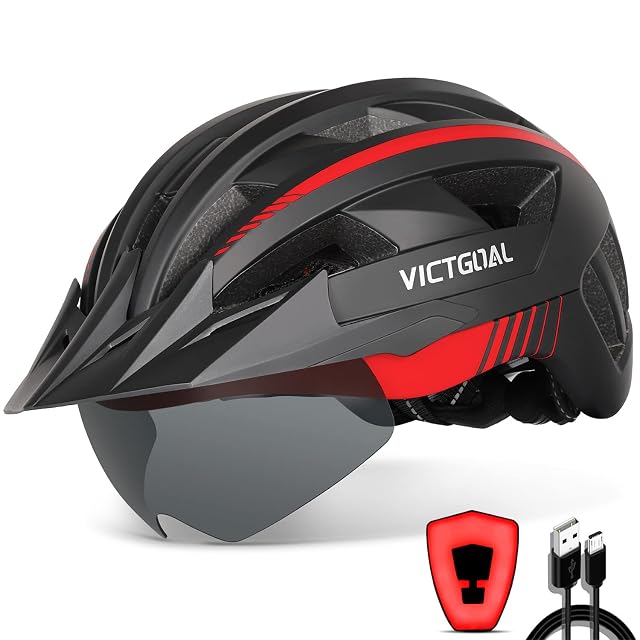
1. Victgoal MTB helmet. A USB-rechargeable rear light, twenty-one vents, and magnetic detachable goggles. Twenty-one vents is the most in this catalog, and rechargeable rather than battery means the light is topped up on the same cable as everything else you own. The goggles are a genuine addition for unlit trails, where the problem after dark is as much grit and insects as visibility.
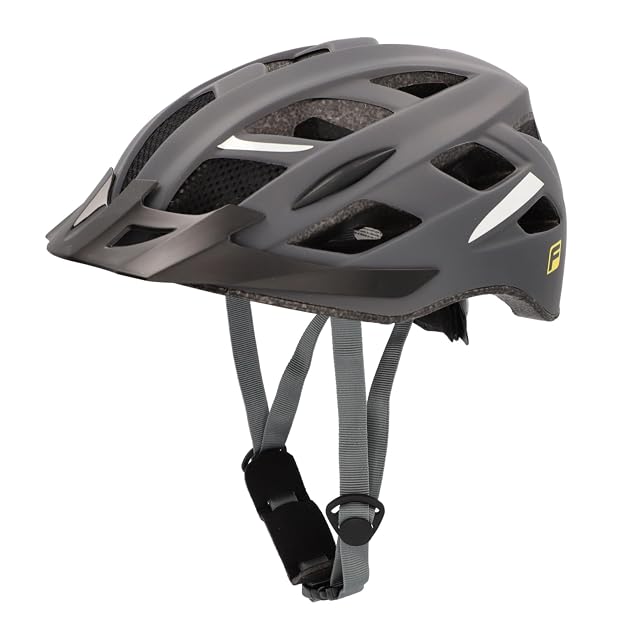
2. Fischer Urban Levin. An integrated rear light and sixteen vents with insect mesh, at a price below what a separate rear lamp costs. It is one of the best-selling helmets on this site, and the reason is that arithmetic. One caution, and it is on the manufacturer: the listing title states 52–59 cm where the detailed specification says 54–59 cm. Confirm the range with the seller before ordering.
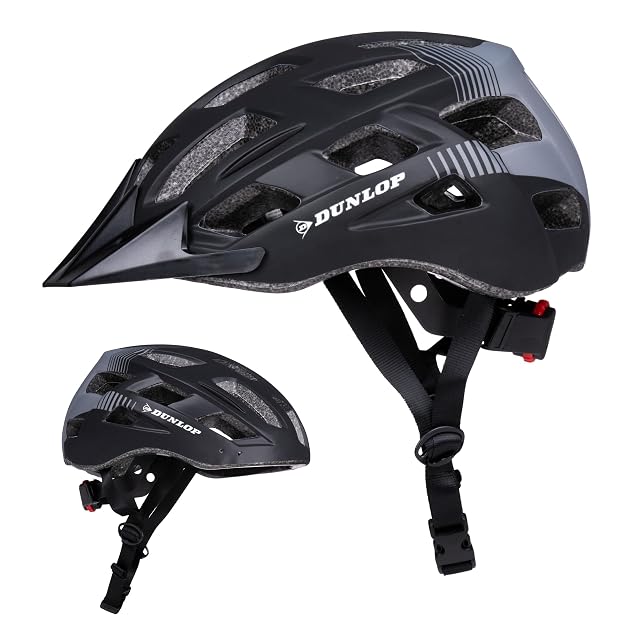
3. DUNLOP helmet with LED and visor. Six LEDs in three modes — the most lighting modes here — plus a removable visor, in size L for 58–61 cm heads. The visor is worth having in rain at night, when headlights on a wet windscreen are the actual problem. Fewer vents than the two above, which is the trade for the shell shape.
What to check before you buy
Measure first, then check the stated range. And whichever you choose, set the cradle so the helmet sits level with the front edge two finger-widths above your eyebrows — a helmet tipped back protects the part of your head that was never going to hit anything.
Which one fits how you ride?
You ride at night
Fit and certification come first, and visibility features are a genuine bonus rather than the reason to choose.
You want to be seen
A light mount or an integrated rear light adds a high visible point, which is where drivers look.
You ride in heat or over long distances
Ventilation becomes the deciding comfort factor, and it competes with coverage.
You have had any impact
Replace the helmet. A helmet that has taken a hit has done its job and should not be relied on again.
Picking by how you ride
Commuting
Where fit, ventilation and a rear light or reflective detailing matter most, and where the helmet is worn daily.
Road riding
Where ventilation and weight dominate, and where night visibility is a secondary consideration.
Winter riding
Where a cap or liner under the helmet changes the fit, which needs rechecking rather than assuming.
Any riding
Where certification and correct fit are what actually matter, and everything else is preference.
What really separates these
Certification
A helmet must carry the certification mark required where you ride. Uncertified helmets exist and they are not a saving.
Fit above all else
A helmet that moves is a helmet that will not be in the right place. Head shapes differ and no brand fits everyone.
Retention system
The dial or cradle at the back. It is what holds the helmet level and it is worth adjusting properly rather than pulling the straps tight.
Visibility features
Integrated rear lights, reflective straps and light shells all help at night. They are a bonus on top of fit, not a substitute.
Ventilation against coverage
More vents means cooler and slightly less shell. It is a preference, and it matters more in summer than most people expect.
Which figure for which ride
Your riding
What matters most
What is secondary
Any riding
Certification and fit
Everything else
Night commuting
A rear light or reflectives
Weight
Long summer rides
Ventilation
Integrated lights
Winter
Fit with a cap on
Vent count
Where riders go wrong
Wearing the helmet too far back
It should sit level, low on the forehead, with the front edge a couple of finger widths above the eyebrows. Tilted back is the commonest fitting error.
Keeping a helmet after an impact
The liner is designed to be destroyed once. A helmet that has been in a crash should be replaced even if it looks intact.
Buying uncertified
Certification marks exist for a reason and vary by region. A helmet without the mark required where you ride is not a saving.
Assuming a helmet makes night riding safe
Lights, position on the road and visibility do far more to prevent a collision. A helmet reduces injury in one; it does not prevent one.
By the kind of rider you are
The daily commuter
A certified, well-fitting helmet with a rear light or reflective detail, worn on every ride.
The road cyclist
Ventilation and weight, with visibility handled by lights and clothing instead.
The winter rider
A helmet that still fits over a thin cap, checked rather than assumed.
Servicing and how long it holds up
Helmet liners degrade with sweat, sunlight and time, and the shell can hide damage that the liner has taken. A helmet that has been left on a car parcel shelf all summer has been cooked, which is not visible from the outside.
Wash the pads rather than the whole helmet, and let them dry fully.
Store it out of direct sun and heat; UV and heat degrade the liner.
Inspect the liner for cracks and compression after any knock.
Replace after an impact, and follow the maker's guidance on age.
Safety
The most safety-critical item in this whole category.
Only use a helmet carrying the certification required where you ride.
Fit it level and low on the forehead, with the straps forming a V under each ear.
Replace it after any impact, even without visible damage.
Never buy a used helmet: you cannot know its impact history.
21 vents · USB rear light · magnetic detachable goggles
The most equipped helmet in this hub: twenty-one vents, a USB-rechargeable rear light with three modes, and detachable magnetic goggles that double as sunglasses.
Best for: Trail riders who want ventilation, light and eye protection in one purchase rather than three.
54–59 cm (21.3 to 23.2 in) · 16 vents · integrated rear light
The best-selling helmet in this hub, with an EPS inner shell, sixteen vented inlets with insect mesh and an integrated three-mode rear light built into the retention ring.
Best for: Everyday town riding where being seen matters as much as anything else.
58–61 cm (22.8 to 24 in) · 6 LEDs, 3 modes · removable visor
A size L helmet for 58–61 cm (22.8 to 24 in) heads with six rear LEDs in three modes, a removable visor and a dial adjuster, supplied with the CR1620 cell already fitted.
Best for: Riders with a larger head who want lighting and a visor without moving up in price.
Measure your head with a tape about a centimeter above the eyebrows, at the widest point, and compare that figure in centimeters to the range the manufacturer states. The S/M/L label is not comparable between brands; the centimeter range is.
Does a helmet light replace a rear lamp?
No. It adds a second position at a different height, which is what makes it useful. Lighting requirements are set by the bike's own lamps, and they are national — check the rules for where you ride.
When should a helmet be replaced?
After any impact, even one that leaves no visible mark, because the EPS liner works by crushing and a crushed liner does not come back. Manufacturers also state a service life from the date of manufacture. Follow the figure printed inside your own helmet.
What certification should a helmet have?
The mark required where you ride, which varies by region. A helmet without it is not a saving and may not be legal for some events.
How should a helmet fit?
Level and low on the forehead, snug enough that it does not move when you shake your head, with the straps forming a V under each ear.
Do I need to replace a helmet after a crash?
Yes. The liner is designed to crush once and absorb the impact. It should be replaced even if it looks undamaged.
Are helmet lights useful?
A rear light on the helmet sits high, which is where drivers look. It complements bike lights rather than replacing them.
Does a more expensive helmet protect better?
Certification is the baseline all helmets must meet. Price usually buys ventilation, weight and fit systems rather than a different level of protection.
Can I buy a second-hand helmet?
It is not advisable: you cannot know whether it has been dropped or crashed, and that history is exactly what matters.
For the rider who: Everyday town riding where being seen matters as much as anything else.
Biggest plus: Rank 8 on the German store when checked — the strongest sales position of any helmet here
Biggest minus: The listing title says 52–59 cm (20.5 to 23.2 in) and the manufacturer detail says 54–59 cm (21.3 to 23.2 in) — measure and check with the seller
Spares and fitting kit from the same aisle, at the price we read. Confirm they match the bike and the part you chose before ordering: it turns on the standard and the part number, which the listing gives.
CNC 20210527003 · Bottles and cages — Pair · 6061 aluminum · bottles 600–800 ml · 2 screws per cage
FiveBox ZM-04 · Bottles and cages — Pair · aluminum alloy · bottles 68.9–76.2 mm (2.71 to 3 in) · bolt spacing 56–71 mm (2.20 to 2.80 in)
Everything listed is drawn from the catalog of this site. Specifications are the published ones, from the maker and from Amazon; prices are what Keepa recorded on the date shown, and both move. The order rests on declared specifications, on stated strengths against stated limits, and on price. None of this kit has been ridden by us, and the page makes no such claim.
Last checked on
Prices quoted in these summaries are dated readings. The live price is shown next to each product.
The tool we use ourselves
Chosen your tool? Now buy it at the right price.
Bike racks, trainers and computers swing by thirty dollars or more across the year, and
the biggest "discounts" often land at prices the same model sold for six weeks earlier.
UniverTrack tracks the real price history across retailers, spots fake
reductions, and alerts you when it is genuinely the moment to buy.
Real price historyBuy-now alertsAI buying assistant