Skip to content

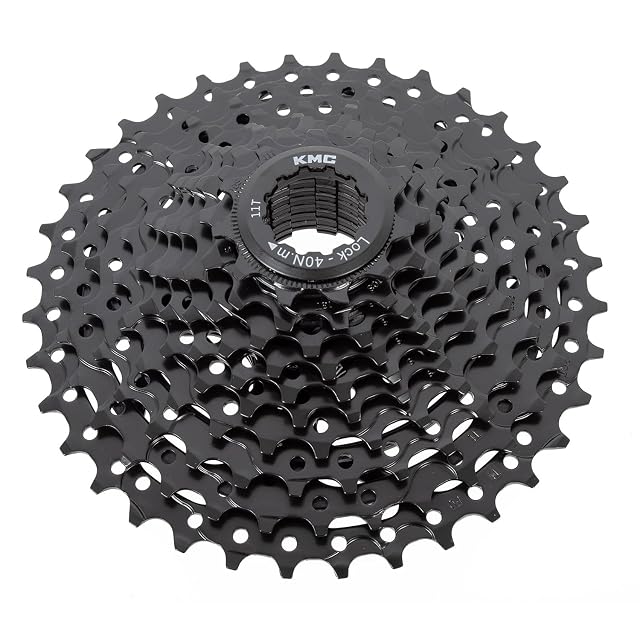
KMC Cassette, 10-speed, 11–42T, steel

A wide-range 10-speed steel cassette from 11 to 42 teeth, from a manufacturer better known for its chains.

KMC 10-speed wide range cassette in black

KMC Cassette, 10-speed, 11–42T, steel

A wide-range 10-speed steel cassette from 11 to 42 teeth, from a manufacturer better known for its chains.

Speed
10-speed
Tooth range
11–42T
Material
Steel
Amazon reference
B0CDQCTBNL (identical on 6 markets)
EAN
4715575885100
  • A 42-tooth largest sprocket, which is a substantially easier climbing gear than a 32
  • From KMC, a specialist drivetrain manufacturer
  • Forty-two teeth exceeds many standard rear derailleurs' published maximum

Best for: Adding a genuinely low climbing gear to a 10-speed bike, where the derailleur can take it.

≈ $73
Check price on Amazon
Specifications

Speed
10-speed
Tooth range
11–42T
Material
Steel
Amazon reference
B0CDQCTBNL (identical on 6 markets)
EAN
4715575885100

KMC’s wide-range cassette is a ratio change rather than a replacement, and the derailleur decides whether it is possible.

What the manufacturer publishes

A 10-speed cassette sprocket set from 11 to 42 teeth, in steel.

The 42-tooth question

This is the whole decision. A 42-tooth largest sprocket is a dramatically easier climbing gear than the 32 of the cassettes below it in this hub. It is also beyond what many standard 10-speed rear derailleurs are rated for.

The maximum sprocket size is published by the derailleur manufacturer. If yours states 36, a 42 will not clear the pulley. Some riders solve this with an extender hanger; that is a further purchase and its own compatibility question.

The second consequence

Chain length. A larger sprocket needs a longer chain, and the derailleur’s total capacity figure has to accommodate the range. Both figures come from the derailleur maker.

The gear steps

Ten sprockets across 11 to 42 means larger jumps than ten sprockets across 11 to 32. On a climb that does not matter; on a flat road at a steady cadence it does. That is the honest trade.

The questions riders ask

Will my derailleur handle 42 teeth?

Check the maximum sprocket size your rear derailleur manufacturer publishes. Many standard 10-speed derailleurs stop at 34 or 36 teeth, and exceeding that means the upper pulley fouls the largest sprocket.

What is the trade for the wider range?

Larger gaps between gears. The same ten sprockets spread across a wider range means bigger jumps, which is noticeable on flat riding where you want to fine-tune cadence.

All cassettes and sprockets

Prices quoted in these summaries are dated readings. The live price is shown next to each product.