The best bike tracker for recovering a stolen bike
These devices work in two completely different ways and they fail in completely different places. One has a SIM card and reports its own position. The others are silent tags that only appear when a compatible phone passes close enough — which in a locked garage or a rural barn may be never.
Whether the device reports on its own, and how well it is hidden.
The second matters as much as the first. A tracker in an obvious place is removed in the first minute and the whole purchase is wasted.
The order, and why
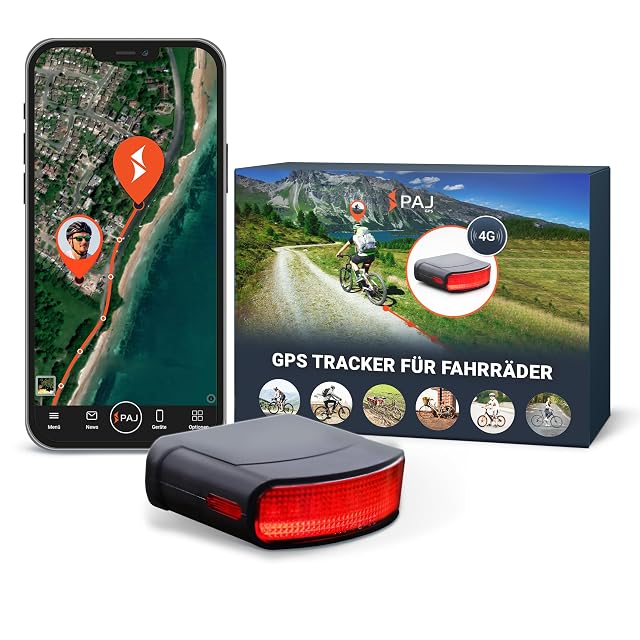
1. PAJ GPS rear light tracker. 4G real-time tracking, a fall alarm, IP67, and three months of subscription included. It reports without waiting for anyone, which is the difference between knowing where the bike is and hoping somebody walks past it. Building it into a rear light is the concealment: a rear light on a bike is invisible because it belongs there. It is the most expensive answer and it carries a running cost.
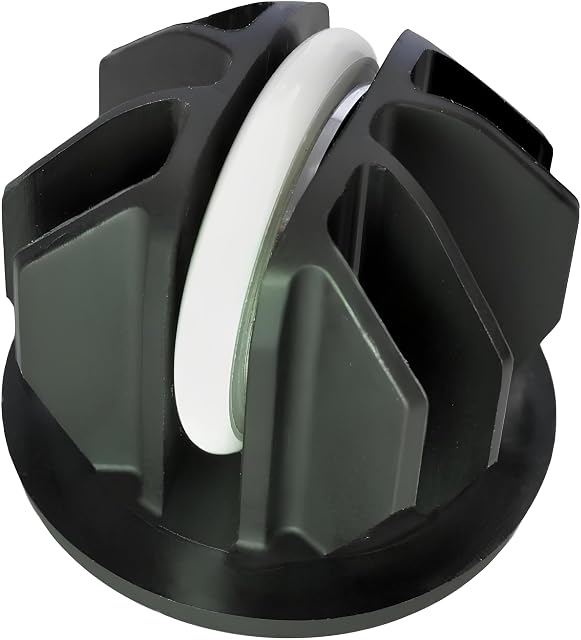
2. egmatec fork steerer plug. An injection-molded holder for an AirTag or SmartTag2 that fits inside a 32–38 mm internal steerer and doubles as the top cap. This is the best hiding place on a bicycle — reaching it means removing the stem — and the part it replaces is one the bike already has, so nothing about the bike looks different.
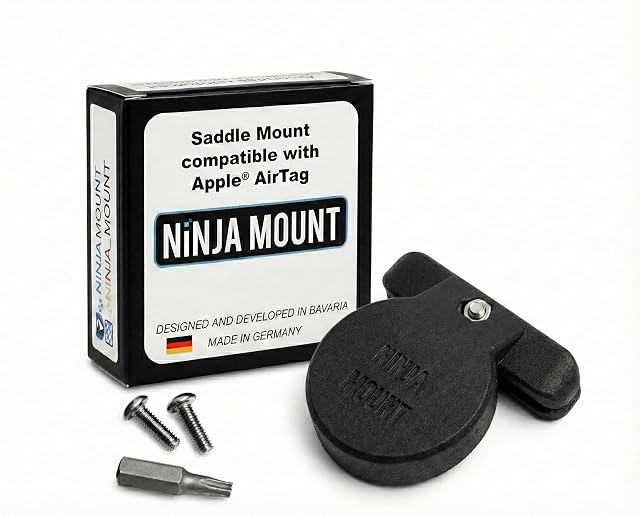
3. NINJA MOUNT bikeTag Saddle. An under-saddle holder in ABS with a universal saddle fit, for AirTag 1 and 2. Easier to fit than the steerer plug and easier to find: under the saddle is the second place anyone would look. It is a real deterrent against opportunists and not against someone who knows what to check.
What to know before you buy
Both tag holders need the tag itself, which is a separate purchase, and neither works without a compatible phone ecosystem. Check which network your phone belongs to before choosing the holder.
Which one fits how you ride?
You want a chance of recovery
A hidden tracker is the tool, and the emphasis is on hidden.
You lock up in a city
A tracker complements a good lock rather than replacing it, and the lock still does the preventing.
You want no subscription
Network-based tags rely on other people's phones passing nearby, which works well in cities and poorly elsewhere.
You want live location anywhere
A GPS tracker with a mobile connection, which needs charging and a subscription.
Picking by how you ride
Recovery after theft
The core use, and one that depends on the tracker being hidden and charged when it matters.
Knowing where the bike is
Useful for a shared household bike, and a lower-stakes use of the same device.
Deterrence
Minimal. A tracker does not stop a theft; a lock does.
Insurance
Some insurers take a tracker into account. It is worth asking rather than assuming.
What really separates these
Where it can be hidden
A visible tracker is removed in seconds. Under a saddle, inside a steerer tube, in a bottle cage bolt: concealment is the whole design problem.
Network-based tag or GPS
A tag relies on nearby phones and works well in dense cities; a GPS tracker reports its own position anywhere with mobile coverage.
Battery and charging
A GPS tracker needs charging on a routine you keep. A tag runs for a long time on a small cell, which is a real advantage.
Subscription
GPS trackers almost always need one. Tags do not, which is a substantial difference over years.
What you do with the location
The answer is to inform the police rather than to go and confront someone. That shapes how useful live tracking actually is.
Which figure for which ride
Your situation
The tracker
The catch
Dense city
A network-based tag
Needs nearby phones
Rural area
GPS with mobile network
Subscription and charging
Any
Hidden mounting
Visible means removed
Any
A good lock as well
A tracker prevents nothing
Where riders go wrong
Mounting it visibly
A tracker a thief can see is a tracker a thief removes. Concealment matters more than any specification.
Treating a tracker as security
It offers a chance of recovery after the fact. The lock, the parking place and the frame number registration are what protect the bike.
Letting the battery run flat
A GPS tracker charged last spring is a tracker that does nothing. It is a routine, not a purchase.
Going to recover the bike yourself
A location is information for the police. Confronting a thief is dangerous and is not what the device is for.
By the kind of rider you are
The city cyclist
A hidden network-based tag, no subscription, alongside a properly rated lock.
The rural rider
A GPS tracker with a subscription, charged on a routine, because there are no nearby phones to relay a tag.
The expensive bike owner
A tracker, a registered frame number, photographs, insurance and two locks.
Servicing and how long it holds up
A hidden tracker is easy to forget, which is exactly the problem. A battery that ran out months ago gives the same result as no tracker at all, and the concealment that protects it also hides its condition.
Set a reminder to check the battery; hidden means forgotten.
Test that the tracker reports its location occasionally.
Check the mounting has not worked loose with vibration.
Keep the app account details somewhere you can reach without the bike.
Safety
This is where a tracker's limits matter most.
Report a theft to the police and give them the location; do not go yourself.
Record the frame number and photograph the bike before anything happens.
Register the frame number with a national database where one exists.
Remember that a tracker recovers, it does not prevent: the lock does that.
4G real-time tracking · fall alarm · IP67 · 3 months subscription included
The only true GPS tracker in this hub: a 4G unit built into a rear light, with real-time location, route recording, motion and fall alarms, and three months of subscription included.
Best for: A valuable bike, or riding where a crowd network is useless — rural roads, quiet times, long distances.
Fork steerer 32–38 mm (1.26 to 1.50 in) internal · injection molded in Germany · doubles as a plug
A holder that hides a tag inside the fork steerer of a mountain bike, fitting internal diameters of 32 to 38 mm (1.26 to 1.50 in) and doubling as a plug against dirt.
Best for: Mountain bikes with an open fork steerer, where the most invisible hiding place is the point.
Under-saddle mount · ABS · AirTag 1 and 2 · universal saddle fit
An under-saddle AirTag holder in ABS, stated to fit almost any saddle across mountain, e-, road and city bikes, and compatible with both AirTag generations.
Best for: Any bike, because it needs no measurement — the fallback when the fork and bottle cage options do not fit.
A tag with no GPS and no SIM. It broadcasts over Bluetooth and is located when someone else's compatible phone passes within range and relays its position anonymously. In a dense city that happens constantly. In a rural shed it may not happen at all, and the tag reports nothing rather than reporting an error.
Does a SIM tracker need a subscription?
Yes — a device with its own mobile connection needs a data plan for it. The PAJ GPS here includes three months, after which it is a recurring cost. That is the honest trade against a tag that costs nothing to run and only works when a phone walks past.
Where should a tracker be hidden?
Somewhere that takes tools to reach and is not obvious from a meter away. A thief who finds the tracker removes the whole benefit, which is why the mounts in this list matter as much as the electronics.
Does a tracker stop my bike being stolen?
No. It offers a chance of recovery afterwards. Prevention is the lock, where you park and registering the frame number.
Tag or GPS tracker?
A network-based tag relies on nearby phones and works well in dense cities without a subscription. A GPS tracker reports anywhere with mobile coverage and needs charging and a subscription.
Where should I hide it?
Somewhere a thief will not look: under a saddle, inside a steerer, in a bottle cage bolt. Visible means removed within seconds.
What do I do if it shows a location?
Give it to the police. Going to retrieve the bike yourself is dangerous and is not what the device is for.
Do I still need a lock?
Absolutely. The lock is what prevents the theft; the tracker only helps afterwards, and only sometimes.
Will it affect my insurance?
Some insurers take a tracker into account and some do not. It is worth asking your insurer rather than assuming either way.
Spares and fitting kit from the same aisle, at the price we read. Confirm they match the bike and the part you chose before ordering: it turns on the standard and the part number, which the listing gives.
CNC 20210527003 · Bottles and cages — Pair · 6061 aluminum · bottles 600–800 ml · 2 screws per cage
FiveBox ZM-04 · Bottles and cages — Pair · aluminum alloy · bottles 68.9–76.2 mm (2.71 to 3 in) · bolt spacing 56–71 mm (2.20 to 2.80 in)
Everything listed is drawn from the catalog of this site. Specifications are the published ones, from the maker and from Amazon; prices are what Keepa recorded on the date shown, and both move. The order rests on declared specifications, on stated strengths against stated limits, and on price. None of this kit has been ridden by us, and the page makes no such claim.
Last checked on
Prices quoted in these summaries are dated readings. The live price is shown next to each product.
The tool we use ourselves
Chosen your tool? Now buy it at the right price.
Bike racks, trainers and computers swing by thirty dollars or more across the year, and
the biggest "discounts" often land at prices the same model sold for six weeks earlier.
UniverTrack tracks the real price history across retailers, spots fake
reductions, and alerts you when it is genuinely the moment to buy.
Real price historyBuy-now alertsAI buying assistant