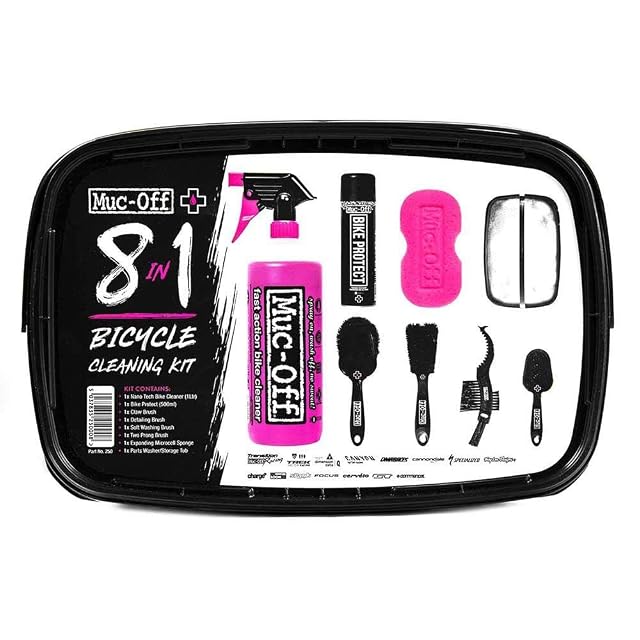
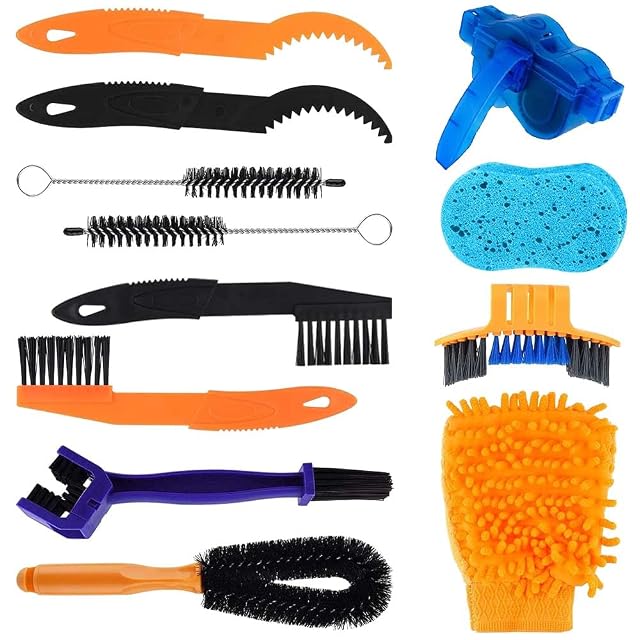
What you need
A bucket. A sponge or soft brush for the frame. A narrow stiff brush for the drivetrain. A bike cleaner for the frame and a drivetrain degreaser. Cloths.
That is genuinely the whole list.
The order
Drivetrain first, with degreaser and the stiff brush. Its dirt is the worst on the bike and it should not end up on a clean frame.
Frame second, top down, with a mild cleaner and the soft brush. Working downwards means dirty water runs onto surfaces you have not cleaned yet rather than ones you have.
Rinse sparingly with the bucket.
Dry, then lubricate the chain.
Why pressure is the enemy
Bearings are sealed against splash. A jet drives water and grit past those seals, and the damage appears weeks later as a hub that feels rough. A bucket physically cannot do this.
The rule that protects the brakes
Keep degreaser and lubricant away from rotors and pads. Contaminated pads are replaced rather than cleaned by most manufacturers’ own instruction.
Frame cleaner and degreaser are different products
A drivetrain degreaser is aggressive enough to dissolve old lubricant, and it is not intended for paint, decals or anywhere near a rotor. A frame cleaner is a mild detergent. One product doing both does one of them badly.
Afterwards
A frame protection film on the down tube and chainstay prevents the chips that washing reveals. Apply to a clean, dry frame above roughly 15 °C (59 °F) — adhesive applied cold lifts at the edges within weeks.
The questions riders ask
Why is a pressure washer bad?
Bearings in the hubs, bottom bracket and headset are sealed against splash, not against a jet. A pressure washer drives water and grit past those seals, which is how a clean bike develops a rough hub a month later.
What order should I clean in?
Drivetrain first with degreaser and a stiff brush, so its dirt does not end up on a clean frame. Then the frame top down with a mild cleaner. Then rinse sparingly, dry, and lubricate.
Last reviewed 30 August 2026