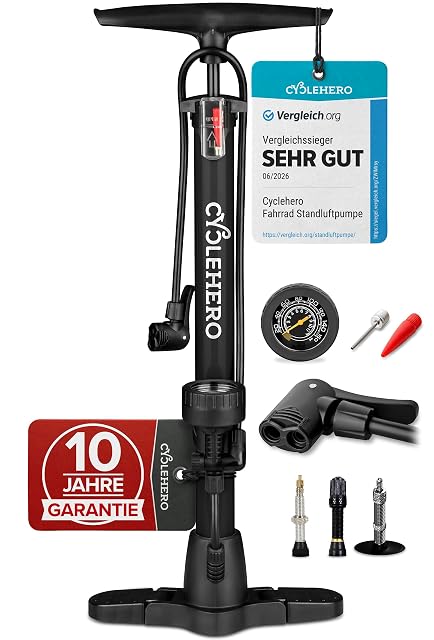
Buy: a track pump with a gauge you can read
Correct pressure changes how a bike rides more than most components at this price, and a weekly check takes ten seconds. Look at barrel height, a head that takes all three valve types, and a gauge with resolution at the pressures you actually run.
Buy: lights that live on the bike
Not lights you remember to bring. And two rear lights if you ride after dark regularly — a rear lamp failing is the one you do not notice.
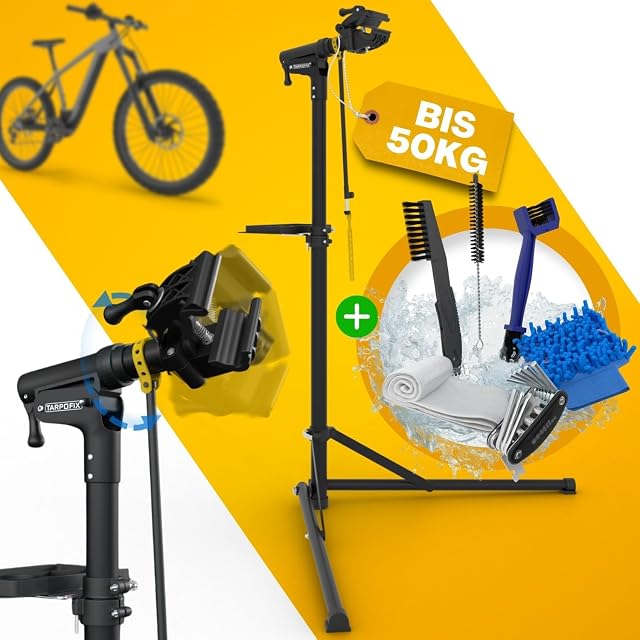
Buy: a repair stand, if you want to do your own maintenance
It is not a tool for a task. It is the tool that turns “I would rather not” into “I will do it on Sunday”. Buy one that publishes a load rating if you have a heavy bike.
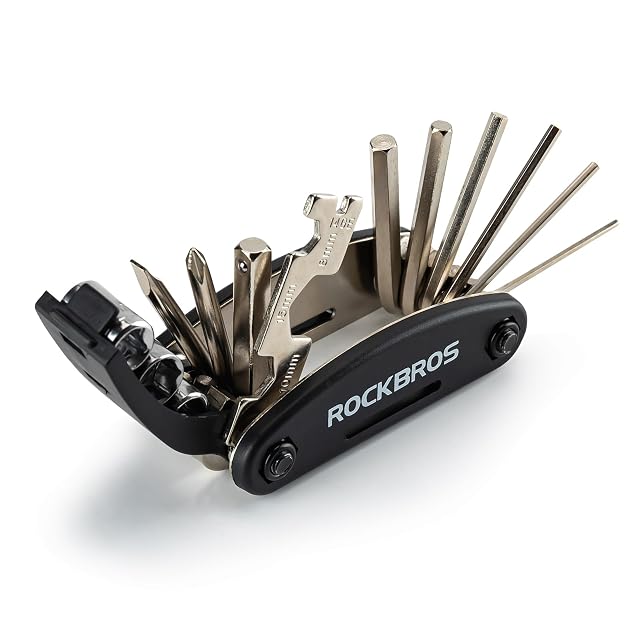
Buy: a multi-tool that covers your bike’s actual sizes
Two to six millimeters of hex covers almost every fastener on a modern bike. Check whether your rotors need Torx before treating any tool as complete.
Skip: the fifty-piece kit
Most of it never touches a bike.
Skip: upgrades to a bike you are about to replace
Lighter wheels or a groupset on an inexpensive frame usually costs close to a better bike.
Think twice: the phone mount
Useful, and worth knowing that some phone manufacturers state that sustained handlebar vibration can damage optical image stabilization. If yours says so, a damped mount or a dedicated computer is the answer.
The order that works
Pump, lights, lock, mudguards, then tools. Almost every unused accessory failed on sequence rather than on budget.
The questions riders ask
What is the most over-bought accessory?
The fifty-piece tool kit. Most of it will never touch your bike, because your bike uses perhaps six fastener sizes. Count the sizes on it once and buy those tools properly instead.
And the most under-bought?
A track pump with a readable gauge, and a repair stand. The first prevents more punctures than any protection belt; the second decides whether the other jobs get done at all.
Last reviewed 30 August 2026