Twenty-four patches and metal levers — read the lever warning first
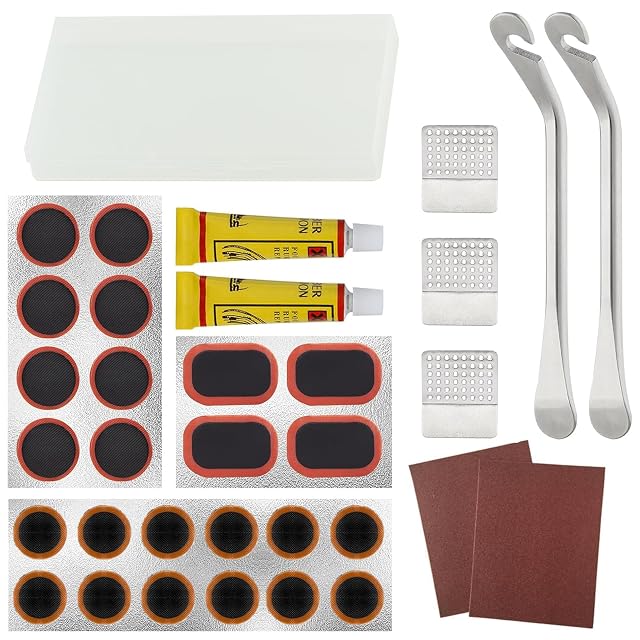
XIAOCUNCN 24 patches, 2 fluids, rasp, 2 metal levers
A vulcanizing repair kit with twenty-four patches in three shapes, two tubes of fluid, a metal rasp and two metal levers.
What you are getting
A vulcanizing repair kit: 24 patches in three shapes — 12 small round, 8 large round, 4 large square — two tubes of vulcanizing fluid, a metal rasp, two metal tire levers, and a storage box. 110 g (3.9 oz). $9.88.
Twenty-four patches is the largest count on this shelf
The REMA TIP TOP kit already published here has twelve pieces; the Slime SKABS on this page has six; the VeloChampion kit comes in four or ten. Twenty-four, in three sizes, is enough for years of punctures on one bike.
“You can choose the appropriate patch for different perforation sizes” — and that is the argument for three shapes. A square patch covers a slit; a round one covers a hole; a large one covers a pinch flat, which is a line rather than a point.
It is the vulcanizing half of this shelf’s rule
The tag on this page: self-adhesive patches are quick; vulcanizing patches are permanent.
This is the permanent side, and it says so: “two tubes of vulcanizing fluid designed for long-lasting repairs… creating a strong and durable bond.”
What that costs is time. Rubber solution has to be spread, left to go tacky — a few minutes, not seconds — and then pressed. The Slime SKABS on this page go on in under a minute and do not pretend to be permanent. Both belong in a saddlebag for different reasons: SKABS to get home, these to fix the tube properly on the kitchen table.
“Strong metal levers… these sturdy levers ensure easy removal of the tire.”
The buying advice on this page is explicit, and it cuts both ways: plastic levers can snap on a tight tubeless bead, and metal ones can damage a carbon or alloy rim edge.
So: metal levers for a steel or heavy alloy rim with a tight wire-bead tire — where plastic will break. Not for a carbon rim, and not for a light alloy rim with a machined bead seat, where a steel lever leaves a burr that cuts tubes afterwards.
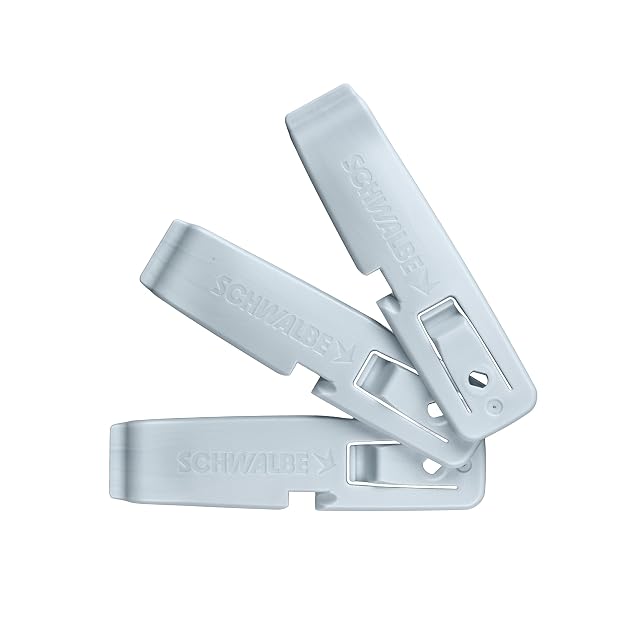
The UYIii levers on this page are the plastic answer to the same job. Match the lever to the wheel, not to the toughest option in the shop.
The rasp, and why it is not optional
A metal rasp to roughen the tube before the fluid goes on. It is the step people skip and the reason patches lift: vulcanizing fluid grips a scuffed surface and slides off a shiny one. The Slime SKABS kit includes a scuffer for the same reason, and so does the REMA kit published here.
Its compatibility list goes a long way past bicycles
“Not only for road, mountain, motorcycle, bicycles, trolleys, wheelchair inner tubes, but also for other inflatable rubber products, such as rubber rowing boats.”
True of any vulcanizing patch kit — it is butyl and rubber solution, and it does not care what the tube is for.
What is not published
No patch diameters in millimeters, only “small” and “big”; no fluid volume; no cure time, which is the one figure a vulcanizing kit should give; and no lever length or material grade beyond “metal”.
Availability
Read on the day this page was built: $10 at the American Amazon shop.
Read from Keepa on the day this page was last revised; stock and price both move without notice.
Prices quoted in this text were read on 2026-10-06. The live price is at the top of the page.