Plastic, which is the right answer for a carbon rim
UYIii 3 plastic levers, self-lubricating
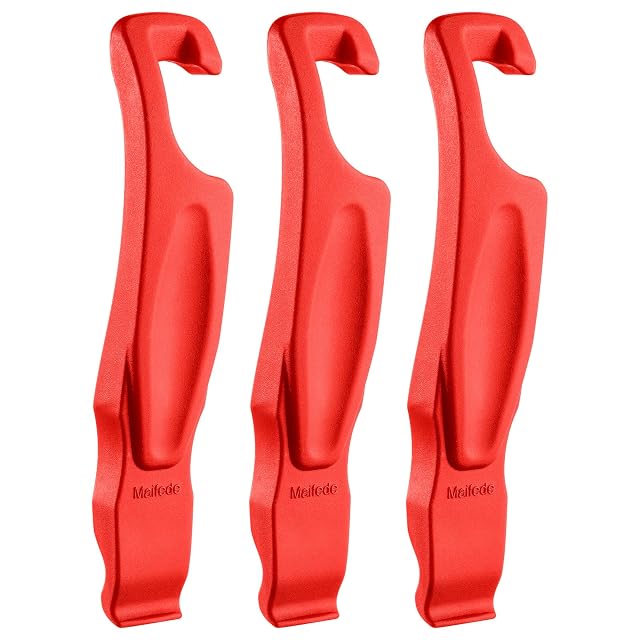
A set of three self-lubricating plastic tire levers with textured thumb grooves and reinforced backs.
What you are getting
Three tire levers in self-lubricating engineered plastic, with thumb-press grooves on the front, back and sides, a sandblasted grip finish and reinforced backs. $6.99.
They are the plastic answer, and this shelf says when that is right
The buying advice on this page: plastic levers can snap on a tight tubeless bead, and metal ones can damage a carbon or alloy rim edge. Match the lever to the wheels you own.
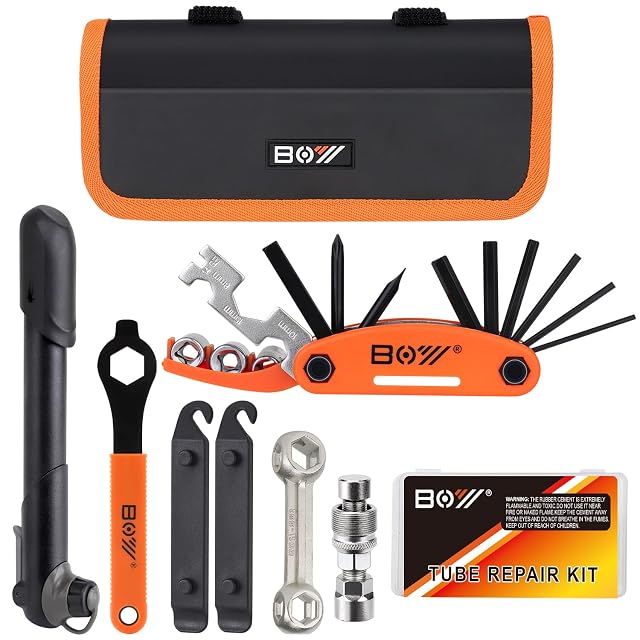
So plastic is for a carbon rim, for a light alloy rim with a machined bead seat, and for any wheel where a burr on the rim edge would cut tubes for years. The two metal levers inside the XIAOCUNCN kit on this page are for the opposite case — a tight wire bead on a steel or heavy alloy rim, where plastic gives up.
UYIii makes the claim directly: “rounded edges and a ‘glide’ finish make it easy to lever and glide off the rim and won’t scratch your rims.”
Three levers, which is the number that matters
Two levers get a tire started; the third holds the bead while you move the first. On a tight tire working alone, three is the difference between a job and a fight.
The Schwalbe levers already published on this shelf solve the same problem differently — with a spoke clip that hooks a lever onto a spoke so it holds itself, which is why that page’s tag says the clip is what makes a tight bead possible alone. These have no clip and give you a third hand instead.
“Self-lubricating engineered plastic”, which is a real class of material
Plastics like acetal and nylon are described this way because they have a low coefficient of friction without any added lubricant — a lever slides along the rim instead of grabbing. It is why a plastic lever works at all.
What UYIii does not do is name the polymer. “Military-grade plastic for high strength and reliability” is not a material, and “reinforced on the back to resist breakage” is the right place to reinforce — a lever fails in bending, at the point where it crosses the rim edge.
The grip detail is more than it sounds
“Thumb press grooves” on three faces and “an extremely fine sandblasted finish increases friction with the palm.”
A tire lever is pushed hard with a wet or greasy hand. A smooth plastic lever slips and the knuckle hits the spokes. Texture where the hand goes is a small, real thing.
What is not published
No polymer named, no length, no weight, no thickness, and no statement about tubeless beads — which is the one case where a plastic lever is most likely to break, and the case the buying advice on this shelf singles out.
The last bullet is a lifetime guarantee, which is about the seller rather than the lever. On a $6.99 set of plastic levers that guarantee is worth reading as what it is: three replacements are cheaper than one scratched carbon rim.
Availability
Read on the day this page was built: $7 at the American Amazon shop.
Read from Keepa on the day this page was last revised; stock and price both move without notice.
Prices quoted in this text were read on 2026-10-06. The live price is at the top of the page.