The only tire here that says outright it is not tubeless
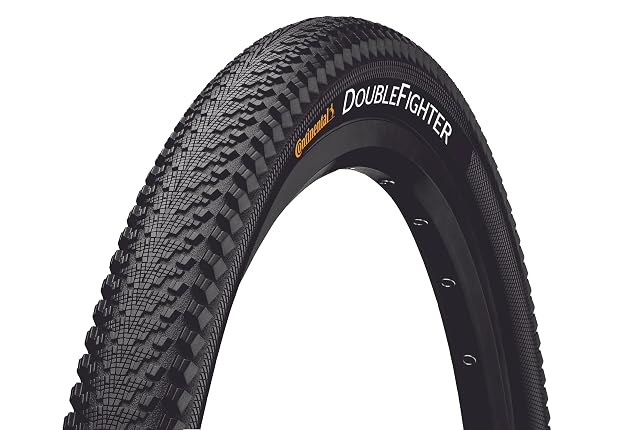
Continental Double Fighter III 27.5×2.00, wire bead
A semi-slick 27.5 × 2.00 city and gravel tire on a wire bead, at 860 g (30.3 oz) and 26 to 65 PSI.
What you are getting
A 27.5 × 2.00 city-and-gravel tire — ETRTO 50-584, for 650b rims — with a wire bead, 860 g (30.3 oz), and a published pressure range of 26 to 65 PSI. $41.95.
It says plainly that it is not tubeless
“A classic wire bead that mounts like any standard clincher and is used with an inner tube; this tire is not tubeless.”
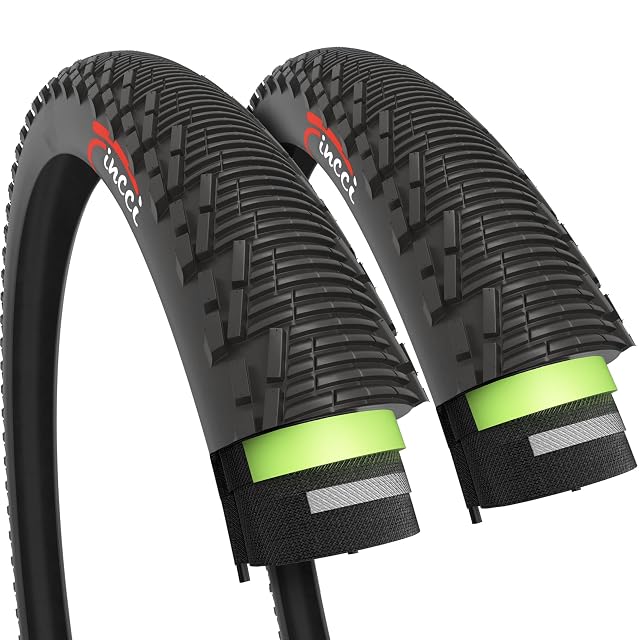
Say that out loud on this shelf and it is almost unique. The introduction to this page compares “clincher against tubeless-ready casings”, and most listings leave the question open — the Fincci set on this page, the WTB and the Kenda all simply do not mention it. Continental closes it in one sentence.
A wire bead cannot be run tubeless safely: the bead is a steel hoop that does not lock into the rim shelf the way an aramid tubeless bead does.
And it dates its own specification
“27.5×2.00 (ETRTO 50-584) for 27.5 inch / 650b rims; wire bead, 860 g (30.3 oz), 26-65 PSI, per Continental’s 2026/27 tire range.”
A source and a year. Tire weights and pressure ranges change between model years, and a figure with a catalog behind it is worth more than one without. No other tire on this page attributes its numbers.
The tread is described by where the knobs are
“Exposed outer knobs bite firmly on sharp gravel and park paths for confident cornering, while the center tread keeps rolling smooth on asphalt.”
That is the semi-slick layout: a continuous or tightly spaced center for rolling, open shoulders for lean. The WTB All-Terrain on this page uses the same idea at 700×32; the Maxxis Minion DHR II is the opposite, knobs everywhere.
What Continental does not publish is a tread depth, which the Fincci tires on this page do (1.5 mm (0.06 in) and 3 mm (0.12 in)).
860 g (30.3 oz), and what the wire costs
Eight hundred and sixty grams is heavy for a 50 mm (1.97 in) tire. The Fincci 26-inch MTB pair on this page is 1,900 g (67 oz) for two — 950 g (33.5 oz) each — and the Fincci 700×38c is about 450 g (15.9 oz).
Most of that difference is the bead. The shelf tag says it: “folding or wire bead changes the weight more than the tread does”. A steel hoop is roughly 100–150 g (3.5 to 5.3 oz) more than aramid, and it cannot be folded into a saddlebag.
What it buys is price and a bead that seats without fighting.
26 to 65 PSI is a wide window, and it is the useful one
Twenty-six PSI on a 50 mm (1.97 in) tire is low enough for genuine comfort on gravel; sixty-five is firm enough for tarmac. A tire that publishes both ends lets you use them — and the shelf intro’s point about wider tires running lower pressures only works if you know how low is allowed.
What is not published
No TPI, no tread depth, no compound, no puncture belt named — “a durable casing and long-lasting tread” is the whole of it — and no load rating. The last line of the description field is supplier inventory text, not specification.
Availability
Read on the day this page was built: $42 at the American Amazon shop.
Read from Keepa on the day this page was last revised; stock and price both move without notice.
Prices quoted in this text were read on 2026-10-06. The live price is at the top of the page.