Belt, sidewalls and an extra tread layer — and the weight of all three
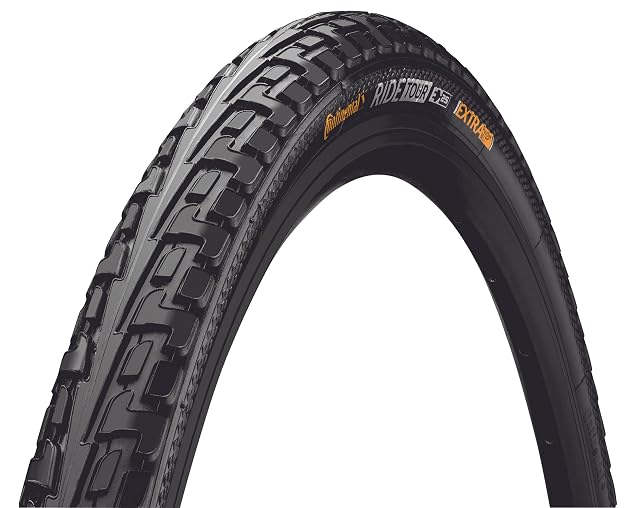
Continental Ride Tour 26×1.75, wire bead, 780 g (27.5 oz)
A trekking tire in 26 × 1.75 with the ExtraPuncture Belt, reinforced sidewalls, an extra tread layer and an E25 e-bike rating.
What you are getting
A Continental Ride Tour in 26 × 1.75 — ISO 47-559 — on a wire bead, about 780 g (27.5 oz), with the ExtraPuncture Belt, an E25 e-bike rating and a published 29 to 58 PSI. $35.64.
It gives the ISO number, the weight, the pressure and the belt name
Four things, on one bullet: “26×1.75 (ISO 47-559) wire-bead clincher; use with an inner tube. Inflate to 29-58 PSI. Weight about 780 g (27.5 oz).”
Of the eight tires on this page, only this and the Continental Double Fighter III state a pressure range, and only three state both an ETRTO and a weight. The buying advice on this shelf is about clearance and the introduction about ETRTO; this listing answers both without being asked twice.
The ExtraPuncture Belt is named, and so is where it sits
“A rugged rubber breaker under the tread works with rubber-reinforced sidewalls for a high level of puncture protection and resistance to sidewall abrasion.”
Both places, described separately. That is unusual: Maxxis protects the sidewall with EXO and says nothing about under the tread; Fincci protects under the tread with nylon and says nothing about the sidewall. Continental here claims both, with the material given as rubber rather than nylon or aramid.
Rubber is heavier than either for the same cut resistance, which is part of why a 47 mm (1.85 in) tire weighs 780 g (27.5 oz).
E25, which this tire has and most do not
“Rated by Continental for e-bikes up to 25 km/h (about 15.5 mph), with high puncture protection and low rolling resistance to resist wear from the extra drive force.”
Two of the eight tires here are E25 rated: this and the Maxxis Minion DHR II, which expresses the same limit as 16.1 mph. On a trekking tire for a hub-motor town bike, that rating is the point of the product.
“Made for high mileage” is a material claim, not an adjective
“Continental adds an additional rubber layer for high mileage.”
That is a specific thing: more rubber above the belt means more tread to wear through before the casing shows. It is also the third reason this tire is heavy — belt, sidewalls and now an extra tread layer.
A trekking tire that lasts is a trekking tire that weighs, and Continental is consistent about which side of that trade it has chosen.
One number on the listing is wrong, and it is not Continental’s
The shipping record for this listing says 100 g (3.5 oz). A 26 × 1.75 tire cannot weigh 100 g (3.5 oz); Continental’s own bullet says about 780 g (27.5 oz), which is the credible figure. Take the 780 g (27.5 oz).
What is not published
No TPI, no tread depth, no compound, no load rating. The description field on this listing also carries pages of supplier inventory notes — order dates, return counts — which are not specification and are not quoted here.
Availability
Read on the day this page was built: $36 at the American Amazon shop.
Read from Keepa on the day this page was last revised; stock and price both move without notice.
Prices quoted in this text were read on 2026-10-06. The live price is at the top of the page.