Mudguards first
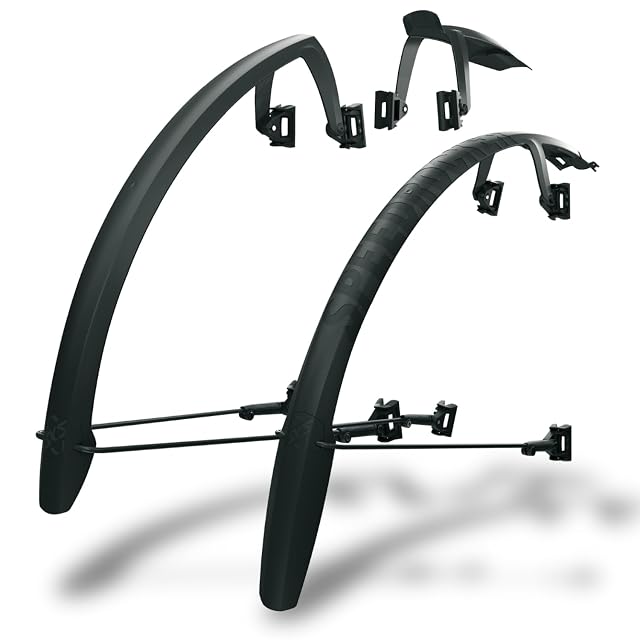
Most of the water that soaks a rider comes off their own tires, not out of the sky. Full-length guards change whether you arrive presentable, and therefore whether you cycle on a marginal morning.
Check the tire width clearance the guard manufacturer states, and look for eyelets on the frame before buying full-length ones.
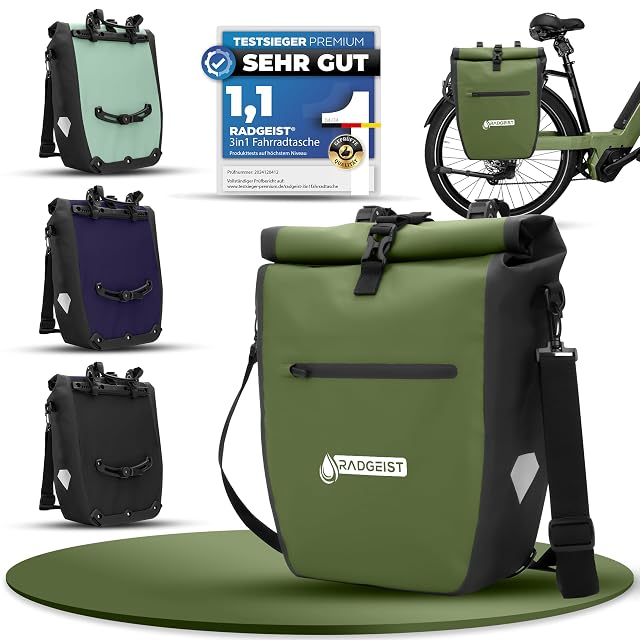
A pannier, not a rucksack
A rucksack puts weight and sweat on your back. A pannier puts both on the bike.
The specifications that matter: closure construction — a welded roll-top stays dry where a zip eventually does not — and rack rail diameter, which decides whether the hooks fit. Measure your rail.
A carry handle and a shoulder strap decide whether the bag comes off the bike easily at both ends of the journey.
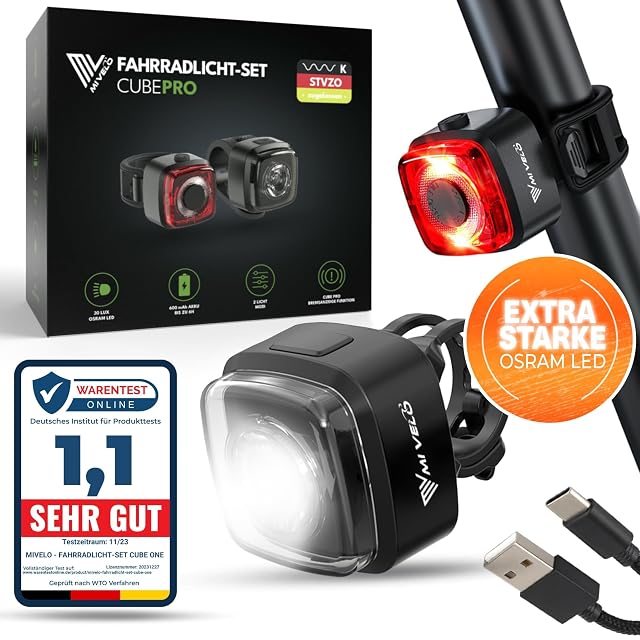
Lights that live on the bike
Not lights you remember to bring. Rechargeable lamps left mounted, charged at a desk. A rear lamp with a wide spread, because junctions are where the risk is.
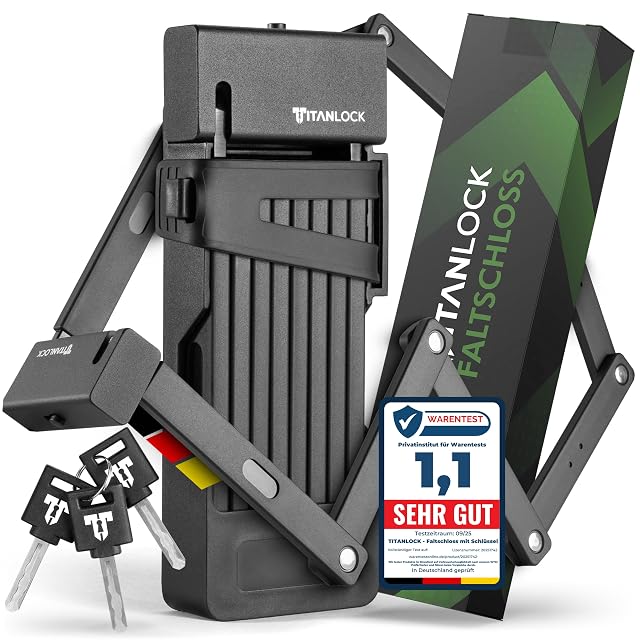
A lock sized to where you actually park
Weight first: a lock too heavy to carry every day gets left at home. A folding lock stows on the frame and reaches thick stands; a D-lock resists leverage best per kilo.
If your insurance names a certification scheme, that is the requirement to work to.
Tires with a protection belt
A commute crosses more glass and debris than any other kind of riding. A named protection layer is worth the weight penalty here, and reflective sidewalls are worth more than they cost.
The maintenance that keeps it going
A weekly pressure check. A monthly chain measurement. Both take minutes and both prevent the failures that turn a commute back into a bus journey.
The questions riders ask
What is the highest-value commuting purchase?
Mudguards, for most people in most climates. Arriving dry changes whether you cycle on a marginal morning more than any other single item.
Pannier or rucksack?
A pannier, if the bike has a rack. A rucksack puts the weight and the sweat on your back; a pannier puts both on the bike, which is what it is for.
Last reviewed 30 August 2026