Seven and a half millimeters, six months, and CO2 safe
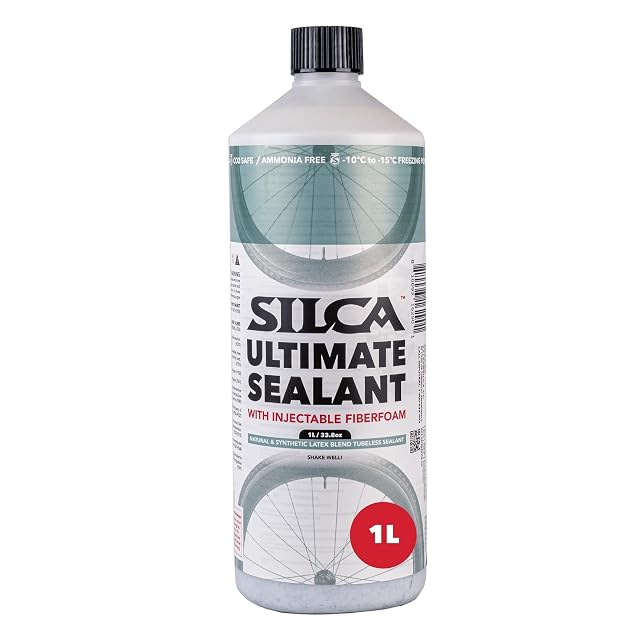
SILCA Ultimate sealant, 1,000 ml, FiberFoam
A liter of hybrid latex sealant with carbon fiber FiberFoam, sealing punctures up to 7.5 mm (0.30 in) and staying liquid beyond six months.
What you are getting
One liter of SILCA Ultimate tubeless sealant, 1,070 g. A hybrid latex formula with FiberFoam carbon fibers, stated to seal punctures up to 7.5 mm, to stay liquid for 6+ months, to work down to −15 °C (10 °F), and to be CO2 safe. $44.99 — 4.5 cents a milliliter, the cheapest sealant on this page.
7.5 mm, “25% more coverage than conventional bicycle tire sealants”.
Against the rest of this shelf: Orange Seal Endurance seals 6.35 mm (0.25 in) punctures and 12.7 mm (0.50 in) slices; the Muc-Off sealant already published here seals to 6 mm (0.24 in).
A hole and a slice are different problems, and SILCA gives only the hole figure. Orange Seal gives both, which is more useful: a slice is what a flint does, and it is harder to bridge than a round hole of the same area.
The “25% more” is measured against unnamed conventional sealants, so it is a claim rather than a comparison.
FiberFoam is described as a mechanism, with a number
“Small strand carbon fibers create a strong ‘fiber dam’ for faster sealing with minimal air loss. These fibers are 400% stiffer than fiberglass.”
Most sealants seal by latex coagulating in the hole. A fiber dam works differently: the fibers bridge the gap first and the latex fills around them, which is why the claim is about speed and air loss rather than hole size alone.
Four hundred per cent stiffer than fiberglass is SILCA’s figure for the fiber, not for the sealed repair. Carbon fiber genuinely is far stiffer than glass fiber, so the direction is right; the percentage is unverifiable from here.
And this is where the injector warning on this page matters
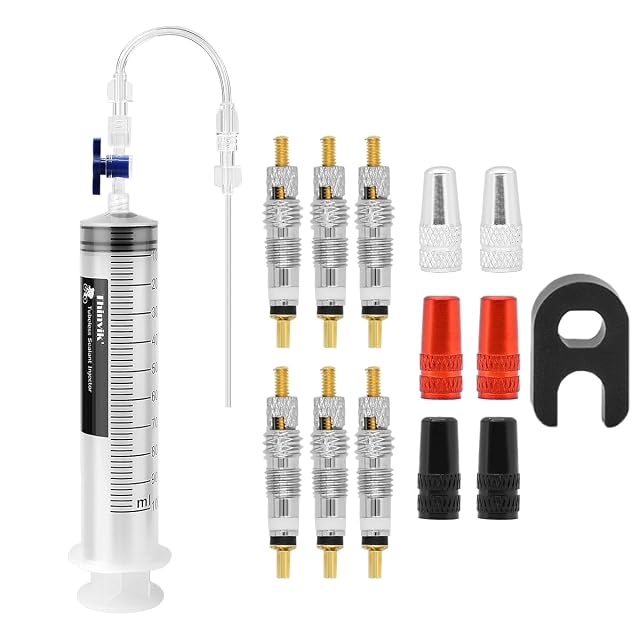
Both Thinvik injectors on this page carry the same exclusion: “do not applicable for Finish Line and other sealant containing large particles.”
SILCA’s sealant contains carbon fibers. Fibers are not the same as the large particles those warnings name, and neither listing mentions the other — SILCA says only “easily injects through the valve cores… injector sold separately”.
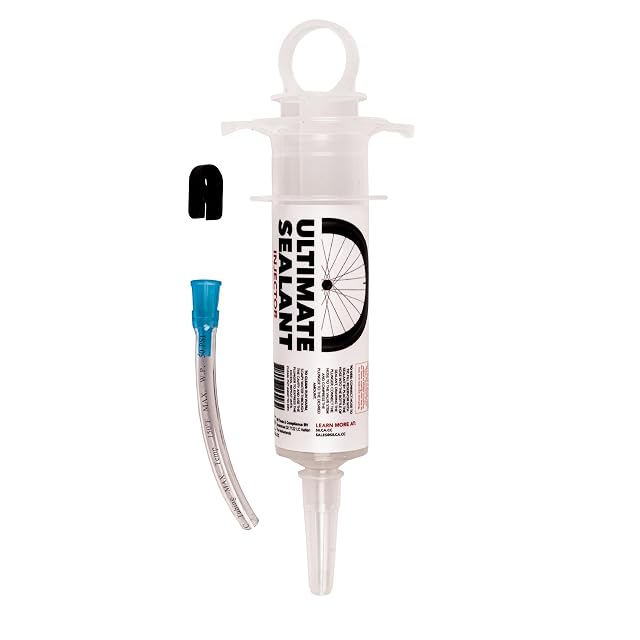
So the question is open and worth asking before buying both: a fiber-loaded sealant in a thin-hose syringe is exactly the case where a hose blocks. SILCA’s own injector on this page is the one the brand says to use, at 59 ml.
Minus fifteen degrees, and CO2 safe
Two properties nothing else in this group publishes.
−15 °C matters because sealant that freezes stops sealing, and the milkit sealant already published on this shelf claims −20 °C — the only lower figure in the survey.
CO2 safe matters more than it sounds. A CO2 cartridge chills a tire sharply as it discharges and the gas can shock some latex formulas into coagulating on the spot, ruining the sealant. A sealant rated for CO2 can be used with the inflators on the mini pumps page of this site.
Six months, which is the service interval this shelf cares about
“Stays liquid for 6+ months (weather dependent).”
The introduction to this page says sealant is a consumable with a service interval, and that is the figure. Orange Seal on this page says 60 to 120 days; the published Muc-Off says up to six months.
So on the makers’ own claims, a liter of this lasts two Orange Seal intervals — which changes the cost comparison completely. A liter at $44.99 topped up twice a year is cheaper to run than a 473 ml bottle topped up four times.
What is not published
No volume per wheel, which the introduction to this shelf asks for and no sealant in this survey gives; no latex-free option; no slice figure; and no fiber length. “Hybrid latex” is not explained — hybrid with what is not stated.
Availability
Read on the day this page was built: $45 at the American Amazon shop.
Read from Keepa on the day this page was last revised; stock and price both move without notice.
Prices quoted in this text were read on 2026-10-06. The live price is at the top of the page.