One: get the wheel out
Open the quick-release as a cam lever, or undo the thru-axle. On the rear, shift into the smallest sprocket first — it gives the derailleur the most room and makes refitting far easier.
If you have disc brakes, do not squeeze the lever with the wheel out. If you do, the pads close and a spacer is needed to part them again.
Two: get one side of the tire off
Let out any remaining air. Push the whole tire sideways into the center of the rim all the way round — the rim is deeper there, and that slack is what makes the bead come off by hand on many tires.
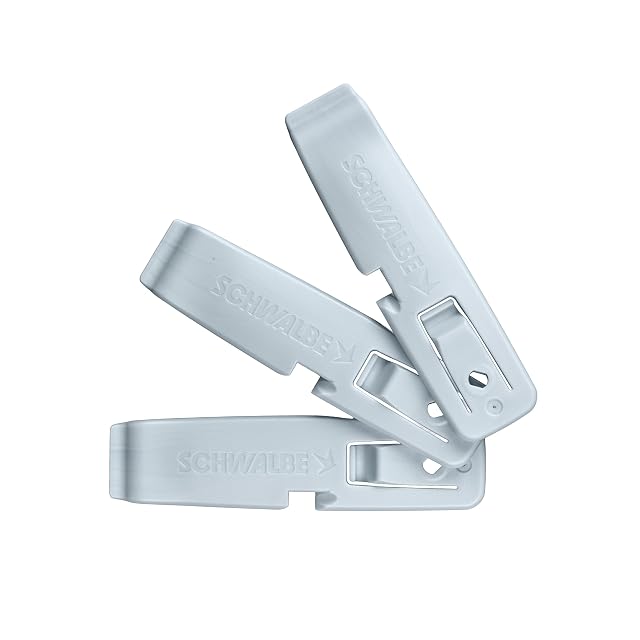
Then a lever under the bead, hook it on a spoke, a second lever a hand’s width along, and work round. The Schwalbe set on this site has three levers, a spoke clip and a built-in Presta valve key.
Three: find the cause
This is the step people skip and it is the one that matters.
Run a finger slowly round the inside of the casing. Look at the outside for a cut. Check the rim tape has not slipped off a spoke hole, which is a puncture that recurs on the inside face of the tube every time.
Line the tube up with the tire and find the hole: it tells you where to look. Two small holes side by side on the underside are a pinch flat, the sign of too little pressure or a hard hit on an edge.
Four: fit the new tube
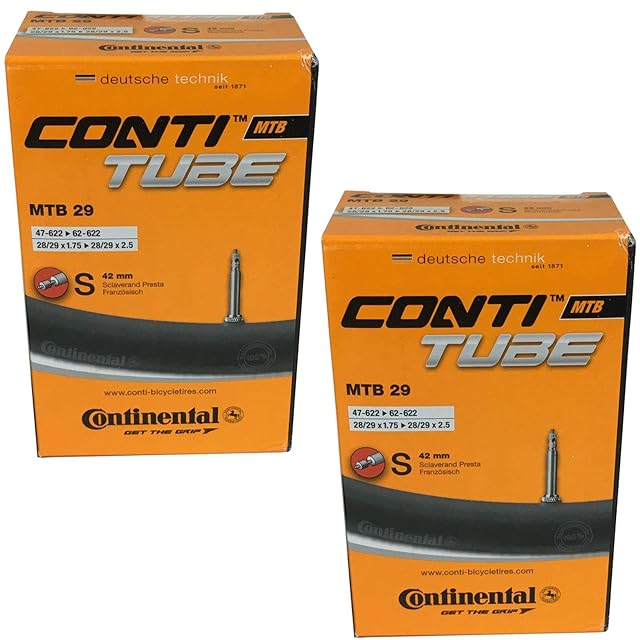
Check the size first: the size printed on the tire sidewall must fall inside the tube’s range. The Continental tube on this site covers 29-inch tires from 47 to 62 mm wide, with a Presta valve; it does not fit a road wheel or a 27.5-inch one.
Inflate it just enough to give it shape. Valve through the hole first, tube into the tire all the way round, then the bead back on — last section by hand if you possibly can, because a lever is what pinches a tube.
Five: check before you inflate
Push the tire sideways all the way round on both sides and check no tube is visible anywhere. A tube caught under the bead pushes the tire off the rim, usually somewhere quiet, minutes or hours later.
Six: inflate in two stages
To a low pressure first. Check the molded bead line sits an even distance above the rim all the way round on both sides. Then to riding pressure, inside the range printed on the sidewall.
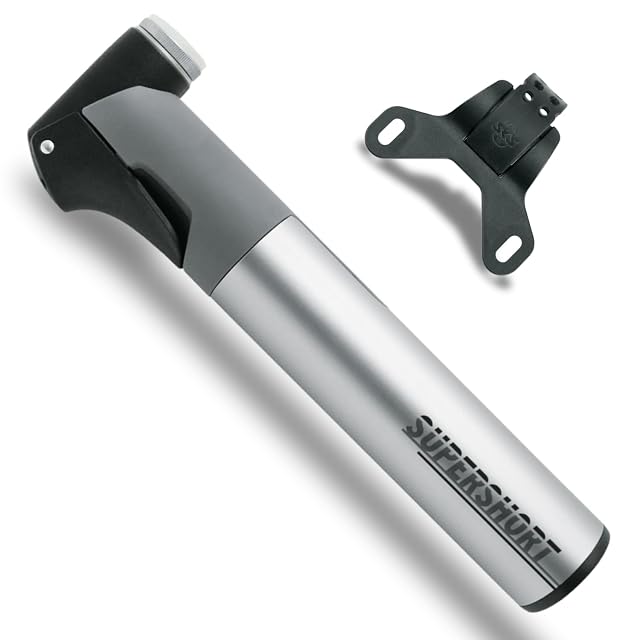
On the road, a mini pump gets you home, not always to full pressure. The SKS pump on this site is 6.5 in long with a head that takes Presta, Schrader and Dunlop valves; check its pressure ceiling against a narrow road tire before relying on it.
Seven: patch the old tube at home
A properly vulcanizing patch is a permanent repair and a patched tube is a legitimate spare. Self-adhesive patches are a get-home fix.
What to carry
- Two tire levers, better three.
- A tube in the right size, or patches and glue.
- A mini pump or a CO2 inflator with the right valve head.
- For nutted wheels, the matching wrench.
The questions riders ask
Why did my new tube go down straight away?
Almost always because whatever caused the first puncture is still in the tire. Run a finger carefully round the inside of the casing before fitting anything: a flint or a thorn tip is often barely visible from outside.
Do I need tire levers?
For most tires yes, and for a tight tubeless-ready tire definitely. Two is the useful number: one holds the bead while the other works round. Levers that clip onto a spoke free a hand entirely.
How do I know which tube size to buy?
Read the sidewall of the tire: it shows a size such as 29 × 2.2 or an ETRTO figure such as 55-622. The tube's range must include it, and its valve must match the rim hole, Presta or Schrader. The Continental tube on this site covers 47-622 to 62-622 with a Presta valve.
What are two small holes side by side?
A pinch flat, also called a snakebite. The tube was trapped between the tire and the rim, usually because the pressure was too low or the wheel hit an edge hard. Check the pressure range on the sidewall and ride inside it.
Last reviewed November 8, 2026