The chainstay
The mark that always happens. The chain slaps against it over every bump, and on a bike with a wide-range cassette it happens constantly.
A chainstay protector — adhesive, neoprene wrap or even an old inner tube — is a few dollars and it goes on before the first ride.
The down tube
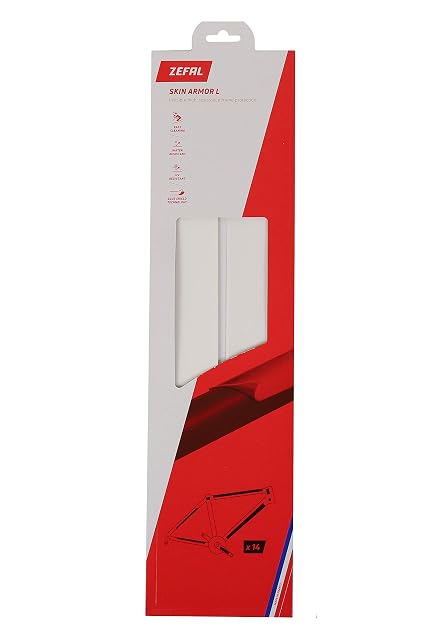
Stones from the front wheel, arriving at road speed. Adhesive film on the leading face — a set like Zéfal’s frame protection film, $32.68 on Amazon.com when we checked on October 23, 2026 — or a fender, which is the reason fenders started as a frame protection measure rather than a rider comfort one.
Cable rub
Where a cable crosses the head tube or runs along a tube, it moves fractionally with every steering input and wears through paint over a season. Small patches of film at each contact point.
The head tube
If you use a bar bag, its straps and the bag itself rub. Film, and check the bag is not resting on the tube.
Rack straps and carrier arms
A strap under load on a painted tube marks it within a month. Film, or a protective sleeve where the arm clamps — and check what your bike carrier’s manufacturer states about clamping, particularly on carbon, before you buy one of the hitch racks we cover.
Applying film
Clean, dry frame, above roughly 59 °F (15 °C). Adhesive applied cold lifts at the edges within weeks, which is the most common reason a protection kit is judged poor quality.
Round the corners of any piece you cut — square corners lift first.
Saddle covers
Different problem: a saddle left in rain soaks through and stays wet for days, and the padding underneath breaks down faster than the cover. A waterproof cover is the parking-lot fix — a thin PVC or nylon cap with an elastic hem that pulls over the saddle while the bike is locked outside and comes off before you ride.
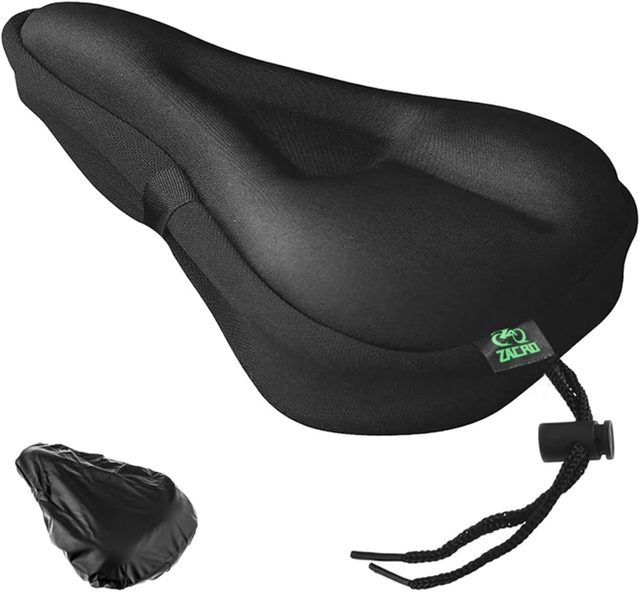
Gel covers are something else. The Zacro gel cover, 11 × 7 in, adds gel padding to a wide or exercise-bike saddle; it is a comfort accessory, not rain protection, and it should not be left on in the wet.
Where to go from here
Most marks are made while the bike is dirty — grit under a strap or a cable works like sandpaper. A two-minute post-ride routine and a proper clean after a muddy ride do as much for the paint as any film. The rest of the protection kit we cover is on the frame protection and saddle covers shelf.
Prices quoted in this text are dated readings and can differ from the live price in the buy box.
The questions riders ask
Where does a frame actually get marked?
The chainstay, from the chain slapping; the down tube, from stones thrown up by the front wheel; anywhere a cable rubs; the head tube, if you use a bar bag; and the seat tube and top tube where a rack strap or a car carrier arm sits.
Will protective film damage the paint when removed?
Good film states that it removes without residue, and most does if it is not left for years in the sun. Cheap film yellows and bonds — Zéfal states no yellowing over ten years, which addresses exactly that failure.
Last reviewed October 23, 2026