One: rinse while it is wet
Straight away, at ordinary tap pressure, from above, letting the water run down. Avoid pointing it at hub centers, the bottom bracket shell or suspension seals.
If you cannot rinse immediately, at least knock the worst off before it sets.
Two: cleaner and brushes
Bike cleaner on the frame, left for a moment to work, then a soft brush. A stiffer brush for the tires and the underside.
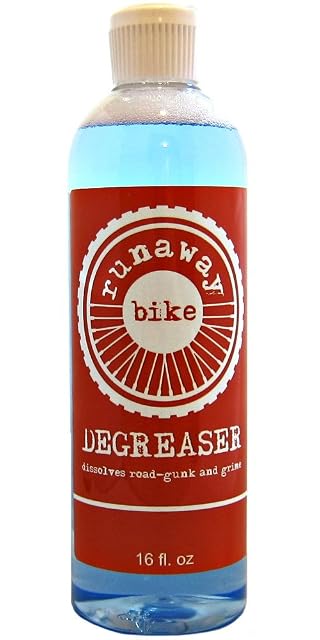
Degreaser on the drivetrain only, and left for a minute before brushing.
Three: the drivetrain properly
Mud packs into the cassette and the derailleur cage. A narrow brush for between the sprockets, a rag pulled through the gaps, and a brush inside the jockey wheels — which is where a surprising amount hides.
Four: rinse again, then dry
Degreaser left on a cassette migrates onto the chain and thins the lubricant.
Dry the chain properly. A chain oiled while wet traps water underneath.
Five: lubricate
Wet lube if you ride in these conditions regularly. Wipe the excess.
The parts that suffer from mud
Suspension stanchions, as above.
The rear derailleur and jockey wheels, where packed mud stops the chain tracking properly.
Brake pads, which wear several times faster with grit in them — check thickness against the manufacturer’s published minimum after a muddy season.
Bearings, if you pressure-wash.
Keep it off the rotors
Keep degreaser, lube and any cleaner not labeled safe for disc brakes off the rotors and pads — on a stand, turn the wheel so the rotor is away from the spray, or take the wheels out for a full drivetrain clean. Contaminated pads squeal and lose bite, and most brake manufacturers advise replacing them rather than trying to clean them.
What to keep in the shed
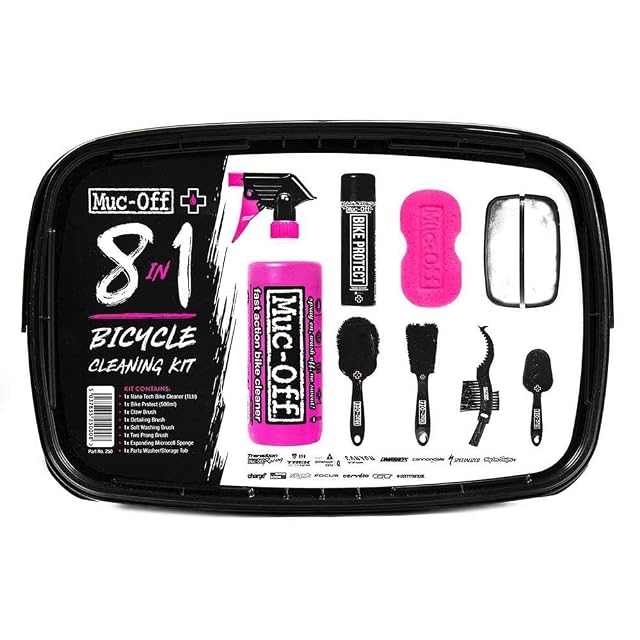
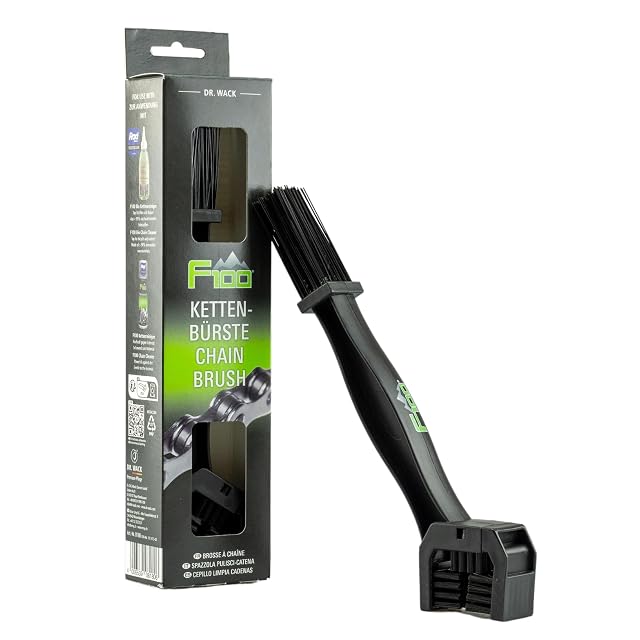
A soft brush and a stiffer one, a narrow chain brush, a degreaser and the lube you actually ride with. Our pages on bike cleaning kits, degreasers and cleaners and chain lubricants compare what each one publishes.
The questions riders ask
Should I hose it down straight away?
Yes, at ordinary tap pressure. Mud left to dry bonds to the frame and has to be scrubbed off, and scrubbing dried grit across paint is what marks it. A hose is fine; a pressure washer is what manufacturers advise against.
What about the suspension?
Wipe the stanchions — the shiny upper tubes — with a clean cloth every time. Grit sitting on them is dragged past the seals on the next compression, and that is what scores a fork.
Can I use dish soap to wash my bike?
For the frame, a little mild dish soap in warm water works in a pinch. Keep it away from the drivetrain, where a dedicated degreaser does the job properly, and rinse well: some dish soaps contain salt or additives you do not want sitting on paint or bearings.
How often should I clean the chain?
After every muddy or wet ride, and every few hundred miles otherwise. A gritty chain wears itself, the cassette and the chainrings faster — replacing a chain is cheap; replacing all three is not.
Last reviewed October 19, 2026