After a dry ride: nothing
A dusty frame does no harm. A dry chain in dry conditions is fine. Put the bike away.
After a wet or gritty ride: the two minutes
Wipe the chain. A rag held around it, back-pedal a few turns. That is thirty seconds and it removes the grit that would otherwise grind between the rollers.
Re-lube. One drop per roller, back-pedal to distribute, then wipe the outside. Excess oil on the outside of a chain does nothing except collect more dirt.
Look at the tires. A quick glance for anything embedded. A flint pulled out now is a puncture that does not happen on Tuesday morning.
After a salted ride: add a rinse
Before the salt dries. A bucket of water over the drivetrain and frame is two minutes and it prevents most of what a winter does.
Not a pressure washer — most bike manufacturers advise against one, because the pressure drives water past the seals in hubs, bottom bracket and headset.
What this is protecting
The chain, and through it the cassette and the chainrings. A chain replaced before it passes its wear limit keeps the cassette; a chain ridden to destruction takes it with it, at several times the price.
The proper clean, every few hundred kilometers
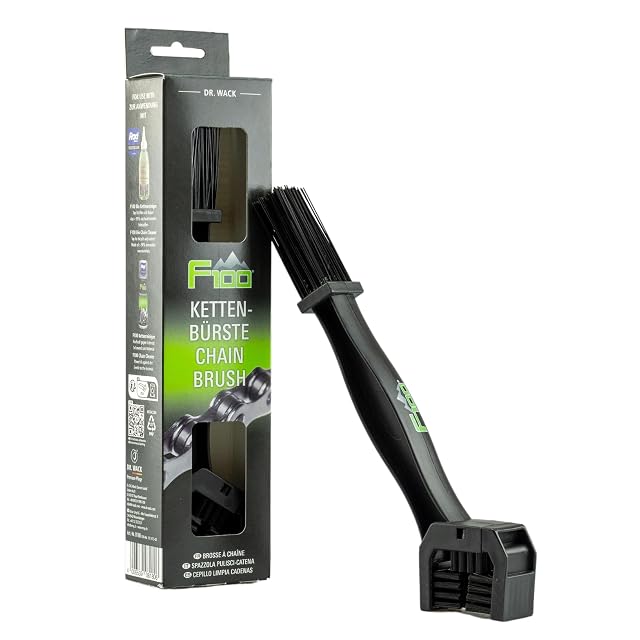
Degreaser on the drivetrain, brushes, rinse, dry, re-lube — and a chain wear check while it is clean, which is when you can actually see it.
The test
If the chain leaves a black mark on your finger, the two minutes are due.
The questions riders ask
Is two minutes really enough?
For the thing that matters, yes. Grit on a chain works as a grinding paste between the rollers and the pins, and wiping it off is most of what a full clean achieves for chain life. The frame can wait.
What if the bike is soaking wet?
Wipe the chain dry before oiling. Lubricant applied over water traps it underneath, and a chain oiled while wet rusts from the inside.
Last reviewed 30 August 2026