The only declared wet lube here, and the only one rated for frost
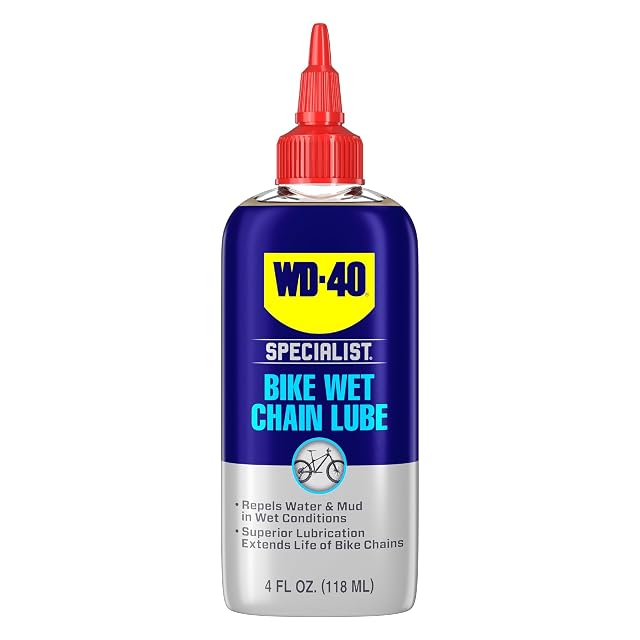
WD-40 Specialist Bike Wet lube, 118 ml
A wet chain lube in 118 ml for mud and rain, with a no-wax formula that WD-40 states performs in freezing temperatures.
What you are getting
WD-40 Specialist Bike Wet chain lube, 4 oz (118 ml), 120 g. A wet lube for mud and rain, stated to work in freezing temperatures, with a no-wax formula. 50-state VOC compliant. $9.96.
It is the only declared wet lube on this page
The tag on this shelf is the division: wet lube survives rain; dry lube keeps dust off the chain. Three lubricants in this group are dry or wax; one is all-conditions; one is a 2-in-1. This is the wet one.
“Designed for wet, muddy & extreme conditions, it provides a durable coating that helps repel water and mud.”
A wet lube is a heavier oil that stays on the chain when water runs over it. The price is that it also holds grit, which is the whole reason the dry lubes on this page exist.
“No-wax” is a real claim, and it is aimed at the other half of this shelf
“The no-wax formula will not build up inside chain links and the drivetrain.”
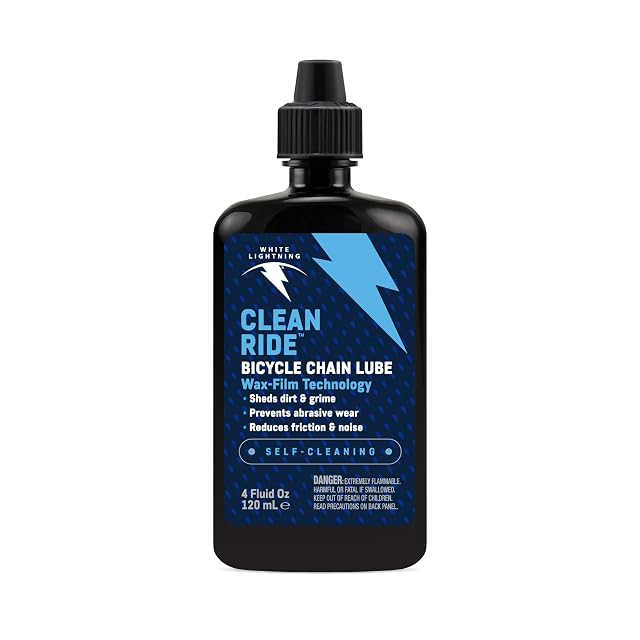
Read that against the Muc-Off Bio Dry on this page, which “uses a wax-based formula”, and the White Lightning Clean Ride, which is a dry wax coating. Both of those treat wax as the feature; this treats it as the fault.
Both are right, and the difference is use. Wax sheds dirt in the dry and flakes off in the wet; oil stays in the wet and collects dirt in the dry. The division in this shelf’s tag is exactly this one property seen from two directions.
Freezing temperatures, which nothing else here claims
“The proprietary formula performs in freezing temperatures to keep you riding all winter long.”
That is a published operating property and the only one in this group. A wax lube at −5 °C (23 °F) is brittle; an oil thickens but keeps working. For a bike ridden through winter it is the single most relevant sentence on this page.
VOC compliance, stated
“50-state VOC compliant.” Volatile organic compound limits are stricter in California than in most states, and a product compliant in all fifty is one that ships anywhere. It is a regulatory fact rather than a performance one, and WD-40 is the only brand here to publish it.
Two of five bullets are about WD-40’s events
“WD-40 BIKE sets up hands-on wash stations at local bike events around the globe.” And “WD-40 BIKE products have undergone extensive testing at the hands of internal and 3rd party scientists, bicycle retailers, and professional mechanics.”
The second mentions third-party testing without naming a party, a protocol or a result. The fifth is about marketing stands. Neither tells you anything about the oil.
What is not published
No reapplication interval, which is the figure that would turn 118 ml into a cost per year; no viscosity; no temperature range behind “freezing”; and no statement of whether it is biodegradable — where the Muc-Off on this page is “fully biodegradable” and “made completely from renewable sources”.
Availability
Read on the day this page was built: $10 at the American Amazon shop.
Read from Keepa on the day this page was last revised; stock and price both move without notice.
Prices quoted in this text were read on 2026-10-06. The live price is at the top of the page.