What you are getting
Two tools: a chain whip with an orange non-slip handle, and a lockring removal wrench for 12-tooth splined freewheels and cassette lockrings. Both heat-treated steel, “to prevent bending and flexing”. $12.99.
This is the part people discover the hard way. A cassette lockring is tightened to about 40 Nm, and the sprockets it holds can turn freely in one direction — so turning the lockring just turns the whole cassette.
The chain whip is a length of chain on a handle that wraps round a sprocket and holds it still. The wrench engages the lockring’s splines and undoes it. Neither works alone.
“Designed to be used in conjunction with the cassette lock ring tool to remove cassettes from hubs.”
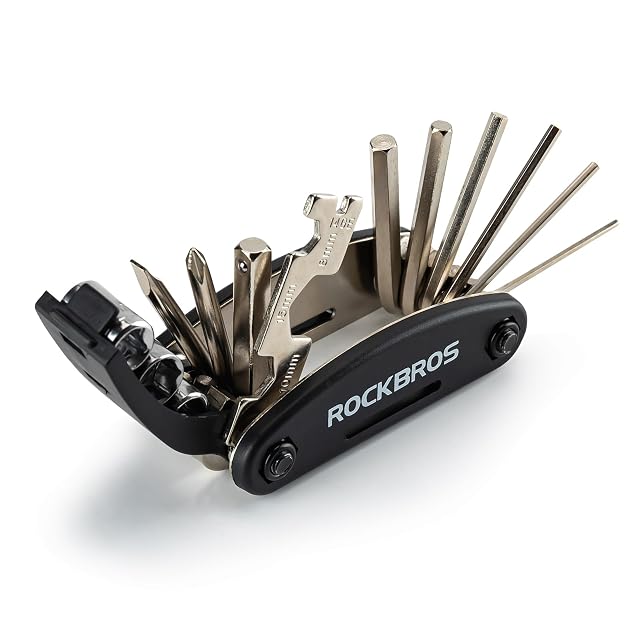
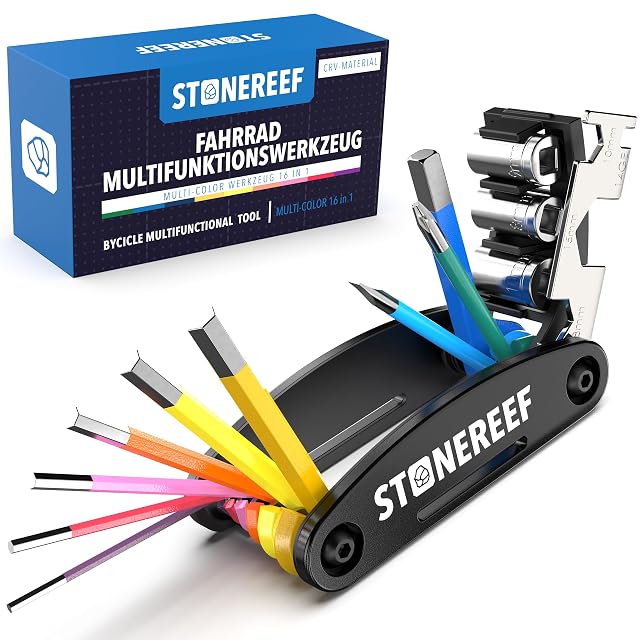
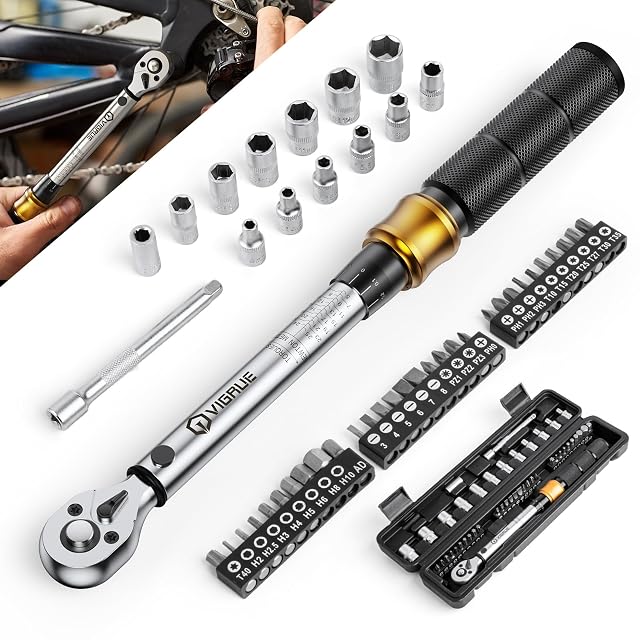
The introduction to this shelf compares multi-tools and torque wrenches, and the five tools published here are three 16-function multi-tools and two torque wrenches. None of them removes a cassette.
The wrench fits by spline count, not by brand
“Fits for any brand 12 teeth splined type freewheels, like Sachs Aris, Sun Race, SRAM, SunTour, Chris King and other cassette lockrings.”
Twelve splines is the pattern Shimano introduced for Hyperglide cassettes and which the industry adopted — which is why one wrench covers five named brands and the cassettes written on this site besides. The cassettes page here publishes Shimano HG51, HG50, HG500-10, XT M771 and the 105 CS-R7101, all of which use a splined lockring.
What the listing does not say is the spline diameter, which differs between a cassette lockring and some older freewheel removers. Twelve teeth is the identifier it gives, and it is the right one.
It works in both directions
“Sprocket remover can also be used to tighten on screw-on freewheels.”
Loosening and tightening. On a screw-on freewheel — the older arrangement where the sprocket cluster threads onto the hub — the same tool does the job in reverse, which is worth knowing on a bike old enough to have one.
And the whip holds a sprocket for refitting as well as removal, though the lockring’s own tightening torque should come from the hub or cassette manufacturer’s figure.
8, 9 and 10-speed, which is narrower than this site’s own cassettes
“Caters for 8, 9 and 10 speed cassettes.”
The cassettes written on this repository run from 8-speed to 12. So:
- 8-speed HG50, HG51 — covered
- 10-speed HG500-10, XT M771 — covered
- 12-speed 105 CS-R7101 — outside the stated range
Why a chain whip would have a speed rating at all is the width of its chain: an 8-speed chain is too wide to seat properly between 11 or 12-speed sprockets, so it slips instead of gripping. The wrench itself is indifferent — splines are splines.
So on a modern 11 or 12-speed cassette, the wrench will work and the whip may not. A cassette-specific holder is the alternative there.
Heat treated, named for the right reason
“Both are in high quality, heat treated to prevent bending and flexing.”
A chain whip is a lever that takes a hard pull with a chain under tension; a lockring wrench takes 40 Nm through twelve small teeth. The failure mode of a cheap one is the handle bending or the splines rounding off, and heat treatment is the answer to both.
“Constructed from steel for durability”, and the handle is “orange non-slip coated” — which matters because this is a tool used with greasy hands.
And it protects the wheel while you work
“When remove flywheel, fixed wheel to prevent from damage.”
Awkwardly phrased, and the point is real: the whip holds the sprocket so the wheel does not spin and the spokes do not take the load.
What is not published
No handle lengths, which decide the leverage available; no spline diameter; no weight; no chain speed for the whip itself — only the cassette range it suits; and no torque figure for refitting, which the buying advice on this shelf says should always come from the part or the manual rather than from a comparison page.
Availability
Read on the day this page was built: $13 at the American Amazon shop.
Read from Keepa on the day this page was last revised; stock and price both move without notice.
Prices quoted in this text were read on 2026-10-06. The live price is at the top of the page.