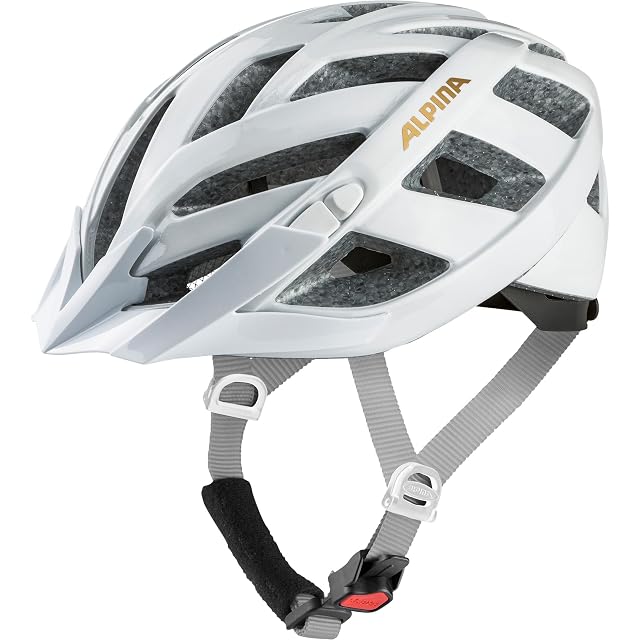
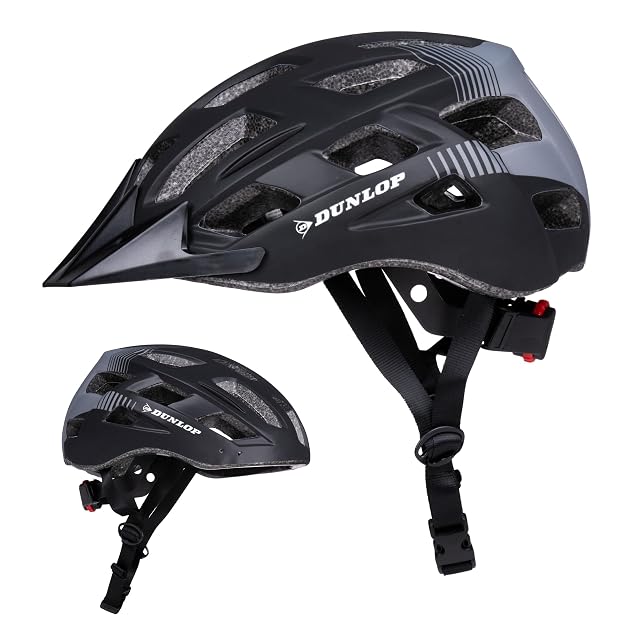
What you are getting
A commuting and road helmet weighing a published 260 g (9.2 oz), in 58–60 cm (22.8 to 23.6 in) (called Large), with 26 air vents, a high-density EPS core in in-mold construction, a snap-on detachable visor, a rear dial, washable padding and a 360-day warranty. $26.99.
It is the only helmet here that publishes its own weight
“Weighing in at a mere 260 g (9.2 oz).”
That matters on this shelf for a reason beyond the number: the introduction to this page used to say that no helmet in the hub published a weight at all. Every other helmet in this American survey gives only a shipping figure — 320 g (11.3 oz), 380 g (13.4 oz), 399 g (14.1 oz), and 671 g (23.7 oz) for the Giro, all of which include the carton.
Two hundred and sixty grams is a genuine road-helmet weight, and it is the one figure here that can be compared with anything.
And it names three markings
“Fully complies with U.S. CPSC and ASTM standards, as well as European CE safety regulations.”
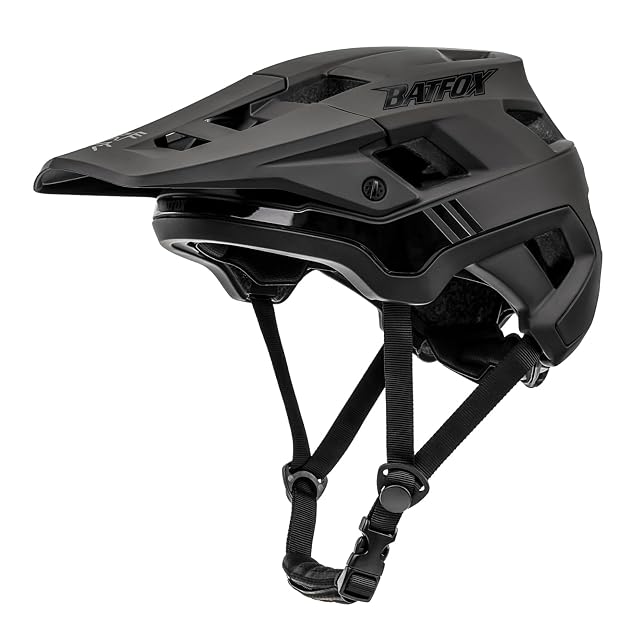
Three, where the Giro and the OutdoorMaster on this page name none and the Schwinn names one. The BATFOX names three as well, and goes one better by citing ASTM F1447 by number.
These are manufacturer declarations, which is all a comparison page can report. Nothing here assesses how a helmet performs in a crash, and the buying advice on this shelf is worth repeating: a helmet is a replace-after-impact item by every maker’s own instructions.
Twenty-six vents, the most on this page
BATFOX 18, Schwinn 20 or 21, OutdoorMaster 25, Favoto 26, Giro not stated.
“Twenty-six strategically placed cooling vents… actively pulls heat and humidity away.” What it does not describe is internal channelling, which is what the Giro’s Wind Tunnel system adds: vents move air across a shell, channels move it across the scalp.
Vent count is the comparable figure; channelling is the one that is not published here.
The size range is the narrowest “Large” on this page
58–60 cm, two centimeters.
| label | range |
|---|
| This helmet | L | 58–60 cm (22.8 to 23.6 in) |
| BATFOX | L | 58–61 cm (22.8 to 24 in) |
| Schwinn | one size | 58–62 cm (22.8 to 24.4 in) |
Three products, three different bands, all for a head of about 59 cm (23.2 in). That is exactly why the buying advice on this shelf says to compare your measured circumference to the range and not to the letter — a 61 cm (24 in) head fits the BATFOX L and the Schwinn, and not this.
What it does not have
No MIPS, and no rotational-protection layer of any kind. The OutdoorMaster on this page has MIPS at $59.99 and the Giro at $119.95; this is $26.99.
That is the trade, stated plainly. What $26.99 buys is a certified, light, well-vented in-mold helmet with a published weight. What it does not buy is the slip plane.
In-mold with a high-density EPS core, named
“High-density EPS foam core and rugged in-mold construction.”
In-mold means the polycarbonate shell is bonded to the foam in the mold rather than glued on afterwards, which is lighter and does not delaminate. It is the standard construction at this price and above, and the 260 g (9.2 oz) is consistent with it.
The Giro adds a hard outer shell over the in-mold layer; the BATFOX describes the same in-mold fusion in one sentence.
A 360-day warranty, which is an odd number and a real one
Not a year — 360 days. Only the Bone phone mount elsewhere on this site publishes a comparable figure, and no other helmet here publishes any.
What is not published
No MIPS or equivalent, no internal channelling, no EPS thickness — where the brand’s own helmet already published on this shelf states 20 mm — no strap material, and no statement of which of the three markings the actual shell carries.
Availability
Read on the day this page was built: $27 at the American Amazon shop.
Read from Keepa on the day this page was last revised; stock and price both move without notice.
Prices quoted in this text were read on 2026-10-06. The live price is at the top of the page.